Mine discharge permitting has tightened steadily, and the practical consequence for operators is simple: monthly grab samples no longer carry enough evidentiary weight on their own. Regulators want continuous records, and the same instruments are useful for process control. A monitoring system that serves both purposes is now the baseline rather than an upgrade.
This article covers what a mine water discharge monitoring station has to deliver, which parameters actually matter in pit dewatering and tailings reclaim streams, and how to design a station that survives contact with a real mine site.
Table of Contents
Regulatory Framework Requirements
Mine water discharge sits under several overlapping frameworks. The World Bank Group Environmental, Health and Safety Guidelines set a widely used baseline for mining operations internationally, while national regulations add country-specific requirements. Permit conditions then layer on site-specific limits based on the sensitivity of the receiving water.
Permits for mining discharges typically regulate pH, total suspended solids (TSS), BOD, COD, heavy metals and cyanide. In the United States, effluent limitation guidelines (ELGs) under the Clean Water Act set technology-based limits by mining subcategory, and NPDES permits apply them with site-specific adjustments. Monitoring frequency is set case by case: continuous measurement for the parameters that can swing quickly, weekly or monthly sampling for those that move slowly. In the EU, the Industrial Emissions Directive (2010/75/EU) and the BAT conclusions for the relevant sector define the monitoring methods and frequency, and permits for large continuous outfalls often require online instruments with electronic reporting to the competent authority. Smaller outfalls frequently remain on manual sampling.
The reason continuous measurement keeps winning these arguments is variability. pH, suspended solids and metal concentrations in active dewatering streams can move a long way within a single day as process water, storm flow and haul-road runoff reach the outfall at different times. A single sample can be unrepresentative of anything except itself, which leaves both the operator and the regulator exposed.
Multi-Parameter Monitoring Platform Design
A multi-parameter platform is usually cheaper to buy, install and maintain than a set of separate single-parameter panels. The design questions are the same either way: which parameters must be measured, where the sample point sits, how the signal reaches the control system, and where the permit requires redundancy.
Primary stations belong at points that represent the overall discharge and stay accessible for maintenance. Flow measurement at the same location allows mass loading to be calculated, which is what many permits actually limit. The American Society of Civil Engineers publishes guidance on monitoring station design that balances measurement accuracy against the practicalities of keeping a station running through winter and flood conditions.
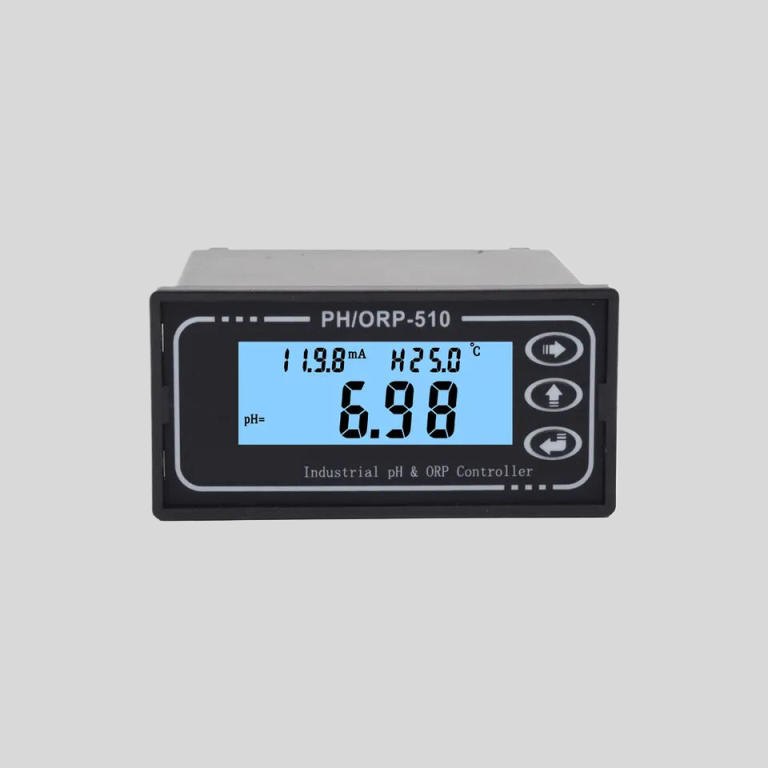
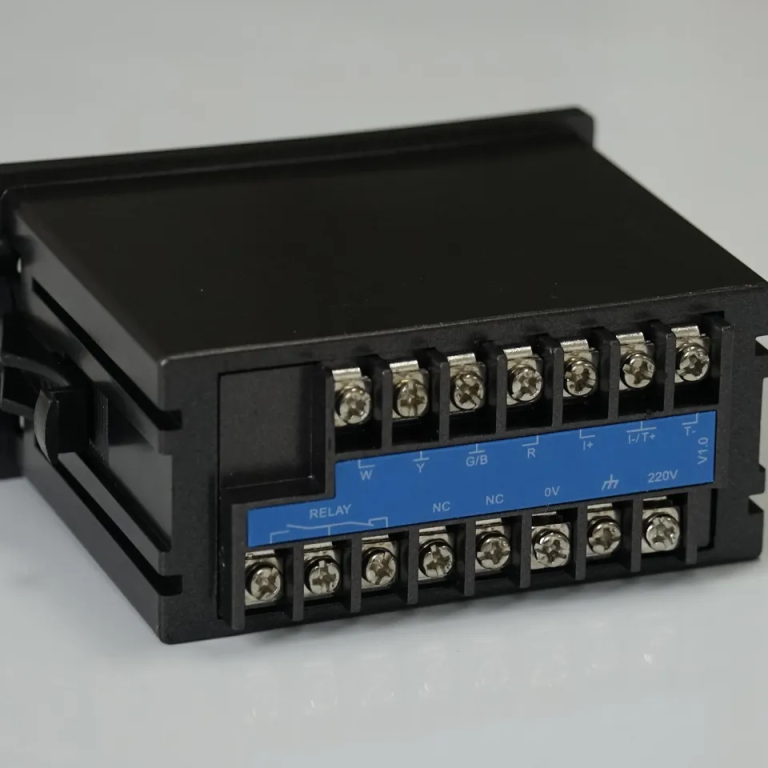
Shanghai ChiMay’s multi-parameter platforms combine pH, conductivity, turbidity, dissolved oxygen and temperature in a single housing, which simplifies installation and cuts down on the number of sample lines and shelters a site needs. They support Modbus TCP/RTU, 4–20 mA and HART, so integration with most control architectures is straightforward, and modules can be added as permit requirements change.
Critical Parameter Monitoring
pH deserves more attention than it usually gets in mining applications. Values can sit at either extreme, and they can move fast when process conditions shift. Automated buffer calibration verifies sensor accuracy on a daily schedule and keeps the documentation that compliance reporting requires; EPA Method 150.1 remains the standard reference for pH measurement in wastewater compliance work.
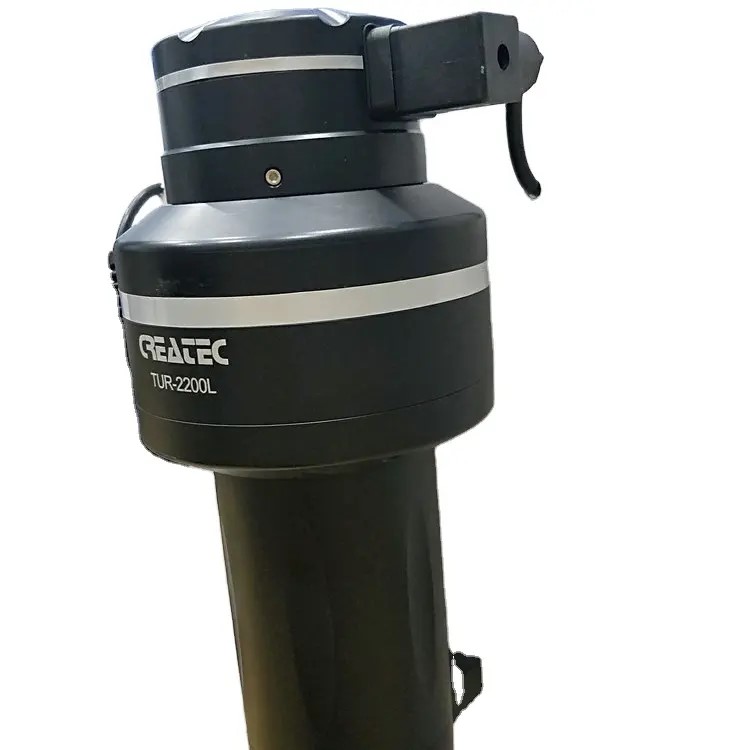
Turbidity gives a continuous surrogate for suspended solids once a site-specific correlation against gravimetric TSS has been established. Optical turbidity sensors need automatic cleaning in mining service, where solids loading is high and biofouling accelerates the problem. Shanghai ChiMay’s turbidity sensors use ultrasonic cleaning, which in normal mining service keeps the optics clear for extended intervals between manual intervention.
Metals monitoring increasingly relies on continuous analysers for iron, manganese, aluminium and any metal of specific concern to the permit. ICP-based and atomic absorption analysers reach the detection limits most permits require, but capital cost is significant and reagent consumption is a real operating expense, so many sites run them on a subset of the discharge points rather than everywhere.
Flow Measurement and Load Calculations
Load-based limits need flow data as much as concentration data; without it, no mass emission rate can be calculated at all. USGS techniques for streamflow measurement apply directly to open channel conditions in discharge channels and outfall structures, and ISO 748 covers velocity-area flow measurement in open channels.
Flow measurement options for mining discharge include ultrasonic meters, electromagnetic meters and weir or flume installations. The right choice depends on channel geometry, solids content, access for maintenance and the accuracy the permit demands. Where continuous analysers are not installed, flow-proportional samplers collect composite samples that represent average concentrations across the flow range.
Data Management and Reporting
Continuous instruments generate more data in a month than a manual programme produces in a decade, and someone has to manage it. Platforms that acquire at intervals from 15 seconds to 1 hour, store every record with an audit trail, and export reports in the format the regulator accepts do most of that work.
In the United States, permitted facilities report monitoring data electronically to EPA through the Discharge Monitoring Report (DMR) system, and comparable electronic submission requirements apply in most developed jurisdictions. Linking the monitoring platform directly to the reporting workflow removes a transcription step that is a common source of avoidable reporting errors.
Data validation routines flag results that need review — range checks, rate-of-change limits, comparison against correlated parameters. Shanghai ChiMay’s platforms include validation logic that flags questionable data while the system keeps recording.
Alarm and Response Systems
Exceedance alarms only help if they arrive early enough for someone to act. Multi-level alarms that separate “investigate” conditions from “act now” conditions keep operators from ignoring the whole system, and notification through several channels — call, SMS, email — avoids the single-point failure of one delivery route.
Automated responses can take corrective action without waiting for a human: dosing adjustments, process changes, or diversion of flow to containment. ASME guidance on safety instrumented systems applies to these implementations, particularly the fail-safe requirements. Sensor redundancy reduces the chance of an undetected failure producing a violation, backup power keeps the station running through outages, and scheduled testing verifies that alarms and interlocks actually work.
Cost-Benefit Analysis
Discharge monitoring pays for itself in avoided enforcement and in process insight, but the numbers depend entirely on the site. Civil penalties for Clean Water Act violations at mining operations routinely reach six figures per enforcement action, and EPA publishes its enforcement results each year — the range is wide enough that any single “average penalty” figure should be treated with suspicion.
Monitoring system costs scale with the number of parameters, redundancy requirements and data management sophistication. A medium-sized operation typically sees six-figure capital cost for a full station build-out, with annual operating cost for calibration, consumables, maintenance and data management a fraction of that. Set against the cost of a single enforcement action or a permit renewal delay, the arithmetic is rarely close.
The operational case is often stronger than the compliance case. Continuous measurement shows where chemical consumption can be cut, catches upset conditions while they are still cheap to fix, and gives the site real data when a receiving water complaint or an exceedance allegation needs answering.
What This Means in Practice
For a mine site, the monitoring question is not whether to install continuous instruments, but how many, where, and how much data the permit actually requires. A defensible station design covers the regulated parameters at points that represent the discharge, keeps the records a regulator will ask for, and produces information the plant can use. Shanghai ChiMay’s monitoring platform supports that combination across the discharge, reclaim and treatment points a mining operation runs.