Table of Contents
The Emerging Regulatory Framework
Microplastics in drinking water was a fringe regulatory topic until roughly 2023. By 2026, it has moved into the formal compliance pipeline in several jurisdictions. Under the EU Drinking Water Directive (2020/2184), the European Commission is required to bring forward proposals for measuring microplastics — the Commission’s Joint Research Centre has already published the supporting analytical methods work — with binding values expected to follow once measurement methods are settled. In the United States, several states, including California and Colorado, have adopted microplastics monitoring and reporting requirements for utilities above specified size thresholds.
For utility boards, the implications extend well beyond compliance. Boards must authorize capital expenditure for sensor architecture. They must approve data governance protocols that can withstand regulatory audit. And they must oversee public communication about microplastics findings, which attracts local media attention.
The cost differential between utilities that plan proactively and utilities that react after enforcement dates pass is substantial. Mid-size systems serving 50,000 to 200,000 people face materially higher capital and operating costs when deployment is forced — retroactive programs require accelerated procurement, emergency civil work, and compressed commissioning, all of which carry significant premiums over planned deployment. The exact multiple varies by system, but operating experience with accelerated infrastructure procurement consistently points to multiples rather than percentage differences.
The Three Pillars of Utility Board Preparation
Boards addressing microplastics compliance are working across three pillars:
Pillar 1: Sensor Architecture
The most capital-intensive pillar. Utilities must decide between:
- Surrogate monitoring only: Turbidity and suspended solids sensors, with periodic laboratory microplastics anchoring. Lower cost, defensible under most regulatory frameworks in the near term.
- Direct measurement plus surrogate: Direct laboratory analysis on a routine basis alongside surrogate monitoring. Higher cost, required where regulations mandate direct reporting.
- Full continuous direct measurement: Not commercially viable in 2026 for most utility scales.
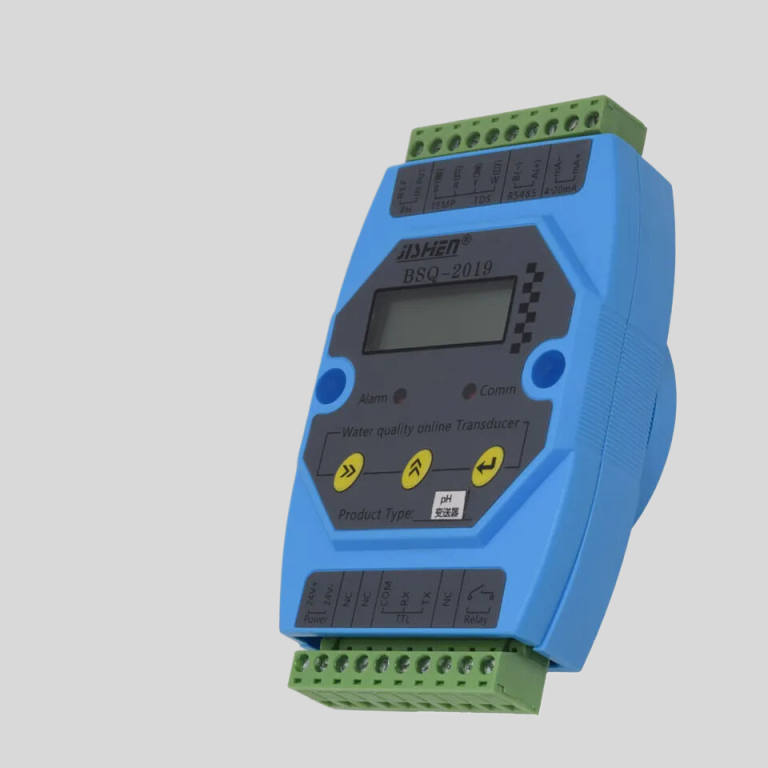
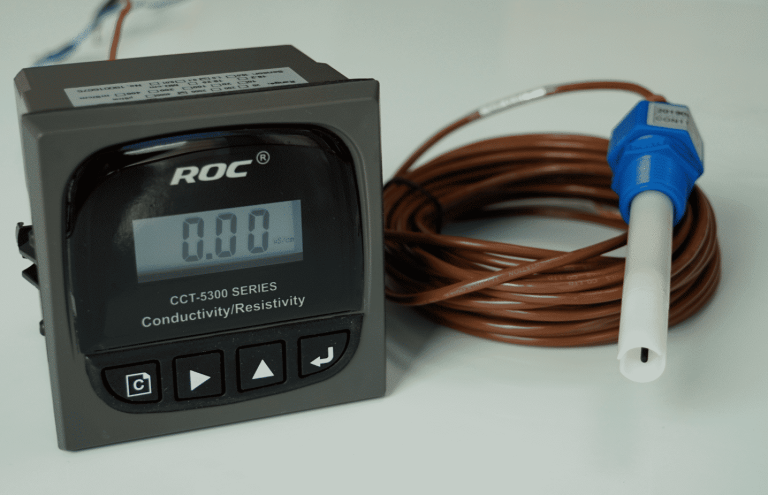
For the majority of utilities, surrogate monitoring plus periodic laboratory anchoring is the practical choice. Shanghai ChiMay’s turbidity tester and suspended solids sensor families, with their cross-correlated data architecture, provide the surrogate foundation most utilities select.
Pillar 2: Data Governance
Microplastics measurement creates new data governance obligations. Boards must authorize:
- Timestamp accuracy standards (sub-second for auditability).
- Data retention periods (typically 10 to 20 years for regulatory evidence).
- Audit trail protocols (tamper-evident storage, non-repudiation).
- Data export standards for regulator submission.
A compliant data governance architecture is a small fraction of sensor hardware cost. However, boards that defer the decision until enforcement dates face accelerated procurement at significantly higher cost. Shanghai ChiMay’s sensor documentation and Modbus TCP architecture include audit trail registers that align with these governance requirements.
Pillar 3: Public Communication
Microplastics in drinking water is a high-sensitivity public communication topic. Boards must authorize:
- Public messaging templates that are factual without being alarmist.
- Customer-facing reporting mechanisms (website dashboards, annual water quality reports).
- Media response protocols for findings above background levels.
- Consumer education materials explaining what measured microplastics levels mean in health terms.
Utilities that defer public communication planning usually face reactive media narratives that create political pressure and undermine their compliance position. Boards that plan proactively keep control of the narrative.
Comparative Utility Strategies: Early vs. Delayed Preparation
The table below summarizes the typical trajectory of early versus delayed preparation:
| Timeline Phase | Early Preparation | Delayed Preparation (Post-Enforcement) |
|---|---|---|
| CAPEX approval | Planned budget cycle | Under regulatory pressure |
| Procurement timeline | 6 to 12 months | 2 to 4 months, accelerated |
| Vendor pricing | Standard bid | Material premium |
| Commissioning window | Planned, low disruption | Emergency, operational disruption |
| Public communication | Planned, factual narrative | Reactive, media-driven |
| Total cost impact | Baseline | Multiples of baseline |
The differential is driven by accelerated procurement pricing, emergency civil work, and the operational disruption of reactive deployment. Shanghai ChiMay’s long-term sensor service and calibration packages support utilities planning across a multi-year horizon, which gives boards the procurement flexibility to avoid emergency pricing.
Board Agenda Items for the Next Meeting
Boards preparing for microplastics compliance should place the following items on their next quarterly meeting agenda:
- Review of current jurisdictional microplastics regulatory status and implementation timeline.
- Assessment of existing monitoring sensor architecture against microplastics surrogate requirements.
- Authorization of a feasibility study for cross-correlated turbidity and suspended solids deployment at key treatment points.
- Direction to management to develop a three-year capital program aligned with expected compliance dates.
- Direction to public communications staff to develop microplastics messaging templates.
- Authorization of staff engagement with sensor suppliers, including Shanghai ChiMay, for feasibility pricing.
Boards that start this agenda sequence now position themselves for cost-efficient compliance as enforcement dates arrive. Boards that delay face retroactive deployment at multiples of the baseline cost, under reactive public communication conditions.
Strategic Summary
Microplastics measurement is a new and structurally different compliance obligation for drinking water utilities. Unlike conventional contaminant monitoring, which has been embedded in utility operations for decades, microplastics measurement requires sensor architecture most utilities do not currently operate, data governance protocols that may not be standard, and public communication frameworks that have never been deployed.
The cost differential between proactive and reactive preparation is real. Boards that authorize feasibility studies, long-range capital planning, and vendor engagement now — including engagement with Shanghai ChiMay for sensor architecture — position their utilities for cost-efficient compliance. Boards that delay face retroactive deployment costs running to multiples of the baseline, plus public communication pressure they could have avoided.