Table of Contents
Boiler Feedwater Quality Control: Technical Requirements and Instrumentation Selection
Key Takeaways
- Boiler tube failures caused by water quality issues cost the power industry approximately $1.2 billion annually in repairs and lost generation
- Proper feedwater conductivity control below 0.3 μS/cm extends boiler lifetime by 25-40%
- Dissolved oxygen levels exceeding 7 ppb accelerate corrosion rates by 300% in high-pressure systems
- Silica carryover in steam above 20 ppb causes turbine blade deposits reducing efficiency by 2-5%
Boiler feedwater quality directly determines thermal efficiency, equipment longevity, and operational safety in power generation. Understanding technical requirements and selecting appropriate instrumentation enables facilities to optimize performance while minimizing operating costs.
Boiler Water Quality Fundamentals
Steam Generation Chemistry
Boiler systems operate under conditions that concentrate impurities through evaporation, creating potential for scaling, corrosion, and foaming if water quality falls outside acceptable limits. Feedwater must meet stringent purity requirements because even trace contaminants can cause significant problems at high temperatures and pressures.
The relationship between feedwater quality and boiler performance follows predictable patterns. As total dissolved solids (TDS) increase, vapor pressure depression reduces steam generation efficiency. Silica volatilizes in high-pressure boilers, depositing on turbine blades and reducing aerodynamic efficiency. Hardness salts precipitate as scale on heat transfer surfaces, insulating tubes and accelerating failure.
Classification by Operating Pressure
Boiler designs for different pressure ranges demand correspondingly different water quality specifications:
Low-pressure boilers (up to 150 psi): Primary concerns include scale prevention and corrosion control. Conductivity monitoring typically suffices for treatment control.
Medium-pressure boilers (150-600 psi): Dissolved oxygen control becomes critical. Oxygen scavenger dosing requires continuous monitoring to prevent under-dosing or excessive treatment.
High-pressure boilers (above 600 psi): All impurity categories require precise control. Cation conductivity measurement detects ionic contamination invisible to standard conductivity sensors.
Critical Measurement Parameters
Conductivity Measurement
Conductivity serves as the primary indicator of dissolved solids concentration. However, standard conductivity measurement fails to detect certain contaminants, particularly silica and organic compounds that do not significantly affect ionic conductivity.
Cation exchange conductivity provides more sensitive contamination detection by converting all salts to their acid form through ion exchange before measurement. This technique reveals organic contamination and weak acids that standard sensors miss.
For boiler feedwater applications, inline conductivity meters must provide:
- Measurement range of 0.01-100 μS/cm
- Temperature compensation across 0-100°C
- Accuracy of ±1% of reading or better
- Minimal polarization effects at high conductivity
Shanghai ChiMay conductivity electrodes utilize four-electrode measurement technology that eliminates polarization errors common in two-electrode designs, providing stable readings across the full range of boiler water conductivities.
Dissolved Oxygen Analysis
Oxygen dissolved in feedwater causes oxygen pitting corrosion, one of the most damaging forms of boiler corrosion. Even small concentrations cause significant metal loss over time:
- < 7 ppb: Acceptable for high-pressure boilers
- 7-50 ppb: Corrosion risk requiring oxygen scavenger treatment
- > 50 ppb: Serious corrosion threat requiring immediate corrective action
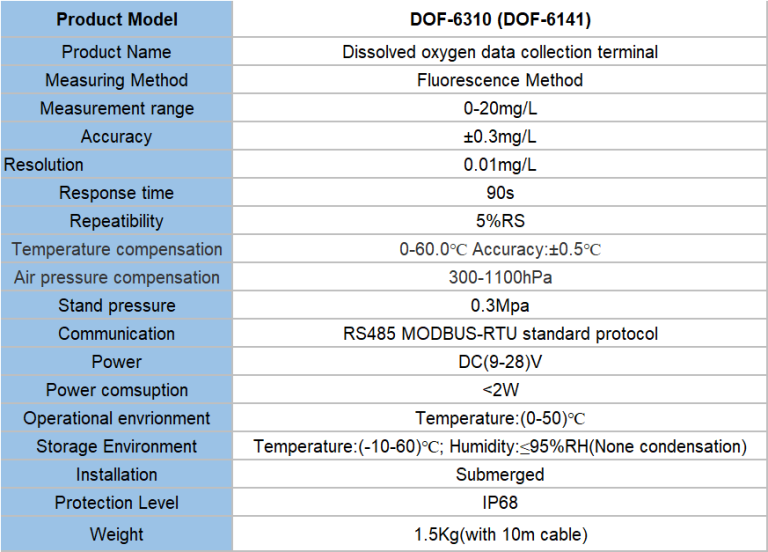
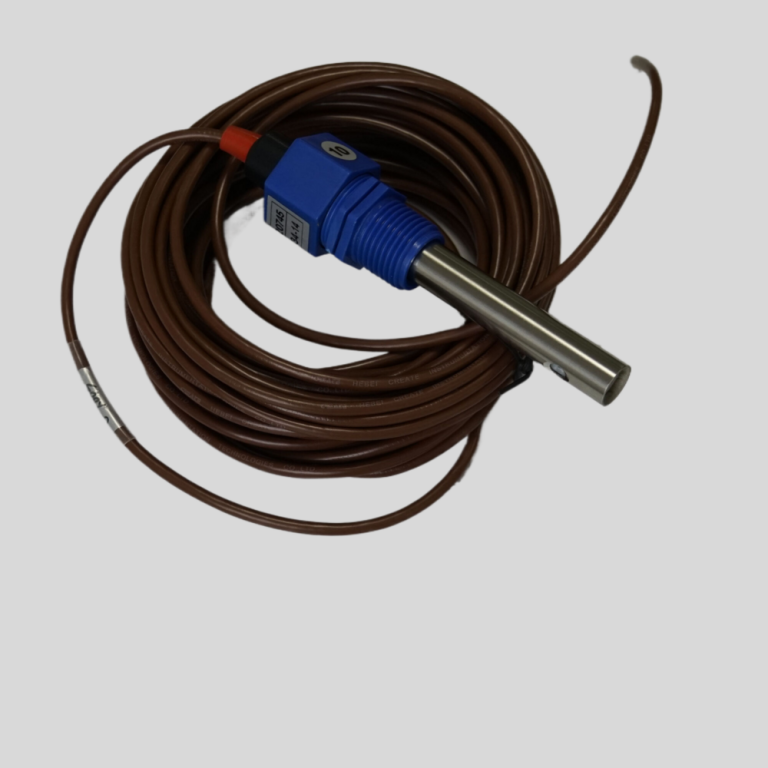
Dissolved oxygen sensors for boiler applications must achieve detection limits below 2 ppb with response times under 60 seconds. Polarographic sensors offer the necessary sensitivity but require regular electrolyte replacement. Galvanic sensors provide maintenance advantages but may have higher baseline drift.
pH Monitoring
System pH critically influences both corrosion and scaling tendencies. Appropriate pH varies by boiler pressure and construction materials:
- Carbon steel systems: Target pH of 10.0-10.8 for corrosion inhibition
- Copper alloy components: Maintain pH below 9.5 to prevent dezincification
- High-pressure boilers: Precise pH control within 9.6-10.0 minimizes both corrosion and carryover
pH sensors for high-purity water applications require specialized construction to maintain accuracy in low-conductivity solutions. Standard glass electrodes suffer from reference junction potentials that obscure true measurement in high-purity water.
Instrumentation System Design
Sampling System Requirements
Instrument accuracy depends critically on sample conditioning. Boiler water sampling systems must provide:
Representative samples: Extraction points must capture true system water composition without vapor entrainment or contamination from sampling lines.
Temperature reduction: Samples must cool to near-ambient temperature before measurement, typically through shell-and-tube or counter-flow heat exchangers.
Pressure reduction: Sample pressure must drop below instrument rating, achieved through restriction orifices or pressure reduction valves.
Flow control: Sample flow rates of 200-500 mL/min provide adequate volume for accurate measurement while minimizing sample consumption.
Installation Best Practices
Proper sensor installation dramatically affects measurement reliability:
Location selection: Install sensors at points representing process conditions, avoiding dead legs or areas of stagnation. Sample lines should slope upward from the process connection to prevent gas pocket formation.
Accessibility: Allow adequate clearance for sensor maintenance, calibration, and replacement. Systems requiring scaffolding for sensor access suffer from delayed maintenance and degraded accuracy.
Environmental protection: Electronics enclosures must protect against moisture, dust, and temperature extremes common in power plant environments.
Calibration and Maintenance
Calibration Frequency
Calibration requirements depend on measurement criticality and sensor stability:
| Parameter | Standard Calibration | High-Conductivity Calibration |
|---|---|---|
| Conductivity | Monthly | Weekly |
| pH | Weekly | Daily |
| Dissolved Oxygen | Monthly | Weekly |
Maintenance Activities
Effective maintenance programs include:
Sensor inspection: Examine sensing elements for coating, mechanical damage, or chemical attack
Junction evaluation: Test reference junctions for response time degradation
Cable integrity: Verify connections and cable insulation integrity
Cleaning procedures: Remove deposits using appropriate chemical or mechanical methods
Performance Optimization
On-Line Analyzers vs Laboratory Testing
While laboratory analyses provide reference accuracy, on-line instrumentation enables real-time control that laboratory testing cannot support. Modern continuous analyzers achieve accuracy sufficient for control decisions when properly maintained:
Continuous conductivity analyzers: Accuracy within ±2% of laboratory measurements under stable conditions
On-line pH analyzers: Typically within ±0.1 pH units of laboratory reference when calibrated regularly
Continuous DO analyzers: Detection limits sufficient for control decisions, though not replacing laboratory verification
Data Management
Integrating analyzer data with distributed control systems enables:
- Automatic alarm generation for out-of-specification conditions
- Trend analysis supporting predictive maintenance
- Historical records for compliance documentation
- Integration with chemical dosing controls for automated treatment
Conclusion
Boiler feedwater quality control requires systematic approach to instrumentation selection, installation, and maintenance. Facilities investing in appropriate measurement technology and maintenance practices consistently achieve improved boiler reliability and extended equipment life.
The cost of water quality instrumentation represents a fraction of the avoided costs from boiler tube failures, forced outages, and efficiency losses. Proper investment in this foundational capability delivers returns through improved availability, reduced maintenance expense, and optimized chemical treatment programs.