Table of Contents
Choosing the Right Dissolved Oxygen Sensor for Cell Culture Applications in Advanced Therapies
Key Takeaways:
– Dissolved oxygen (DO) concentration directly influences cell metabolism, with 40-60% reduction in oxygen transfer potentially decreasing monoclonal antibody titers by 35-50%
– Optical dissolved oxygen sensors from Shanghai ChiMay provide 10x longer stability compared to electrochemical sensors in long-term cell culture applications
– For ATMP (Advanced Therapy Medicinal Product) manufacturing, GMP compliance requires real-time DO monitoring with complete electronic documentation
– Sensor selection impacts total process economics, with the optimal DO monitoring strategy generating USD 180,000-350,000 annual savings in a typical commercial biologics facility
Introduction
Advanced therapy medicinal products (ATMPs), including monoclonal antibodies, cell therapies, and gene therapies, represent the fastest-growing segment of the pharmaceutical industry. According to Armstrong et al., Cell & Gene Therapy Insights 2024, global ATMP manufacturing capacity will need to increase 300% by 2030 to meet projected demand. Central to ATMP production is precise control of dissolved oxygen levels during cell culture—a parameter that directly influences cell growth, metabolism, and product quality.
Traditional polarographic electrochemical sensors have dominated dissolved oxygen monitoring for decades. However, optical sensor technology has emerged as the preferred choice for modern biopharmaceutical manufacturing, offering superior stability, reduced maintenance, and compatibility with single-use bioreactor systems increasingly deployed in ATMP production.
Understanding Dissolved Oxygen Requirements in Cell Culture
Oxygen’s Role in Cellular Metabolism
Dissolved oxygen serves as the terminal electron acceptor in cellular respiration, directly affecting:
Energy metabolism: Cells require oxygen for efficient ATP production through oxidative phosphorylation. DO levels below 20% air saturation trigger metabolic shifts toward less efficient anaerobic pathways, reducing cellular energy availability for product synthesis.
Byproduct formation: Low DO conditions promote lactate and ammonia accumulation—metabolic byproducts that inhibit cell growth and product quality. Research published in Biotechnology and Bioengineering demonstrates that maintaining DO above 40% saturation reduces lactate production by 45%.
Product quality attributes: DO concentration influences protein glycosylation patterns, aggregation levels, and charge variant distribution—critical quality attributes for monoclonal antibodies. FDA pre-approval inspections increasingly examine manufacturing process control, including DO monitoring, for product quality impact.
Process-Specific DO Requirements
| Application | Typical DO Range | Critical Considerations |
|---|---|---|
| CHO cell culture | 20-50% air saturation | Long culture durations (10-14 days) |
| Perfusion culture | 10-40% dynamic range | Rapid response to changing demands |
| Stem cell expansion | 5-21% (hypoxic conditions) | Precise low-end control |
| Microcarrier culture | 30-60% air saturation | Mass transfer limitations |
Electrochemical vs. Optical Sensor Technology
Polarographic (Electrochemical) Sensors
Traditional DO measurement relies on polarographic electrodes containing a platinum cathode and silver/silver chloride anode immersed in electrolyte solution. Oxygen diffusing through a gas-permeable membrane reacts at the cathode, generating a current proportional to oxygen concentration.
Advantages:
– Mature technology with extensive historical validation data
– Lower initial equipment cost
– Wide measurement range capability
Limitations:
– Oxygen consumption during measurement can affect readings in low-volume systems
– Electrolyte depletion requires periodic replacement (typically monthly)
– Membrane degradation limits sensor lifetime to 4-8 weeks in production applications
– Not compatible with single-use bioreactor configurations
Optical (Luminescence Quenching) Sensors
Optical DO sensors utilize luminescent dyes that emit light in proportion to oxygen concentration. The dye is excited by blue light, and the lifetime of the luminescence decreases proportionally to local oxygen partial pressure—the Stern-Volmer relationship.
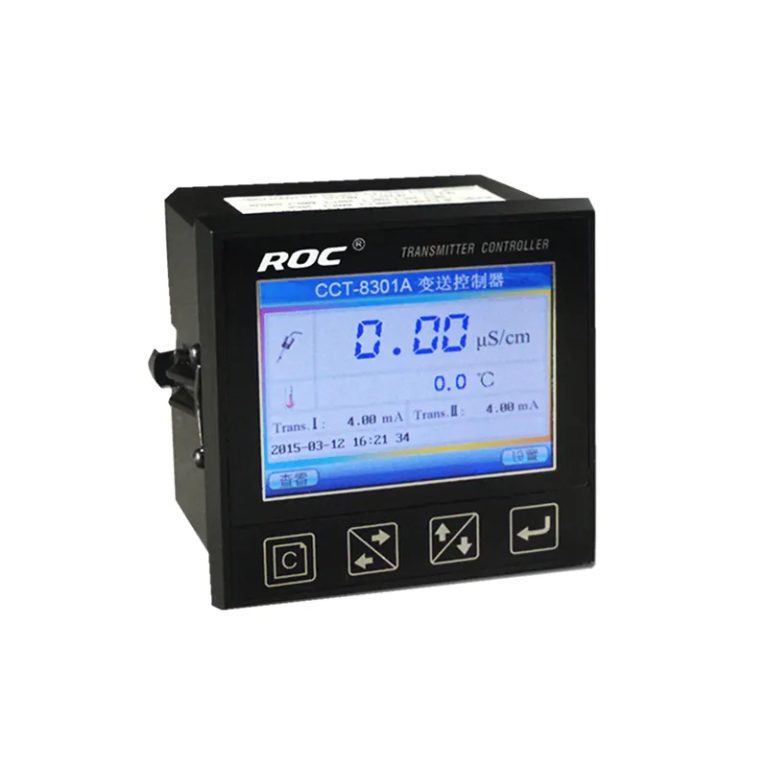
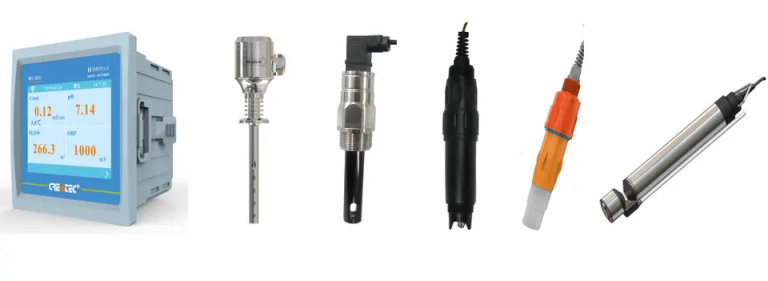
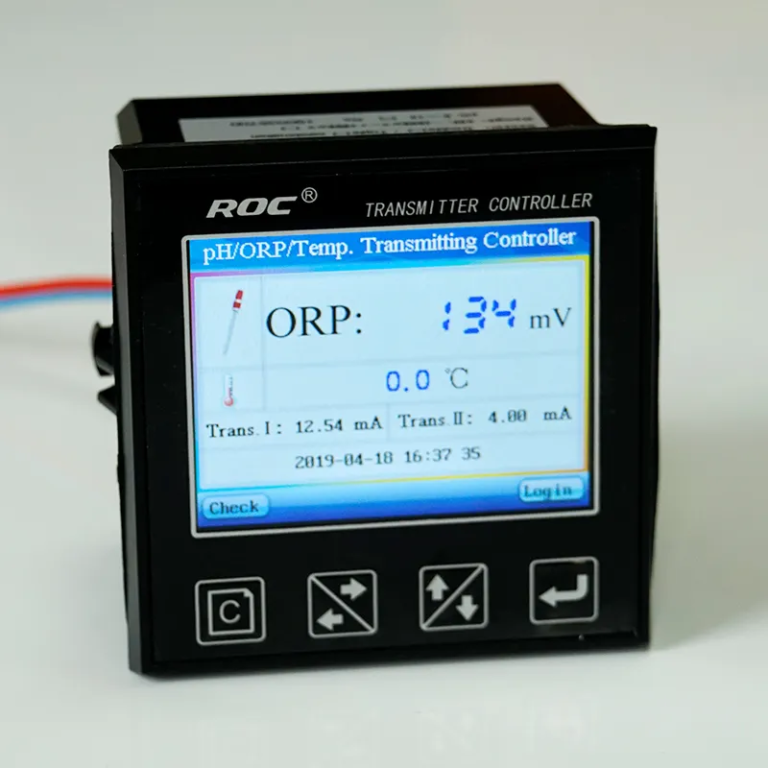
Shanghai ChiMay dissolved oxygen transmitter systems employ this technology, providing:
- Maintenance-free operation for up to 12 months in typical cell culture applications
- No oxygen consumption during measurement, ensuring accuracy in low-volume bioreactors
- Pre-sterilization capability enabling single-use bioreactor integration
- Instant response to DO changes, critical for high-cell-density cultures
Comparative performance data:
| Parameter | Polarographic | Optical |
|---|---|---|
| Response time | 60-120 seconds | 10-30 seconds |
| Drift (per month) | 2-5% | <1% |
| Maintenance frequency | Weekly | Quarterly |
| Single-use compatibility | No | Yes |
| Calibration stability | 7-14 days | 30-90 days |
GMP Compliance Considerations
Regulatory Requirements for DO Monitoring
ATMP manufacturing under GMP conditions requires DO monitoring systems that provide:
Real-time measurement: Process Analytical Technology (PAT) guidance from FDA and EMA encourages continuous monitoring with appropriate process controls. DO sensors must provide continuous data enabling real-time process adjustment.
Complete documentation: Electronic batch records must include DO data with full audit trails per 21 CFR Part 11. Sensor systems must support automated data capture without manual transcription.
Traceability: Calibration records must demonstrate traceability to national or international measurement standards. Documentation must support regulatory inspections and product release decisions.
Sensor Validation Requirements
Per ICH Q2(R1) and USP <1220>, DO sensor validation encompasses:
- Accuracy: Comparison against Winkler titration or certified reference materials
- Precision: Repeatability under identical conditions
- Linearity: Response across the expected measurement range
- Robustness: Performance under challenging process conditions
- Stability: Calibration retention over intended use period
Shanghai ChiMay optical DO sensors meet these requirements with complete validation documentation packages including IQ/OQ/PQ protocols, calibration procedures, and installation qualification checklists aligned with ISPE Good Practice Guide recommendations.
Total Cost Analysis
5-Year Lifecycle Cost Comparison
| Cost Category | Polarographic | Optical | Savings |
|---|---|---|---|
| Sensor capital | USD 45,000 | USD 85,000 | -USD 40,000 |
| Calibration gas/consumables | USD 120,000 | USD 15,000 | USD 105,000 |
| Technician labor | USD 150,000 | USD 45,000 | USD 105,000 |
| Process deviation costs | USD 80,000 | USD 25,000 | USD 55,000 |
| Replacement sensors | USD 200,000 | USD 75,000 | USD 125,000 |
| Total 5-Year TCO | USD 595,000 | USD 245,000 | USD 350,000 |
Key finding: While optical sensors require 89% higher initial investment, total lifecycle costs are 59% lower due to reduced maintenance requirements and improved process stability.
Selection Decision Framework
When to Choose Optical Sensors
Optical DO sensors are recommended for:
- Long-duration cultures (>7 days) where sensor stability is critical
- Single-use bioreactor systems increasingly deployed in ATMP manufacturing
- High-cell-density processes where oxygen transfer limitations are pronounced
- Regulated manufacturing requiring comprehensive electronic documentation
- Reduced maintenance operations where staffing constraints exist
When Polarographic Sensors Remain Appropriate
Polarographic sensors may be appropriate for:
- Short-duration cultures with frequent sensor replacement
- Traditional stainless steel bioreactors with established polarographic infrastructure
- Budget-constrained facilities with existing polarographic expertise
- Applications requiring wide measurement ranges beyond optical sensor specifications
Conclusion
Selecting the right dissolved oxygen sensor for ATMP manufacturing requires careful evaluation of technical performance, compliance requirements, and total cost of ownership. Optical sensor technology from Shanghai ChiMay delivers superior performance for modern biopharmaceutical applications, with 10x longer calibration stability, single-use bioreactor compatibility, and significantly reduced lifecycle costs.
The combination of technical advantages—faster response time, no oxygen consumption, maintenance-free operation—and economic benefits—59% lower 5-year TCO—makes optical DO monitoring the clear choice for facilities manufacturing advanced therapy medicinal products under GMP conditions.
For cell culture applications requiring precise dissolved oxygen control, Shanghai ChiMay optical dissolved oxygen transmitters provide the reliability, accuracy, and regulatory compliance that modern biopharmaceutical manufacturing demands.
Shanghai ChiMay bioprocess specialists provide sensor selection consultation and process optimization support for ATMP manufacturing applications.