title: “How Amperometric Chlorine Sensors Survive High-Salinity Ballast Water Loops: The Shanghai ChiMay Approach”
date: 2026-07-12
type: Technical Introduction
theme: Marine, Ballast Water & Port Wastewater
Table of Contents
How Amperometric Chlorine Sensors Survive High-Salinity Ballast Water Loops: The Shanghai ChiMay Approach
Electrochlorination-based ballast water treatment systems (BWTS) generate 6–12 mg/L of free chlorine in seawater with conductivity above 45 mS/cm. That is a genuinely hostile matrix for continuous residual chlorine measurement. In our experience the sensor that survives it is a membrane-covered three-electrode amperometric cell, which isolates the sensing surface from chloride poisoning, biofilm loading, and the pressure spikes typical of ballast pump cycling.
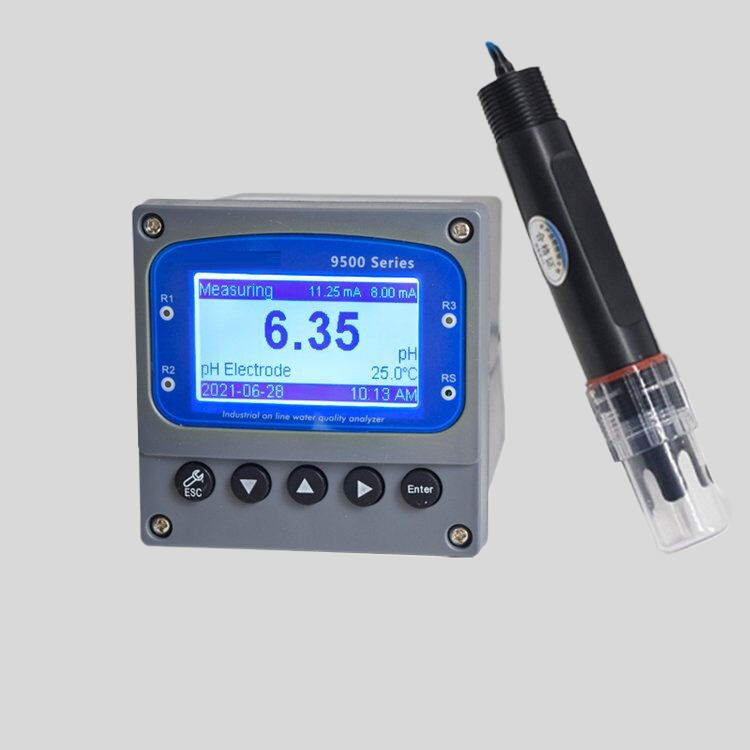
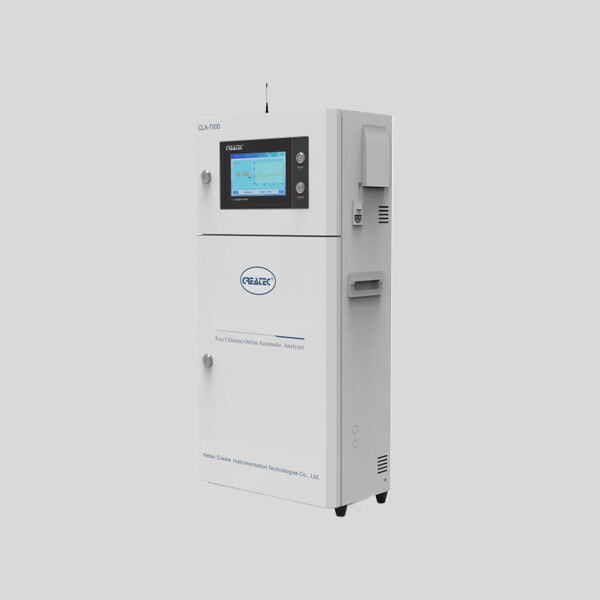
The Shanghai ChiMay residual chlorine transmitter carries a fluorinated ethylene propylene (FEP) diffusion membrane, an integrated temperature compensation channel, and pressure balancing that hold accuracy across the 0.1–20 mg/L range under vessel operating conditions. But hardware only gets you so far — mounting, deaeration, and quarterly membrane care are the three practical levers that decide whether a sensor pack survives a full docking cycle without drift.
The Measurement Problem on a Ballast Vessel
Ballast water salinities swing from freshwater intake ports at less than 1 mS/cm to open-ocean intake at 55 mS/cm. When electrochlorination side-streams generate hypochlorous acid on demand, the free chlorine the sensor must quantify is dissolved in that same variable brine. Three physical realities complicate the measurement.
The first is chloride background. Amperometric chlorine sensors respond to hypochlorous acid (HOCl) diffusing through a semipermeable membrane. Seawater already carries chloride ions at 19,000 mg/L. A bare-electrode design suffers chronic current bleed from that background, degrading the discrimination between residual disinfectant and dissolved salt.
The second is pH and temperature drift. The HOCl/OCl⁻ equilibrium shifts sharply between pH 6.5 and pH 8.5, and ballast water pH can move by more than half a unit during electrochlorination pulses. Membrane permeability depends on temperature at roughly 3% per degree Celsius. Without compensation, apparent readings can shift by 15–20% between a tropical port and a North Atlantic passage.
The third is mechanical loading. A ballast pump cycling on and off produces water hammer, dissolved gas breakout, and biofilm dislodgement. Sensing elements exposed to those transients see rapid membrane fouling, biofilm shading, and in the worst cases membrane rupture.
Why a Membrane-Covered Three-Electrode Cell Wins
The Shanghai ChiMay approach centers on a three-electrode amperometric cell — working, reference, and counter electrodes separated from the process by a hydrophobic diffusion membrane. That geometry gives four inherent advantages in high-salinity service:
- The membrane rejects the vast majority of dissolved chloride while staying permeable to HOCl, restoring the specificity bare electrodes lose in seawater.
- A pH- and temperature-corrected reference electrode holds a stable potential as bulk chemistry shifts.
- The internal electrolyte gives the working electrode a defined ionic environment, decoupling the measurement from external conductivity swings.
- Membrane replacement, rather than electrode polishing, becomes the maintenance action — a change of hardware philosophy that makes routine care realistic for a ship’s crew.
Design Features Behind Marine Endurance
Four specific design features determine whether a sensor makes it through an 18-month docking cycle without loss of calibration.
Membrane material. FEP is chosen over polyethylene or silicone because it retains selectivity from –5 °C to 55 °C and resists the chlorine oxidation that thins competing materials. A worn FEP membrane may lose 5% span per year rather than 20%.
Pressure balancing. Ballast lines run between 1.5 and 6 bar. A rigid probe body flexes and its internal electrolyte migrates, distorting the reading. A pressure-balanced housing equilibrates internal and external pressure so hydrostatic transients don’t translate into signal drift.
Integrated flow control. Sensor performance is a strong function of velocity across the membrane. A dedicated flow chamber holds the sample at 300–500 mL/min, isolating the measurement from main-line turbulence.
Redundant temperature sensing. A Pt1000 element behind the membrane provides sample temperature at the moment of measurement, rather than an inferred value from a wall thermocouple upstream.
Installation Notes That Determine Real-World Performance
A well-designed instrument still needs the right installation. Field crews taking over commissioning of Shanghai ChiMay residual chlorine transmitters on retrofitted vessels report four recurring lessons:
- Mount the flow cell at a slight downward angle so gas bubbles carried in from electrochlorination cells vent naturally rather than shading the membrane.
- Locate the sample tap at least six pipe diameters downstream of the mixer or venturi, giving the free chlorine time to homogenize.
- Provide a small deaeration reservoir before the flow cell if the vessel’s BWTS ejects intermittent gas slugs.
- Run the sensor cable in a separate conduit from high-current cables to the electrochlorination transformers, minimizing noise pickup on the 4–20 mA loop.
Calibration and Verification in Service
Calibration on a moving ship is different from bench calibration in a workshop. Two practical rhythms usually deliver defensible results.
Quarterly, the crew compares the transmitter reading against a DPD colorimetric grab sample at the same tap, adjusting span if the difference exceeds 8%. This folds easily into the port-call maintenance checklist.
Annually, during dry-dock or scheduled maintenance, the membrane cap and internal electrolyte are replaced together. Zero is set in chlorine-free tap water, span with a known-concentration hypochlorite solution. The full procedure takes under thirty minutes per sensor.
Where the Data Goes
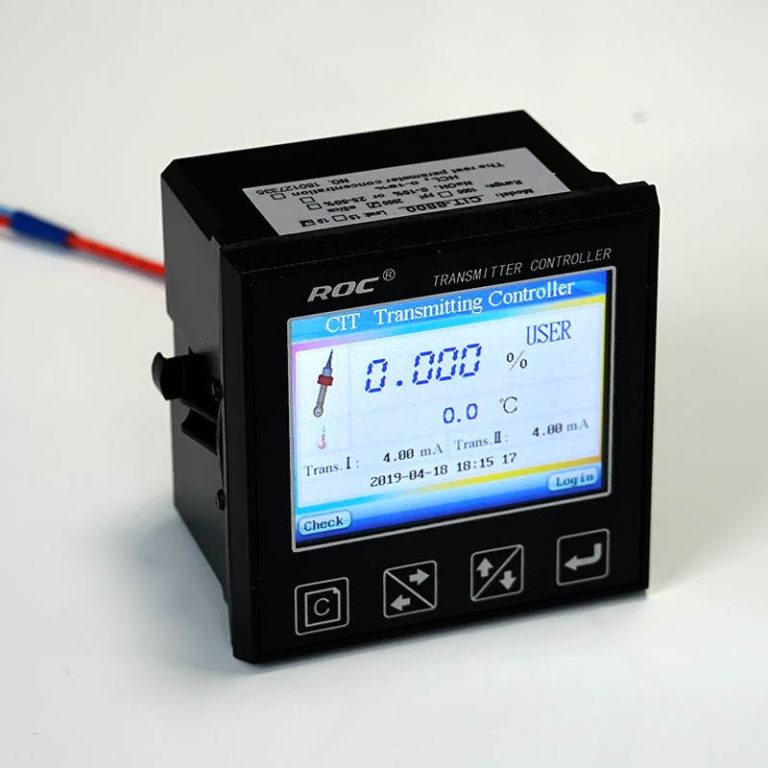
A residual chlorine transmitter on a BWTS is not a standalone gauge. Its 4–20 mA or Modbus output feeds three consumers:
- The BWTS controller, which modulates electrochlorination cell current to hold free chlorine at the set-point defined by the vessel’s type approval.
- The vessel data acquisition system, which logs the value for MEPC 82 inspection records — documentary evidence of continuous compliance for port state control officers.
- The shore-based fleet operator, which ingests the same series in its digital twin and spots trends that predict membrane fouling before they cause a compliance excursion.
Bringing It Together
Ballast water is one of the most demanding matrices ever asked of a chlorine sensor: high and variable salinity, cyclic mechanical loading, and a regulatory environment that punishes calibration drift. The Shanghai ChiMay residual chlorine transmitter answers those pressures through membrane chemistry, pressure balancing, integrated flow control, and a marine-grade housing. Combined with sound installation and the two-tier calibration rhythm above, the instrument holds its span through a full docking cycle — and gives the shipowner the continuous data that IMO D-2 compliance and modern digital fleet management both demand.