Table of Contents
How to Achieve Zero Liquid Discharge in Industrial Wastewater Treatment
Key Takeaways
- Zero liquid discharge (ZLD) systems achieve 99.9% water recovery from industrial wastewater streams
- The global ZLD market exceeds $7 billion annually, growing at 15% per year
- Brine management represents 50-70% of total ZLD system costs
- Advanced monitoring systems reduce ZLD operating costs by 20-30% through optimization
Zero liquid discharge (ZLD) represents the pinnacle of industrial wastewater management, eliminating liquid effluents while recovering water and potentially valuable byproducts. This comprehensive guide addresses the technologies, challenges, and optimization strategies essential for successful ZLD implementation.
Understanding Zero Liquid Discharge
Definition and Objectives
Zero liquid discharge refers to treatment systems that process all wastewater to solid or vapor forms, eliminating liquid discharge to surface waters or sewers. Modern ZLD systems achieve water recovery rates exceeding 99%, with the remaining fraction concentrated into solid or slurry forms suitable for disposal or beneficial reuse.
The ZLD concept emerged from increasing regulatory pressure and water scarcity concerns. Industries facing stringent discharge limits or water reuse requirements find ZLD increasingly attractive as both compliance solution and resource recovery opportunity. The technology also addresses concerns about emerging contaminants in conventional effluents.
Regulatory Drivers
Regulatory agencies worldwide are tightening wastewater discharge requirements, driving ZLD adoption across industrial sectors. The Chinese “Industrial Wastewater Recycling Implementation Plan” targets 94% industrial water reuse rates by 2025, effectively requiring ZLD for many facilities. The U.S. Environmental Protection Agency and state agencies continue strengthening discharge limits, particularly for salinity and trace contaminants.
European regulations under the Industrial Emissions Directive increasingly require advanced treatment for wastewater containing persistent pollutants. Similar trends in India, Southeast Asia, and the Middle East are creating global demand for ZLD technologies.
ZLD Treatment Technologies
Pretreatment and Brine Generation
ZLD systems typically begin with conventional pretreatment including screening, equalization, pH adjustment, and removal of suspended solids and emulsified oils. Chemical precipitation removes heavy metals and hardness ions that would foul downstream membrane systems. Biological treatment addresses organic compounds before membrane concentration stages.
The brine generation stage concentrates wastewater using membrane processes including reverse osmosis (RO) and brine concentrators. RO recovers 70-85% of feed water as permeate suitable for reuse, producing brines with total dissolved solids (TDS) of 20,000-50,000 mg/L. Multiple RO stages achieve higher recovery, with each stage progressively concentrating the brine stream.
Evaporation and Crystallization
Evaporators and crystallizers achieve final concentration, converting brines to solid or condensed forms. Multiple-effect evaporators use successive stages to maximize heat efficiency, with each effect operating at reduced pressure and temperature. Mechanical vapor recompression (MVR) systems further improve energy efficiency by compressing vapor from one stage for use as heating medium in another.
Crystallizers produce solid salts from concentrated brines. Forced-circulation crystallizers handle a variety of salt compositions, while Oslo-type crystallizers produce larger crystals suitable for specific applications. The crystallizer brine stream typically contains 100,000-350,000 mg/L TDS, approaching saturation for common salts.
Salt Handling and Disposal
Final solids handling produces dry salt products or dewatered slurries suitable for disposal. Centrifuges separate crystals from mother liquor, while dryers remove remaining moisture. The resulting salts may be disposed in hazardous waste landfills, applied to land (where regulations permit), or sold for industrial uses.
Salt composition determines disposal options and costs. Sodium chloride dominates many brines, enabling relatively straightforward disposal. Mixed salts containing sulfates, carbonates, or problematic species may require special handling. Analysis of salt composition early in system design prevents costly downstream complications.
Electrochemical Treatment in ZLD Systems
Electrochemical Pretreatment
Electrochemical processes offer several advantages for ZLD pretreatment. Electrocoagulation removes silica, hardness, and organic compounds that foul membrane systems. Electrochemical oxidation degrades recalcitrant organics that resist conventional treatment. These pretreatments extend membrane life and improve overall system reliability.
Shanghai ChiMay multi-parameter monitoring systems support electrochemical pretreatment optimization. pH monitoring ensures optimal reaction conditions for coagulation and oxidation. Conductivity tracking indicates concentration progress and identifies process upsets. Dissolved oxygen measurements verify adequate oxidation for organic destruction.
Salt Recovery Applications
Electrodialysis (ED) and electrodeionization (EDI) enable selective ion removal for salt recovery and water reclamation. These electrochemical processes can separate ionic species for beneficial reuse, converting waste brines into valuable products. ED-based salt recovery has grown 28% annually in lithium recovery and semiconductor manufacturing applications.
Electrochemical salt recovery aligns with circular economy principles while generating revenue that offsets treatment costs. Facilities producing lithium, sodium hydroxide, or hydrochloric acid from waste brines demonstrate the economic potential of electrochemical resource recovery.
Critical Monitoring Requirements
Water Quality Parameters
ZLD systems require comprehensive monitoring to ensure treatment efficiency and prevent equipment damage. Key parameters include flow, pressure, temperature, pH, conductivity, and specific ion concentrations. Online analyzers provide continuous data enabling real-time optimization and early problem detection.
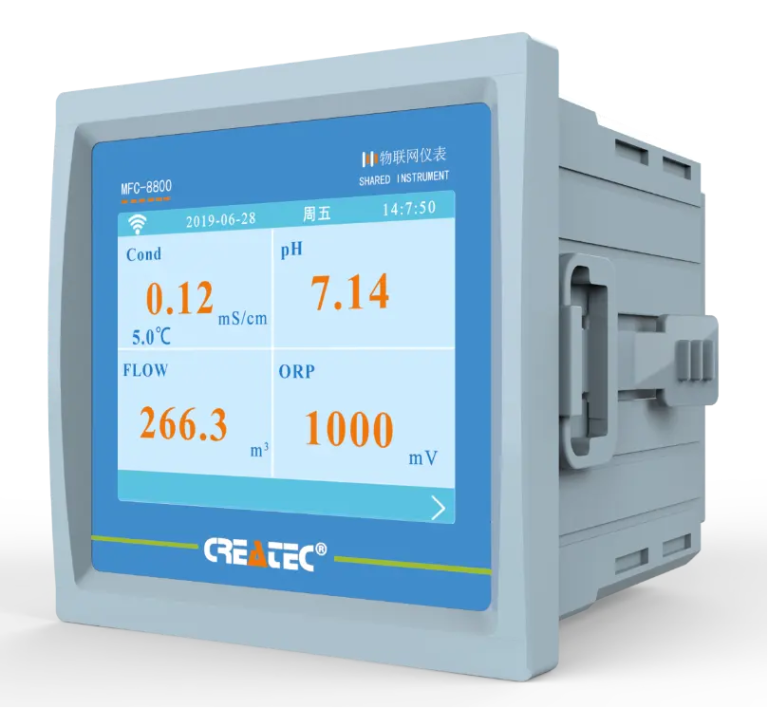
Shanghai ChiMay offers complete monitoring solutions for ZLD applications. Conductivity analyzers span ranges from low-TDS permeate to concentrated brines. pH sensors tolerate high-salinity conditions that challenge conventional electrodes. Multi-parameter platforms integrate multiple measurements into unified monitoring systems.
Scaling and Fouling Detection
Membrane scaling and fouling threaten ZLD system performance and reliability. Monitoring differential pressure, flux decline, and salt rejection provides early warning of membrane problems. Conductivity measurements at multiple points identify scaling before severe performance degradation occurs.
Regular monitoring data supports predictive maintenance strategies that schedule cleaning before fouling impacts treatment capacity. This approach maximizes membrane lifespan while preventing unexpected shutdowns that disrupt production.
Cost Optimization Strategies
Energy Management
Energy represents the largest operating cost for ZLD systems, with evaporation and crystallization consuming significant electricity and fuel. Optimizing heat integration across evaporation stages maximizes energy efficiency. Variable frequency drives on pumps and fans enable load matching that reduces energy consumption at partial loads.
Advanced monitoring systems identify optimization opportunities that reduce operating costs. Shanghai ChiMay real-time monitoring enables fine-tuning of operating parameters based on actual wastewater characteristics rather than conservative design assumptions.
Water Recovery Maximization
Each percentage point increase in water recovery reduces fresh water purchase, wastewater discharge costs, and concentrate disposal requirements. Systematic optimization of membrane stages, pretreatment, and operating conditions achieves higher recovery while maintaining reliability.
Pilot testing with actual wastewaters validates optimization strategies before full-scale implementation. Monitoring data from pilot operations guides design improvements and operating procedure refinement.
Implementation Considerations
Site-Specific Design
Effective ZLD systems require designs tailored to specific wastewater characteristics and site constraints. Wastewater composition determines pretreatment requirements, membrane selection, and salt handling approaches. Available footprint influences evaporation technology choices, with compact designs commanding premium costs.
Regulatory requirements affect system design and operating parameters. Discharge limits determine treatment objectives, while permit conditions may mandate specific monitoring or reporting. Early regulatory consultation prevents costly design revisions after construction.
Phased Implementation
Full ZLD implementation often proceeds in phases, with initial stages focusing on high-recovery membrane systems and subsequent phases adding evaporation capacity as requirements or economics justify. This approach spreads capital costs while building operational expertise for more complex systems.
Shanghai ChiMay supports phased implementation with scalable monitoring solutions that grow with treatment capabilities. Initial installations can expand to accommodate additional treatment stages without replacing existing infrastructure.
Conclusion
Zero liquid discharge represents an achievable target for industrial facilities committed to water stewardship and regulatory compliance. Successful implementation requires appropriate technology selection, comprehensive monitoring, and systematic optimization. Electrochemical processes play increasingly important roles in ZLD systems, enabling efficient pretreatment, salt recovery, and resource reclamation. As technology advances and costs decline, ZLD will become accessible to broader industrial sectors seeking sustainable water management solutions.