Table of Contents
Shanghai ChiMay Conductivity Sensors: Enabling Precision Monitoring in Circular Water Systems
Key Takeaways
- Conductivity measurement is fundamental to monitoring dissolved solid concentrations in recycling systems
- Precision conductivity sensors enable 99.5% accuracy in concentration monitoring
- Real-time conductivity data supports predictive maintenance and process optimization
- Modern sensors offer multi-parameter capabilities for comprehensive water quality monitoring
In circular water systems, where wastewater is treated and recycled for reuse, maintaining precise control over water chemistry is essential. Conductivity sensors play a central role in this process, providing real-time measurements that inform treatment decisions and ensure recycled water meets quality specifications. Shanghai ChiMay has developed advanced conductivity sensing technology specifically designed for the demanding requirements of industrial water recycling applications.
Understanding Conductivity Measurement in Water Systems
Electrical conductivity measures water’s ability to conduct electrical current, which depends directly on the concentration of dissolved ions. In water recycling applications, conductivity serves as a proxy for Total Dissolved Solids (TDS), allowing operators to track mineral concentrations throughout the treatment process. Higher conductivity indicates higher dissolved solid content, which may require additional treatment or blending before reuse.
The relationship between conductivity and TDS varies depending on the specific ions present in the water. However, for most industrial applications, a conversion factor of approximately 0.67 provides reasonable TDS estimates from conductivity measurements. Advanced multi-parameter sensors from Shanghai ChiMay incorporate this conversion automatically, providing both conductivity and TDS readings from a single instrument.
Technical Specifications of Modern Conductivity Sensors
Contemporary conductivity sensors achieve remarkable precision through advanced electrode design and signal processing. Four-electrode technology eliminates polarization effects that can accuracy in traditional two-electrode designs, enabling stable measurements across a wide range from 0.1 μS/cm to 200 mS/cm.
Temperature compensation is another critical feature of modern sensors. Conductivity measurements are temperature-dependent, with most waters showing a 2% per °C change in conductivity near room temperature. Without compensation, temperature variations can create apparent changes in dissolved solid concentration that do not reflect actual water chemistry. Shanghai ChiMay sensors incorporate automatic temperature compensation, ensuring accurate readings regardless of operating conditions.
Applications in Circular Water Management
In closed-loop water systems, conductivity sensors serve multiple critical functions. During the treatment process, sensors verify that dissolved solid removal is proceeding as expected, triggering alerts when concentrations exceed target values. This early warning capability prevents poor-quality water from reaching downstream users and damaging equipment.
In cooling tower applications, conductivity monitoring controls blowdown cycles to maintain acceptable dissolved solid concentrations. Without such control, minerals would concentrate through evaporation until scale formation occurs on heat exchange surfaces. By maintaining conductivity within specified limits, sensors enable efficient cooling tower operation while minimizing freshwater consumption and wastewater discharge.
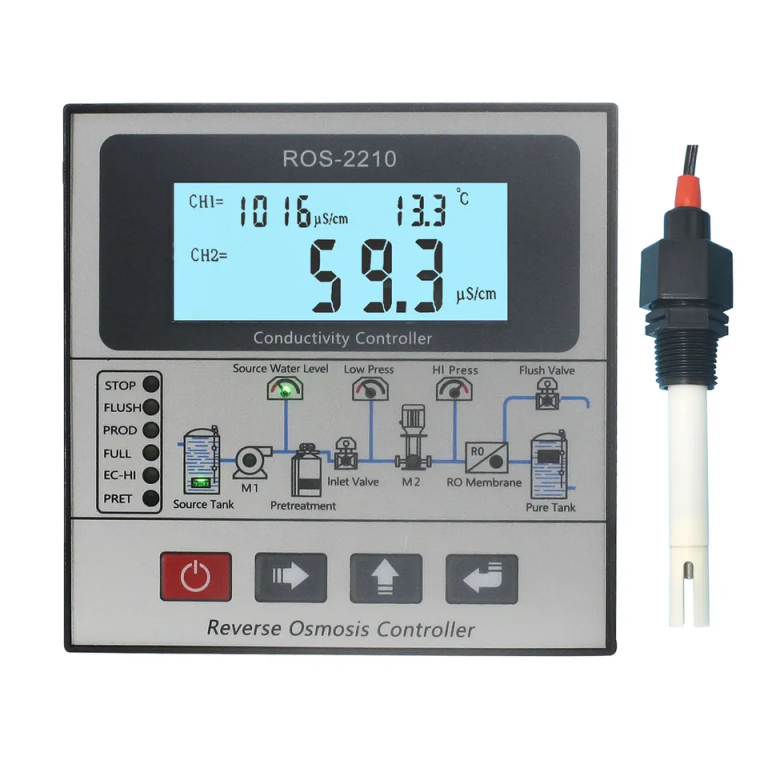
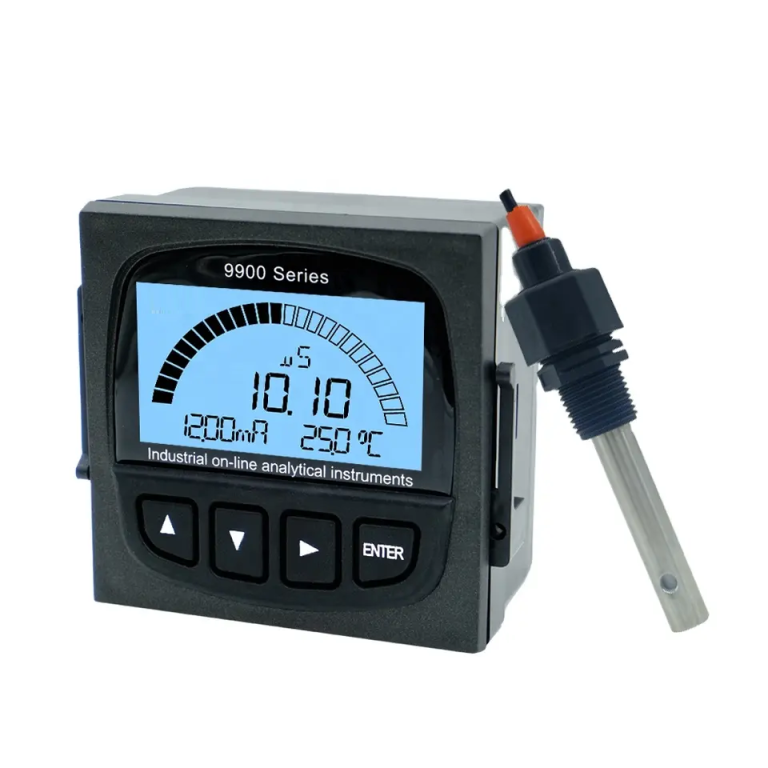
Shanghai ChiMay offers conductivity sensors suitable for both inline installation in treatment pipelines and portable use for field verification. Inline sensors provide continuous monitoring that supports automated control systems, while portable instruments enable periodic checks and manual troubleshooting.
Integration with Industrial Control Systems
Modern conductivity sensors communicate with control systems through standard industrial protocols including Modbus RTU, Modbus TCP, and 4-20 mA analog signals. This connectivity enables seamless integration with supervisory control and data acquisition (SCADA) systems, programmable logic controllers (PLCs), and distributed control systems (DCS).
Data integration allows conductivity measurements to drive automated responses to changing water chemistry. When conductivity approaches setpoints, control systems can activate additional treatment processes, adjust flow rates, or initiate blowdown cycles. This automation reduces operator burden while ensuring consistent water quality.
Cloud connectivity through IoT platforms extends these capabilities to remote monitoring and advanced analytics. Shanghai ChiMay’s IoT-enabled sensors transmit data to cloud servers where artificial intelligence algorithms can identify trends and predict future conditions. Predictive analytics enable proactive maintenance that prevents problems before they occur.
Maintenance and Calibration Best Practices
Maintaining sensor accuracy requires regular calibration and cleaning. Calibration should be performed using certified conductivity standards traceable to national measurement institutes. For most industrial applications, calibration at two points spanning the expected measurement range provides sufficient accuracy.
Sensor cleaning schedules depend on the application and water quality. In applications with high suspended solid content, sensors may require weekly cleaning to remove deposits that affect electrode surfaces. Automated cleaning systems using compressed air or water jets can extend maintenance intervals significantly.
Shanghai ChiMay provides comprehensive support for sensor installation, calibration, and maintenance. Their technical experts help customers establish maintenance procedures optimized for their specific applications, ensuring long-term sensor performance and measurement reliability.
Conclusion
Precision conductivity monitoring is indispensable for successful circular water system operation. Sensors from Shanghai ChiMay provide the accuracy, reliability, and connectivity required for modern industrial applications. By investing in quality conductivity measurement, facilities can optimize their water recycling operations while protecting equipment and ensuring product quality.