Table of Contents
Key Takeaways
The digital economy’s insatiable demand for computing resources has driven explosive growth in data center construction and expansion, with global data center water consumption reaching approximately 200 billion gallons annually according to the International Energy Agency (IEA) 2024 report. Cooling systems responsible for maintaining optimal operating temperatures in servers and infrastructure equipment represent the largest water consumption category in most data center facilities. The strategic management of cooling water quality directly influences operational efficiency, equipment reliability, and facility operating costs in ways that merit serious executive attention.
Economic Impact of Cooling Water Quality
The relationship between cooling water quality and energy consumption creates substantial economic implications for data center operators seeking to optimize facility performance. Scale formation on heat exchange surfaces acts as thermal insulation, forcing cooling systems to work harder to achieve target temperatures. According to the Electric Power Research Institute (EPRI), scale accumulation of just 1 millimeter thickness increases energy consumption by approximately 10% in affected heat exchangers. In large-scale data center operations consuming 10-50 megawatts of power, this efficiency degradation translates to incremental energy costs exceeding $500,000 annually.
Biofouling presents equally significant challenges through microbial growth that restricts flow passages, corrodes equipment surfaces, and creates Legionella safety risks. The ASHRAE Journal (2024) reports that uncontrolled biofouling reduces heat transfer efficiency by 20-40% while increasing pumping energy requirements due to flow restrictions. Remediation of severe biofouling incidents requires system shutdowns that disrupt operations and potentially impact service level agreements with enterprise customers.
Chemical treatment programs offer partial solutions to scale and biofouling challenges but introduce their own cost and risk considerations. Overdosing wastes treatment chemicals and may damage equipment materials, while underdosing fails to prevent fouling accumulation. The American Society of Heating, Refrigerating and Air-Conditioning Engineers (ASHRAE) guidelines recommend continuous monitoring of key water quality parameters to optimize treatment programs and minimize operating costs. Investment in comprehensive water quality analyzer systems enables data-driven treatment optimization that reduces chemical consumption while maintaining effective fouling control.
Strategic Investment Analysis for Executive Decision-Makers
The capital investment required for advanced cooling water quality monitoring systems must be evaluated against the operational cost savings, reliability improvements, and risk mitigation benefits they provide. Executive decision-makers should consider multiple value drivers when assessing monitoring technology investments, including direct energy savings, maintenance cost reductions, equipment lifetime extension, and business continuity protection.
Direct energy savings from improved cooling efficiency represent the most easily quantified benefit of water quality monitoring investments. The U.S. Department of Energy (DOE) data center energy efficiency study (2024) demonstrates that optimized cooling water treatment reduces overall facility energy consumption by 12-18% in facilities with previously uncontrolled scaling and biofouling. For a 20-megawatt facility with electricity costs of $0.08/kWh, this efficiency improvement translates to annual savings exceeding $1.6 million.
Maintenance cost reductions and equipment lifetime extension provide additional value through reduced service requirements and delayed capital equipment replacement. Heat exchangers, cooling towers, and associated pumping equipment experience significantly shorter service lives when operated with poor water quality due to corrosion, erosion, and mechanical degradation. The National Association of Corrosion Engineers (NACE) 2024 report estimates that proper water quality management extends critical equipment lifetime by 30-50%, deferring capital replacement costs that may exceed $10 million in large-scale facilities.
Technology Selection for Data Center Cooling Applications
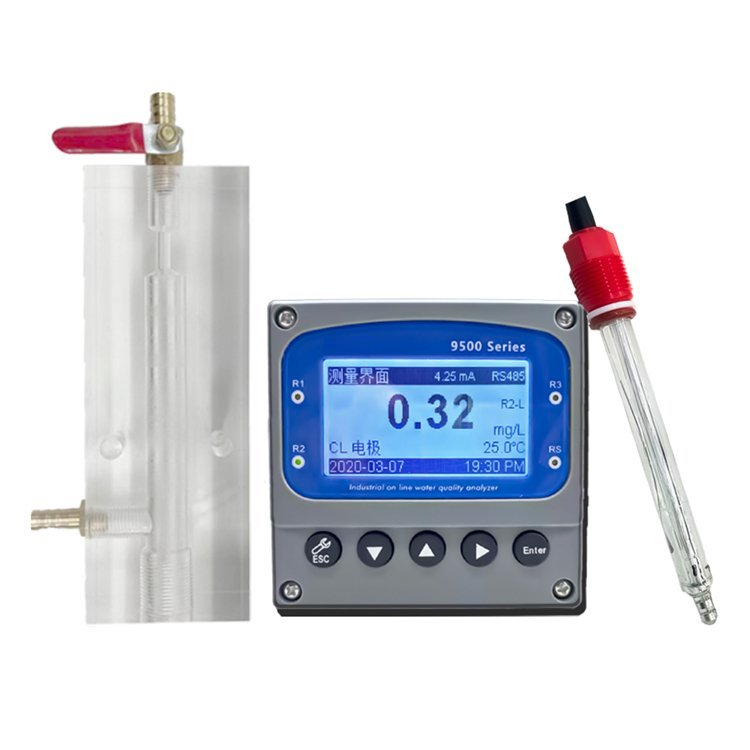
The selection of water quality monitoring technology for data center cooling applications must address the specific challenges of high-flow cooling systems operating under demanding thermal loads. Key parameters requiring continuous monitoring include conductivity for scale prediction, pH for corrosion control, online turbidity sensor readings for filtration performance, and residual chlorine sensor or ORP sensors for biological growth control. The integration of multiple sensor technologies into comprehensive monitoring platforms provides the data foundation for automated treatment optimization.
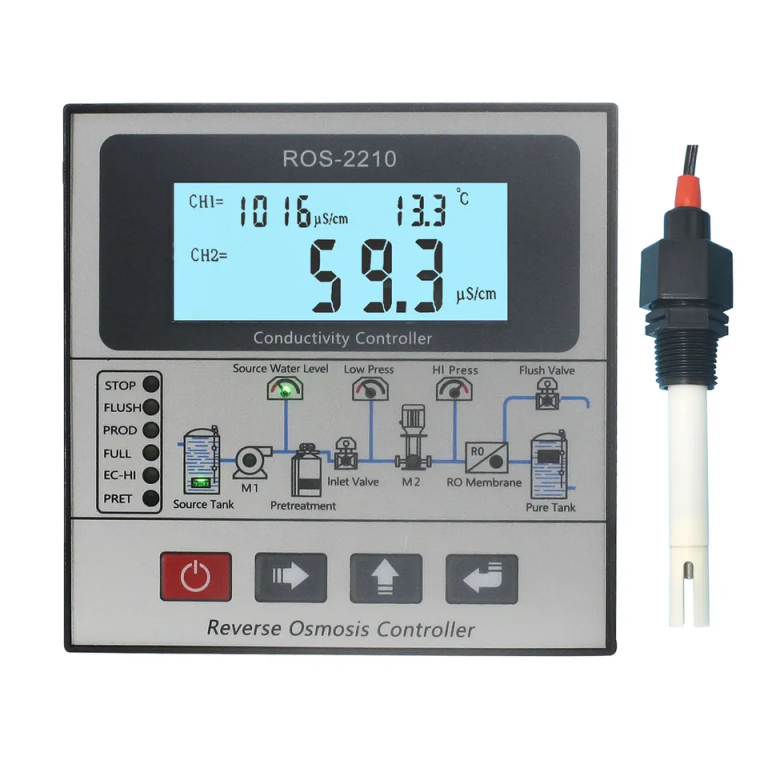
In-line conductivity meter technology provides the primary measurement for scaling tendency assessment, enabling predictive control that adjusts treatment programs before scale formation occurs. Modern conductivity sensors achieve measurement accuracy of ±0.5% with long-term stability requiring calibration intervals of 6-12 months. ChiMay’s conductivity measurement platforms incorporate temperature compensation algorithms that ensure accurate scaling predictions regardless of cooling water temperature variations.
Biological growth monitoring requires particular attention in data center applications due to the serious health and safety implications of Legionella contamination. residual chlorine sensor technology provides continuous monitoring of biocide residual concentrations, enabling automated dosing control that maintains effective biological control while minimizing chemical consumption. Research from the Centers for Disease Control and Prevention (CDC) indicates that continuous chlorine monitoring reduces Legionella detection rates by 89% compared to periodic testing approaches.
Risk Management and Business Continuity
The operational continuity implications of cooling system failures create compelling arguments for investment in water quality monitoring capabilities that protect against unplanned downtime. Data center service disruptions carry substantial direct costs through lost revenue, SLA penalties, and customer compensation, while reputational damage may impact future business development for extended periods. The Uptime Institute 2024 failure survey reports that cooling system failures account for 40% of all data center outages, with average downtime costs exceeding $1 million per hour for large facilities.
Predictive failure detection through advanced water quality monitoring enables maintenance activities to be scheduled during planned maintenance windows rather than forcing emergency responses to system failures. Machine learning algorithms analyzing water quality trend data can identify equipment degradation patterns that precede failure events by days or weeks, providing opportunities for proactive intervention. The Gartner research (2024) indicates that predictive maintenance approaches reduce unplanned downtime by 70-80% compared to reactive maintenance strategies.
Regulatory compliance requirements increasingly mandate water quality monitoring and documentation in jurisdictions with environmental discharge permits or occupational health regulations. Legionella prevention requirements under ANSI/ASHRAE Standard 188 establish risk assessment and monitoring obligations that require documented evidence of water quality control effectiveness. Executive leadership must ensure that cooling water monitoring programs satisfy regulatory requirements while optimizing operational performance.
Implementation Success Factors
The successful implementation of cooling water quality monitoring systems in data center environments requires attention to sensor placement, communication infrastructure, and integration with existing building management systems. Sensor installation locations should provide representative measurements of circulating water quality while enabling convenient access for calibration and maintenance activities. Multiple sensor locations distributed throughout the cooling system provide more comprehensive monitoring coverage and enable identification of localized problems.
Communication and data management infrastructure must support the real-time data transmission, storage, and analysis requirements of advanced monitoring systems. Cloud-based monitoring platforms provide remote visibility and alarming capabilities that enable facility managers to oversee cooling water quality across multiple locations from centralized operations centers. The International Data Corporation (IDC) market analysis (2024) reports that cloud-connected monitoring solutions deliver 35% faster problem identification and resolution compared to localized monitoring approaches.
Change management and staff training programs significantly influence the value realization from water quality monitoring investments. Operations personnel must understand the significance of water quality parameters, recognize alarm conditions, and implement appropriate response procedures when monitoring data indicates potential problems. Investment in comprehensive training programs ensures that monitoring capabilities translate into operational improvements rather than generating data that goes uninterpreted.
Conclusion
The strategic importance of cooling water quality management in data center operations demands executive attention to the economic, operational, and risk implications of monitoring investment decisions. Advanced water quality analyzer technology delivers measurable value through energy efficiency improvements, equipment lifetime extension, and operational continuity protection that justify capital investment with attractive return profiles.
Executive decision-makers should evaluate cooling water quality monitoring investments against multiple value dimensions, including direct cost savings, risk mitigation benefits, and strategic positioning advantages. The quantifiable energy savings alone provide ROI periods well within typical capital planning horizons, while risk reduction benefits protect against potentially catastrophic operational disruptions. ChiMay’s expertise in industrial water treatment monitoring supports data center operators seeking to optimize cooling system performance and protect critical business operations.