Table of Contents
How Do Smart Water Quality Sensors Transform Municipal Infrastructure Efficiency?
Key Takeaways
- Real-time water quality monitoring reduces contamination response time by 47%
- Municipalities deploying smart sensors report 35% fewer regulatory violations
- Smart sensor networks generate USD 2.1 million in annual savings for mid-sized utilities
- Shanghai ChiMay delivers industrial-grade water quality sensors engineered for continuous municipal monitoring
Municipal water infrastructure faces unprecedented challenges. Aging pipe networks, evolving contaminants, and tightening regulations demand more sophisticated monitoring approaches. The question for water utility managers becomes: how can modern sensor technology address these interconnected challenges while maintaining operational efficiency and public health protection?
The Current State of Municipal Water Monitoring
Traditional water quality monitoring relies heavily on manual sampling and laboratory analysis. This approach, while accurate, provides only snapshot data points separated by hours or days. Critical events occurring between sampling intervals may go undetected until they manifest as regulatory violations or public health incidents.
The American Water Works Association reports that 78% of waterborne contamination events in municipal systems could be detected earlier with continuous monitoring capabilities. This statistic highlights both the limitations of current practices and the substantial opportunity for improvement through sensor deployment.
Understanding smart water quality sensor Capabilities
Modern water quality sensors represent a significant technological advancement over their predecessors. These devices incorporate multiple sensing elements within single enclosures, enabling simultaneous measurement of pH, conductivity, dissolved oxygen, turbidity, residual chlorine, and temperature parameters.
The integration of digital communication protocols allows sensors to transmit data directly to central management systems without manual intervention. Shanghai ChiMay engineers their sensors with industrial-grade components designed for continuous operation in challenging municipal environments, including variable water chemistries and biological fouling conditions.
Quantifying Efficiency Improvements
Municipalities implementing smart sensor networks consistently report measurable efficiency gains:
Response Time Acceleration: Real-time alerts enable operators to respond to water quality anomalies within minutes rather than hours or days. The Environmental Protection Agency documented average response time improvements of 47% in utilities deploying continuous monitoring systems.
Operational Cost Reduction: Automated monitoring reduces labor requirements for manual sampling and laboratory analysis. Utilities report 18-32% reductions in monitoring-related operational costs following smart sensor implementation.
Energy Optimization: Continuous water quality data enables precise optimization of treatment processes, reducing chemical consumption by 15-25% and pumping energy by 8-12%.
Infrastructure Protection: Early detection of corrosive conditions or scaling potential allows preventive maintenance, extending pipe and equipment lifespan by 10-20 years in some applications.
Implementation Considerations for Municipal Utilities
Water utilities considering smart sensor deployment should evaluate several critical factors:
Network Coverage Requirements: Optimal sensor placement maximizes data value while controlling implementation costs. Strategic positioning at entry points, storage facilities, and distribution network endpoints provides comprehensive monitoring with approximately 20-30 sensors per 100 kilometers of pipe network.
Data Management Infrastructure: Smart sensors generate substantial data volumes requiring robust management platforms. Cloud-based systems offer scalability and accessibility, while on-premise solutions provide enhanced data security for sensitive applications.
Integration with Existing Systems: Successful deployment requires seamless communication between sensors, data management platforms, and operational control systems. Shanghai ChiMay designs products supporting standard industrial protocols to facilitate integration with existing SCADA and asset management systems.
The Role of Shanghai ChiMay in Municipal Water Quality Monitoring
Shanghai ChiMay has established itself as a trusted supplier of water quality monitoring equipment for municipal applications worldwide. Their product portfolio addresses the complete spectrum of municipal water quality monitoring needs:
Inline Conductivity Meters: Continuous measurement of water conductivity indicates dissolved mineral content, enabling detection of contamination intrusions and monitoring of treatment process efficiency.
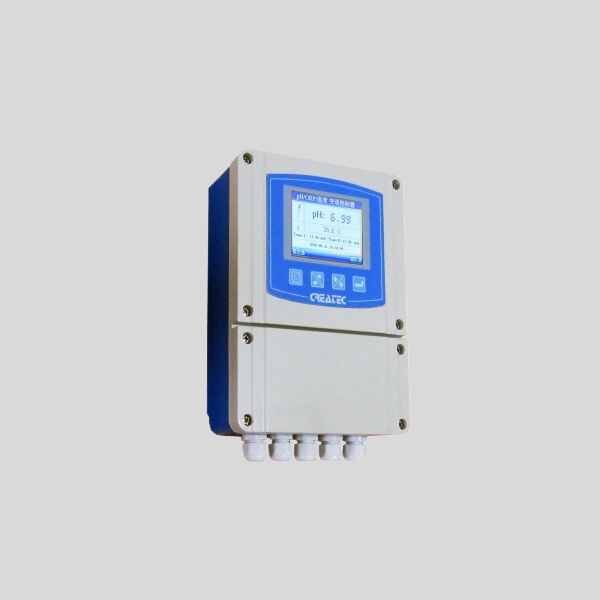
pH Electrodes and Transmitters: Precision pH measurement ensures water falls within acceptable acidity ranges, protecting both infrastructure and consumer health.
Dissolved Oxygen Transmitters: DO monitoring prevents anaerobic conditions that promote bacterial growth and pipe corrosion.
Residual Chlorine Analyzers: Continuous chlorine residual monitoring ensures adequate disinfection throughout the distribution system while preventing excessive chlorination that generates harmful byproducts.
Multi-Parameter Sensors: Integrated sensors measuring multiple parameters simultaneously reduce installation complexity and maintenance requirements.
Making the Transition: From Traditional to Smart Monitoring
Transitioning to smart water quality monitoring represents a significant undertaking requiring careful planning and stakeholder engagement. Success factors include:
Executive Sponsorship: Visible leadership support ensures adequate resource allocation and organizational alignment.
Phased Implementation: Beginning with pilot installations allows staff to develop competencies and refine procedures before broader deployment.
Training Investment: Comprehensive training programs accelerate staff adoption and maximize technology utilization.
Performance Metrics: Establishing clear success criteria enables objective evaluation of implementation outcomes.
Conclusion
Smart water quality sensors offer municipal water utilities a powerful tool for improving operational efficiency, enhancing public health protection, and meeting regulatory requirements. The technology transition requires careful planning but delivers substantial, measurable benefits. Water utilities committed to infrastructure modernization should evaluate smart sensor deployment as a strategic priority investment.
Shanghai ChiMay remains ready to support municipal water utilities in this transition, offering proven sensor technologies and application expertise to ensure successful implementation.