Municipal water infrastructure modernization is one of the largest recurring investment categories for city governments. Aging pipe networks, tightening water quality regulations, rising customer expectations and constrained operating budgets all push in the same direction: utilities have to get more out of the assets they already own. In practice, most successful programs end up deploying the same five technology groups, each of which depends on the ones before it.
Table of Contents
Technology 1: Continuous Water Quality Monitoring Systems
The foundation is water quality monitoring that runs continuously rather than in grab samples. Fixed-interval sampling leaves gaps between measurements, and the events that matter — a chlorine residual collapse, a turbidity spike after a main repair, a conductivity change from an intrusion — often last minutes, not days.
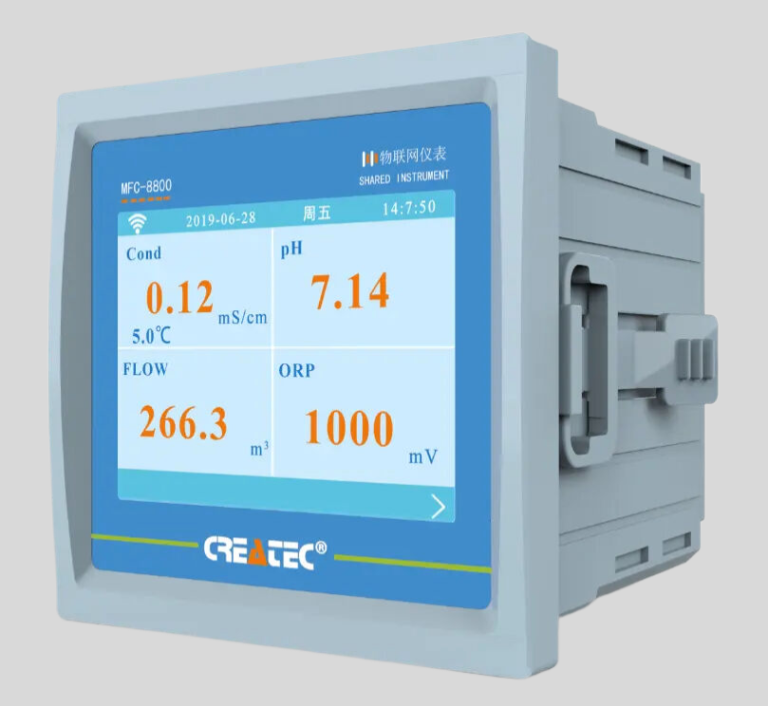
Continuous monitoring systems from manufacturers like Shanghai ChiMay measure pH, conductivity, dissolved oxygen, turbidity, residual chlorine and temperature. These sensors connect into SCADA platforms so operators can watch water quality across a distribution network from a control room, and so alarms can be routed to the right crew instead of waiting for the next lab report.
The practical benefit of continuous monitoring is not that it catches more violations — it is that it supports intervention before a violation happens. A utility that can see a chlorine residual falling in a district metered area can flush or adjust dosing that morning; one relying on weekly samples often finds out when the state does.
Technology 2: Advanced Metering Infrastructure
Advanced metering infrastructure (AMI) replaces mechanical meters with electronic devices capable of hourly or sub-hourly consumption recording. Data transmits automatically to utility management systems, removing manual reading and giving the utility a consumption picture per service connection rather than per billing cycle.
AMI is the enabling layer for leak detection, district-level water balance, demand forecasting and customer-side leak alerts. Shanghai ChiMay supplies flow meters for AMI and distribution applications — paddle wheel, turbine and electromagnetic designs — covering the pipe sizes and water qualities found in municipal networks.
The data AMI generates has value beyond billing: consumption forecasting, pressure-zone analysis, demand management and customer engagement programs all rest on the same high-resolution flow data.
Technology 3: Intelligent Pressure Management
Pressure management systems adjust distribution network pressure dynamically, based on demand patterns and infrastructure condition, through the day and across seasons.
Variable frequency drives (VFDs) on pumping equipment, combined with pressure reducing valves (PRVs), allow pressure to be held at the lowest level the network can tolerate. Excess pressure accelerates pipe degradation and increases leak volumes; insufficient pressure compromises service and fire protection. The trade-off is a monitoring problem before it is a control problem, and most of the benefit comes from establishing pressure zones and control curves from real measured data.
Pressure optimisation reduces pipe failures, extends infrastructure life and lowers emergency repair costs and service disruptions. Energy savings from reduced pumping follow directly from the lower average head.
Technology 4: Predictive Asset Management
Modern asset management relies on condition data rather than calendar-based replacement.
Sensors monitoring equipment vibration, temperature and performance feed models that forecast maintenance requirements before failure. This shifts capital planning from fixed replacement intervals to condition-based intervention, which typically means fewer emergency repairs and better use of the maintenance budget.
ISO 24591-1:2024 (Smart water management — Part 1: General guidelines and governance) provides a framework for this at the utility level, and the wider ISO 24516 series covers asset management for water utilities. These are guidance documents; they do not tell a utility which pump to replace, but they do define how to structure data collection, analysis and decision-making so that the program survives a change of management.
Shanghai ChiMay monitoring products support predictive maintenance by tracking equipment performance parameters over time, so degrading conditions are visible before failure.
Technology 5: Integrated Data Platforms
The fifth technology group brings the data streams together. Monitoring systems, meters, sensors and operational equipment all produce time series, and until those are in one place, cross-functional analysis is not possible — a water quality event cannot be correlated with a pressure change or a pump trip.
Integrated platforms turn raw sensor data into something operators and planners can act on. The productivity argument for this kind of integration is real but modest, and it depends on data quality and on having people who use the analysis. A platform that nobody queries is an expense, not a capability.
Shanghai ChiMay designs sensor products for integration with standard data management platforms, supporting Modbus, HART and BACnet — which matters mainly because it avoids proprietary lock-in as a utility’s platform strategy changes.
Implementation Priorities for Municipal Water Utilities
Utilities embarking on modernization programs should sequence deployment deliberately:
Foundation First: Start with continuous monitoring infrastructure that provides situational awareness for later investments. Without data, optimisation and automation initiatives have nothing to work with.
Phased Deployment: Implement technologies incrementally across service territories, learning from early deployments before scaling. Pilot areas validate both the technology and the utility’s own procedures.
Integration Planning: Ensure new technologies communicate with existing systems through standard protocols, avoiding proprietary integration requirements and vendor lock-in.
Training Investment: Technology value depends on operator competency. Training programs are what convert a sensor installation into an operational improvement.
Define the Success Metric Early: Decide what the program is supposed to change — non-revenue water, response time, energy per megalitre, complaint volume — and baseline it before deployment, or the benefits will be impossible to demonstrate afterwards.
Closing Notes
Municipal water infrastructure modernization is not a single purchase. It is the adoption of five technology groups in a sequence: continuous monitoring, advanced metering, intelligent pressure management, predictive asset management and integrated data platforms. Utilities that work in that order tend to get value from each layer; utilities that buy the platform first usually find out that data integration without instrumentation has nothing to integrate.
Shanghai ChiMay supplies water quality sensing technologies for utility applications — including pH, conductivity, dissolved oxygen, turbidity and residual chlorine instruments — designed to feed standard utility platforms.