Table of Contents
Introduction
Municipal water utilities face mounting pressure to deliver safe, compliant drinking water while managing aging infrastructure and constrained budgets. Traditional water quality monitoring—periodic manual sampling sent off for laboratory analysis—cannot provide the real-time visibility a modern distribution system needs. Lab turnaround alone often runs 24 to 72 hours, which is too slow when a backflow event or a treatment upset is already underway.
Utilities that have moved to online analyzers report the same pattern across three dimensions: operational, compliance, and financial. The six advantages below lay out where that value comes from.
Advantage 1: Immediate Threat Detection
Rapid Response Capabilities
Online analyzers detect water quality anomalies within minutes. Traditional approaches wait for the laboratory, and by the time results confirm a problem, the water has already moved through the system.
Contamination Events: Real-time detection enables immediate response—isolating affected zones and notifying customers—instead of reacting days later to complaint calls.
Infrastructure Issues: Analyzers identify problems such as backflow events, cross-connections, and biofilm disturbances before they spread through the network.
The EPA’s Water Security Initiative and its event-detection research (CANARY and related tools) were built on exactly this premise: continuous multi-parameter monitoring shortens the gap between a water quality change and a response to it. The size of that gap depends on the utility, but earlier detection consistently limits the exposed population.
Early Warning Systems
Advanced analyzers integrate with warning algorithms:
Statistical Process Control: Baseline characterization detects parameter deviations before thresholds are exceeded.
Correlation Analysis: Multi-parameter monitoring identifies complex event signatures—for example, a turbidity rise coinciding with a chlorine demand spike.
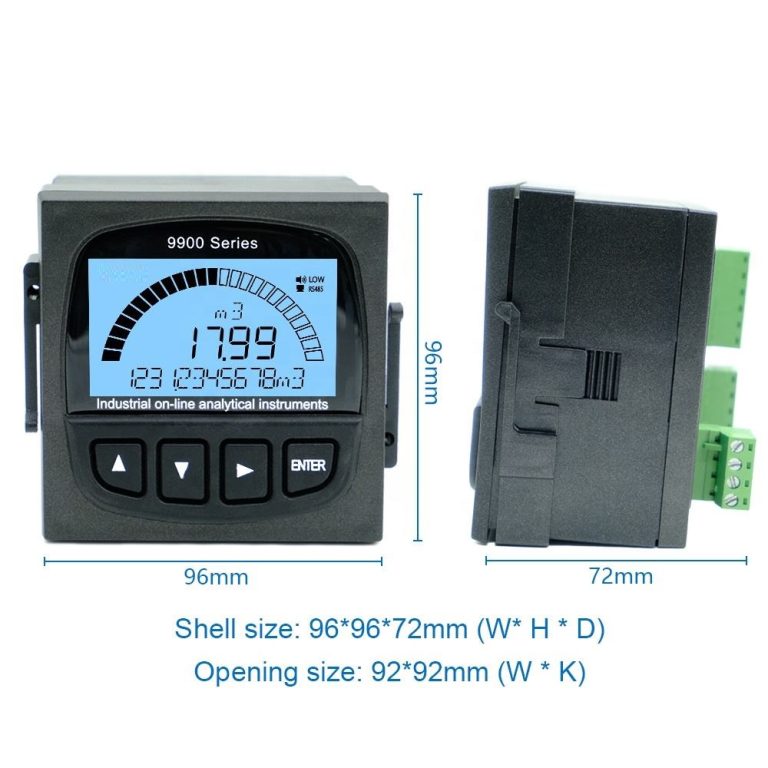
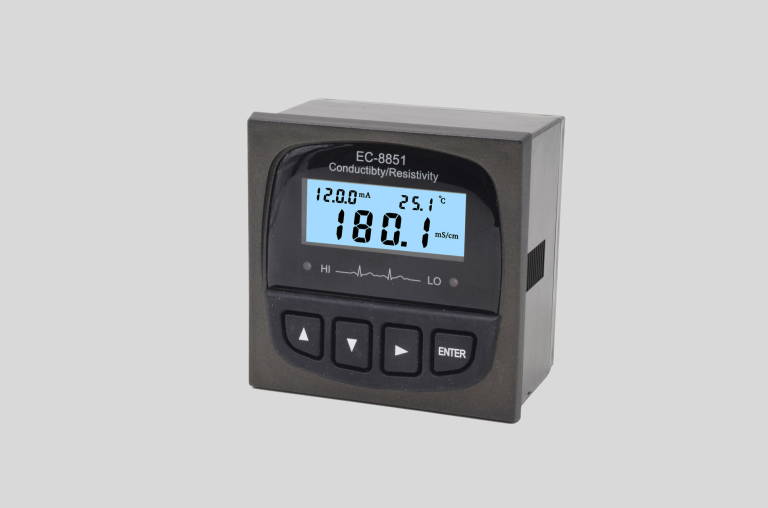
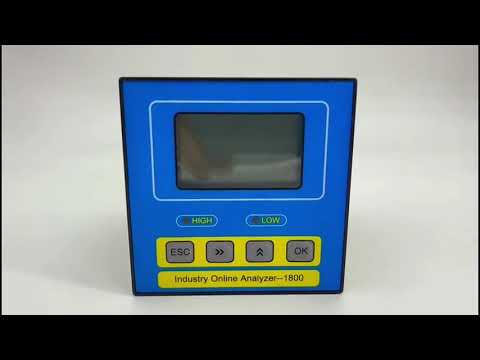
ChiMay’s online analyzers feature configurable alarm outputs that integrate with utility SCADA systems.
Advantage 2: Regulatory Compliance Simplification
Continuous Compliance Evidence
Regulatory agencies increasingly recognize continuous monitoring:
Stage 2 Disinfection Byproducts Rules: Continuous monitoring provides comprehensive data demonstrating compliance optimization efforts.
Lead and Copper Rule: Real-time pH and conductivity monitoring validates corrosion control effectiveness.
Revised Total Coliform Rule: Enhanced monitoring positions utilities favorably in assessment evaluations.
Utilities with continuous records also walk into sanitary surveys and audits with defensible evidence instead of reconstructed grab-sample logs. That is where most of the compliance benefit actually shows up.
Documentation and Reporting
Online analyzers automate compliance documentation through continuous data records, automated reports, and audit trails. The administrative burden drops accordingly—mainly by eliminating the manual transcription and reconciliation steps entirely.
Advantage 3: Operational Efficiency Improvements
Optimized Chemical Dosing
Continuous water quality data enables precision treatment:
Feedback Control: Online analyzers provide real-time input to automated dosing systems, holding target residuals while minimizing chemical consumption.
Chemical Savings: Dosing matched to actual demand instead of worst-case schedules typically trims chemical consumption measurably. The dollar value depends on plant size and chemical prices, so treat vendor payback claims accordingly.
Reduced Manual Sampling
Continuous monitoring reduces labor-intensive activities:
| Activity | Traditional Approach | Online Monitoring |
|---|---|---|
| Routine sampling | 20-50 samples/week | 0-5 samples/week |
| Laboratory analysis | 40-100 hours/month | 5-10 hours/month |
| Data management | 80-160 hours/month | 10-20 hours/month |
ChiMay’s analyzers feature built-in data logging and communication capabilities.
Advantage 4: Infrastructure Protection
Corrosion Control
Real-time water quality monitoring supports corrosion management through pH stability monitoring, scaling prevention, and lead/copper control.
Asset Management
Water quality data informs infrastructure investment:
Condition Assessment: Water quality parameters correlate with infrastructure condition.
Failure Prediction: Anomalies often precede equipment failures, enabling preventive intervention.
Life Extension: Proactive intervention on corrosion and scaling slows asset degradation and stretches service life well beyond what run-to-failure management achieves.
Advantage 5: Customer Satisfaction Enhancement
Service Quality Improvement
Continuous monitoring directly improves customer experience:
Consistent Quality: Real-time adjustment maintains consistent water quality.
Reduced Complaints: Utilities deploying online analyzers consistently report fewer taste-and-odor, discoloration, and pressure-related customer contacts, because problems get corrected before customers notice them.
Transparency and Trust
Modern customers expect visibility through public dashboards, proactive communication, and educational resources.
Advantage 6: Cost-Effectiveness and ROI
Investment Analysis
Online analyzer systems deliver economics that hold up under scrutiny:
| Component | Cost Range | Typical Lifespan |
|---|---|---|
| Primary analyzers | $8,000-25,000/unit | 7-10 years |
| Installation and commissioning | $3,000-8,000/unit | – |
| Communication infrastructure | $5,000-15,000/system | 5-7 years |
| Data management platform | $50,000-200,000/system | 5-7 years |
Typical total investment for municipal systems ranges from $150,000-500,000.
Return on Investment
Savings accumulate from several directions:
Operational Savings:
- Lower chemical consumption through demand-matched dosing
- Labor efficiency gains as sampling and data-entry work shrink
- Reduced emergency response and overtime costs
Compliance Benefits:
- Avoided violations—federal civil penalties for drinking water compliance failures now run into the tens of thousands of dollars per day, and public notification after a preventable event carries its own costs
- Reduced public notification expenses
The payback period varies with utility size and baseline practices, but utilities that move from grab-sampling to online monitoring generally recover the investment within a few years of operation.
Implementation Considerations
System Design
Effective analyzer deployment requires planning:
Parameter Selection: Match analyzer capabilities to utility priorities—pH and conductivity for corrosion control, turbidity for particle monitoring, residual chlorine for disinfection validation.
Location Selection: Strategic placement maximizes monitoring value at treatment plant effluent, distribution entry points, problem areas, and critical facilities.
Integration Planning: Ensure compatibility with SCADA platforms, data management systems, and customer communication platforms.
Vendor Selection
Evaluate analyzer vendors on measurement performance, operational requirements, communication capabilities, and total cost of ownership.
ChiMay’s analyzer portfolio—including inline pH meters, conductivity meters, turbidity testers, and multi-parameter sensors—provides integrated solutions for municipal water quality monitoring applications.
Future Outlook
Technology Evolution
Online analyzer technology continues advancing through miniaturization, machine learning-based analytics, IoT integration, and sensor fusion.
Market Trends
Industry analysts size the online water analyzer market in the billions of dollars, with mid-single-digit to high-single-digit annual growth. Estimates vary considerably by report scope, which is reason enough to treat any single market figure with caution. What is not in dispute is the direction: utilities keep adding online monitoring points, and regulators keep raising expectations for data quality.
Conclusion
Online water quality analyzers deliver advantages across every dimension of municipal utility operations: faster threat detection, cleaner compliance records, lower operating costs, and better infrastructure decisions.
Implementation requires planning—parameter selection, location optimization, and system integration—but the investment pays back through avoided incidents and reduced operating labor.
ChiMay’s analyzer portfolio provides the monitoring capabilities modern utilities require. With proven reliability, flexible integration options, and comprehensive support, ChiMay online analyzers help municipalities protect public health, optimize operations, and deliver the water quality their communities expect.