Pharmaceutical manufacturing needs water far cleaner than drinking water, and the pharmacopoeias are specific about what “clean enough” means. Nine parameters carry most of the weight in a pharmaceutical water system — conductivity, TOC, microbial count, endotoxin, pH, temperature, dissolved oxygen, turbidity, and flow velocity. Each has a compendial or regulatory basis, and each is worth measuring continuously rather than by grab sample.
Table of Contents
The Critical Role of Water in Pharmaceuticals
Water is the most widely used pharmaceutical excipient, and the one most often taken for granted. FDA, EMA, and WHO all set requirements for Purified Water and Water for Injection (WFI), and those requirements are checked during inspections. When a water system drifts out of specification, the consequence is a batch investigation at best and a product recall at worst.
9 Essential Parameters
1. Conductivity
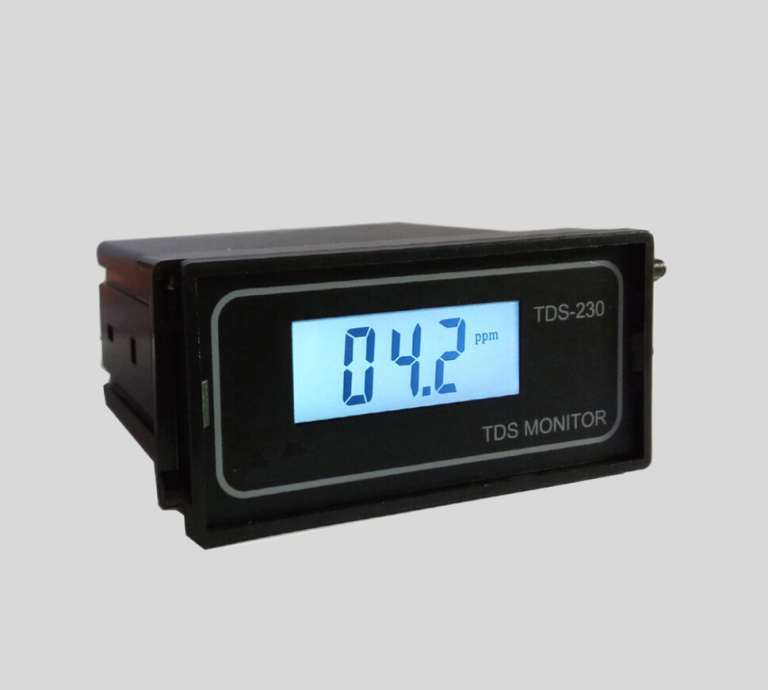
Conductivity is the primary indicator of ionic contamination.
Why It Matters: Dissolved ions from feed water, corrosion products, and contamination events raise conductivity. USP <645> sets the Stage 1 limit for WFI at ≤1.3 μS/cm at 25°C.
Monitoring Requirements: Inline sensors give continuous measurement with temperature compensation. Most WFI samples pass at Stage 1 if the loop is running properly.
Shanghai ChiMay inline conductivity electrodes achieve accuracy of ±0.5% with response times under 5 seconds.
2. Total Organic Carbon (TOC)
TOC analysis catches carbon-containing compounds that conductivity cannot see.
Why It Matters: Organic contaminants come from biofilm, system materials, or degradation of treatment resins. The pharmacopoeial limit is ≤500 ppb (0.5 mg C/L) for both Purified Water and WFI.
Practice: Continuous TOC monitoring is what turns an organic contamination event into a trend line an operator can act on, rather than a lab result discovered after the batch was released.
3. Microbial Count
Microbial contamination is one of the most direct patient safety risks in a water system.
Why It Matters: Microorganisms can contaminate product directly and produce endotoxins. USP <1231> sets an action limit of ≤100 CFU/mL for Purified Water, with tighter internal limits common in practice.
4. Endotoxin Levels
Endotoxins from gram-negative bacterial cell walls pose severe patient safety risks.
Why It Matters: Endotoxins cause fever, septic shock, and in serious cases death. The USP <85> bacterial endotoxins test underpins the WFI monograph limit of ≤0.25 EU/mL.
5. pH Value
pH indicates the acid–base balance of pharmaceutical water.
Why It Matters: pH excursions point to system upsets or contamination. USP <1231> describes Purified Water in the range of 5.0–7.0.
6. Temperature
Temperature control affects both water chemistry and microbial proliferation.
Why It Matters: Warm water promotes biofilm formation. Hot loops run at ≥70°C, and sanitization cycles typically take the loop to 80°C or above.
7. Dissolved Oxygen
DO levels influence oxidative processes and can affect product quality.
Why It Matters: High DO drives oxidation reactions and supports aerobic microbial growth. For most pharmaceutical water applications this is a secondary parameter, but it matters for oxygen-sensitive formulations.
8. Turbidity
Turbidity indicates suspended particles, which usually means a system problem.
Why It Matters: The pharmacopoeias do not set a turbidity limit for Purified Water or WFI — particulate matter is controlled by USP <788>. Utilities therefore use turbidity as an early warning for biofilm sloughing or membrane damage, commonly with an internal action level around 1 NTU.
Shanghai ChiMay online turbidity testers achieve detection limits below 0.1 NTU.
9. Flow Rate and Velocity
Flow monitoring ensures enough velocity to prevent particle settling and biofilm development.
Why It Matters: Low velocity lets particles settle and creates conditions favourable to biofilm. ISPE’s water and steam baseline guidance reflects the long-standing industry practice of holding loop velocity at or above about 1.5 m/s (5 ft/s) to keep flow turbulent and the loop self-cleaning.
Implementing a Comprehensive Monitoring Strategy
Parameter Integration
A workable monitoring strategy ties several parameters together:
- Conductivity + temperature sensor (primary quality indicator)
- TOC analyzer (organic contamination detection)
- pH sensor (acid–base balance)
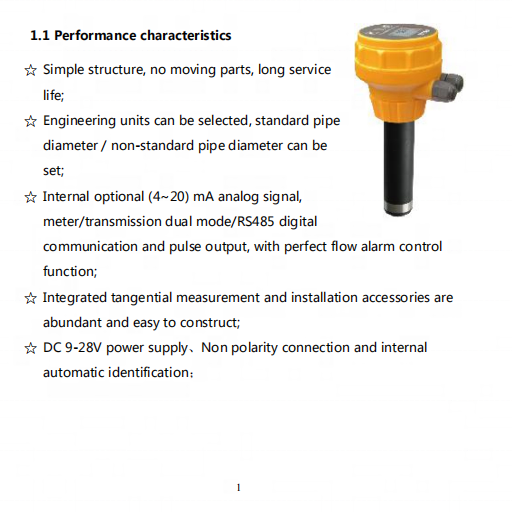
- Flow meter (velocity assurance)
Shanghai ChiMay multi-parameter monitoring stations combine these measurements in sanitary configurations.
Regulatory Compliance Documentation
| Parameter | USP/EP Requirement | Documentation |
|---|---|---|
| Conductivity | ≤1.3 μS/cm (WFI, Stage 1) | Calibration records, continuous monitoring data |
| TOC | ≤500 ppb | Calibration records, test results, trending |
| Microbial | ≤100 CFU/mL | Sampling records, incubation records |
| Endotoxin | ≤0.25 EU/mL (WFI) | LAL test records, equipment qualification |
Putting It Together
These nine parameters each answer a different question, and a monitoring programme that covers all of them gives a facility a defensible position at inspection. The practical work is in selecting equipment that holds its calibration, placing sensors where the water is representative, and keeping the data.
Shanghai ChiMay water quality monitoring solutions provide pharmaceutical manufacturers with measurement performance, sanitary design, and regulatory support documentation that GMP requirements demand.