Flood events impose enormous costs on communities worldwide. The European Environment Agency’s tracking of climate-related extremes shows flood losses running into the billions of euros across Europe in a typical year, with the worst years running far higher. As climate change intensifies precipitation extremes, water resource managers increasingly recognize that traditional flood management approaches—relying primarily on structural barriers and manual response—cannot keep pace. Advanced valve systems integrated with real-time monitoring networks are a practical upgrade path, enabling automated responses that protect infrastructure and save lives.
Table of Contents
The Evolution of Flood Control Technology
Flood management has evolved substantially over the past century, progressing from simple passive structures to active control systems. Early approaches emphasized structural defenses—levees, dams, and floodwalls—designed to contain floodwaters within predefined boundaries. While these structures remain essential components of flood protection, their effectiveness depends on design flood magnitudes that climate change is steadily outdating.
Active flood control systems add dynamic capabilities to structural defenses, enabling real-time adjustment of water flow patterns in response to changing conditions. Control valves serve as the primary actuators in these systems, providing precise flow regulation that structural approaches cannot achieve. Modern softener valves and softening and filtering valves equipped with motorized actuators enable automated operation that responds within seconds compared to the hours required for manual valve operations.
The integration of valve control with sensor networks represents the latest stage in flood management technology. Real-time water quality and flow data trigger predetermined valve responses when conditions exceed critical thresholds, enabling protective actions even when human operators cannot respond quickly enough.
Valve Technology for Flood Applications
Softener Valve Systems
Water softening systems play important roles in both flood prevention and post-flood recovery operations. During flood events, properly controlled softener valves regulate ion exchange regeneration cycles to prevent chemical surges that could damage treatment infrastructure. Post-flood water treatment operations require careful flow control to manage elevated sediment loads and maintain treatment effectiveness.
The Shanghai ChiMay softener valve series incorporates industrial-grade construction suitable for demanding flood management applications. High-density polytetrafluoroethylene (PTFE) seals ensure reliable operation despite exposure to sediment-laden water and variable temperature conditions. Flow capacities ranging from 5 m³/h to 50 m³/h accommodate applications from small commercial installations to municipal-scale treatment facilities.
Automated regeneration control represents a key capability for flood-resilient softening systems. Timer-based and flow-based regeneration initiation enables optimization of softening operations during variable demand conditions.
Integrated Flow Control Systems
Modern flood control applications require valve systems that integrate directly with monitoring networks and control platforms. Modbus and Profibus communication protocols enable direct connection between valve actuators and SCADA systems. Digital communication on industrial valve actuators has become standard practice on new installations rather than the exception.
Fail-safe design proves essential for flood control valve applications. Motorized valves must maintain defined positions during power failures to prevent uncontrolled flow that could exacerbate flood conditions. Spring-return mechanisms and battery-backed position memory systems ensure predictable valve behavior regardless of power availability.
Integration with Monitoring Networks
The effectiveness of automated flood control depends critically on the quality and timeliness of input data from monitoring networks. Sensors measuring water levels, flow rates, turbidity, and rainfall accumulation provide the information required for intelligent valve control decisions. Integration of these data streams with valve control algorithms enables responses that address actual flood conditions rather than false alarms.
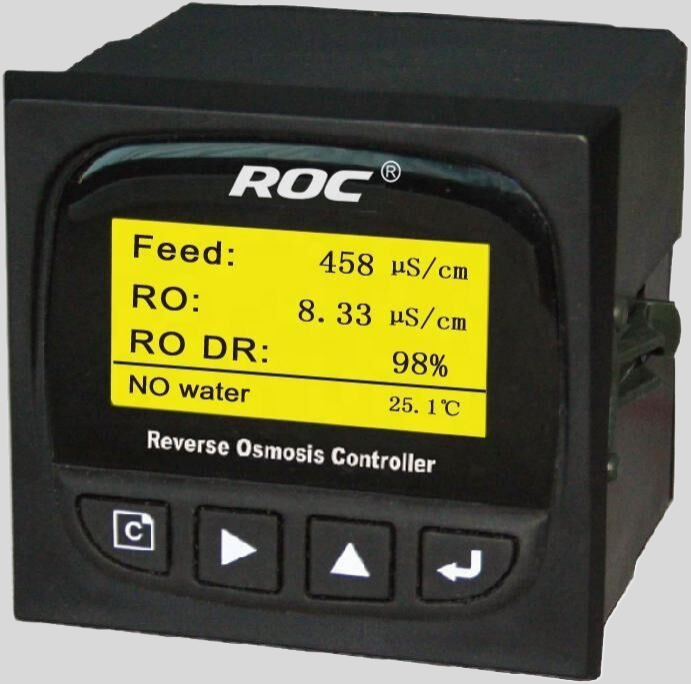
The Shanghai ChiMay range of water quality analyzers provides comprehensive monitoring data suitable for valve control integration. Inline conductivity meters, pH electrodes, and turbidity testers deliver the parameters required for accurate flood condition assessment. Real-time optimization algorithms enhance the effectiveness of valve-based flood control. Model predictive control systems simulate the effects of potential valve adjustments against hydraulic models, selecting control actions that maximize flood attenuation while maintaining service to critical customers.
Economic Analysis and Investment Prioritization
Investment in advanced valve systems yields returns through multiple mechanisms including damage prevention, operational efficiency, and compliance benefits. National Institute of Building Sciences studies conducted for FEMA found that every dollar spent on flood mitigation measures saves an average of $6 in avoided damages.
Capital costs for automated valve systems vary based on valve size, actuation type, and control integration requirements. Basic motorized softener valves suitable for commercial applications typically cost between $800 and $3,000 per unit. Municipal-scale control valves with full automation capabilities may range from $15,000 to $75,000 depending on specifications.
Operational cost savings from automated valve systems arise primarily from reduced labor requirements and improved system efficiency. Operators who move from manual to automated valve control consistently report lower valve-related labor, particularly on remote or frequently cycled assets.
Implementation Case Studies
Case Study: Metropolitan Stormwater System
A major city in Southeast Asia implemented an advanced valve control system to manage stormwater flooding in a densely populated urban area. The system incorporates dozens of automated control valves distributed throughout the stormwater collection network, integrated with more than a hundred water level sensors and a network of weather stations. Real-time data feeds a central control platform that re-optimizes valve positions every five minutes.
Over three years of operation, annual flooding incidents dropped to a fraction of the pre-implementation count, and average flood duration shortened by hours per event. The avoided damages—measured against the city’s own historical loss records—cover the system investment several times over.
Case Study: Industrial Water Treatment Facility
A petrochemical complex implemented automated valve control to protect treatment infrastructure during regional flooding events. The system integrates a dozen motorized softener valves with water quality monitoring and plant emergency response systems. Pre-programmed responses activate automatically when upstream water levels exceed predefined thresholds.
During a significant flood event in 2023, the automated system responded within 90 seconds of threshold exceedance—faster than any manual response could have managed. Equipment damage was confined to a small fraction of what unprotected treatment units would have suffered.
Maintenance and Reliability
Ensuring reliable valve operation during flood events requires systematic maintenance programs that address both mechanical and control system components. Manufacturer guidance and industry practice converge on quarterly inspection and annual service for motorized valves in critical applications.
Predictive maintenance approaches leveraging continuous monitoring data can identify developing problems before they cause valve failures. Vibration analysis, motor current monitoring, and cycle counting provide indicators of mechanical wear that enable scheduled replacement before unexpected failures occur. Redundancy planning addresses the consequences of valve failures in critical flood control applications.
Future Technology Development
Emerging technologies promise continued enhancement of valve-based flood control capabilities. Smart actuators with integrated sensors and edge computing capabilities enable autonomous valve operation that responds to local conditions without requiring central system communication. Integration with digital twin technology offers particularly promising capabilities for flood control optimization.
The increasing frequency and intensity of flood events demands investment in protective infrastructure that traditional approaches cannot provide. Advanced valve systems integrated with comprehensive monitoring networks offer proven capabilities for protecting communities and infrastructure from flood damages.
This article provides technical information about valve systems for flood control applications. Professional engineering consultation is recommended for specific implementation projects.