Chlorine remains the main barrier protecting consumers from waterborne pathogens after water leaves the treatment plant. Holding an adequate residual across a distribution network is harder than it sounds: water spends hours or days working its way through mains, storage and service lines, and chlorine is consumed the whole way. Managing it well comes down to understanding what eats the residual, then instrumenting the places where it runs out.
Table of Contents
The Critical Role of Chlorine in Water Safety
Chlorine inactivates the bacteria, viruses and protozoa that cause waterborne disease. At the treatment plant, dosing usually leaves the clearwell at roughly 2–4 mg/L, which provides more disinfection capacity than the distribution system itself needs. The margin is deliberate: it is there to cover the losses that follow.
Those losses are predictable in mechanism, if not precisely in rate. Chlorine reacts with organic matter, with pipe wall material, and with biofilm, and the reaction slows or accelerates with temperature and residence time. What reaches a customer tap depends on the sum of those effects along the path the water took.
On the regulatory side, two distinct requirements are often merged in shorthand. Under the EPA’s Surface Water Treatment Rule, the residual entering the distribution system cannot fall below 0.2 mg/L for more than four hours (40 CFR 141.72), and within the distribution system at least 95% of monthly samples must show a detectable residual. The World Health Organization’s drinking water guidelines use a similar threshold — a free chlorine residual of at least 0.2 mg/L at the point of delivery — as the practical indicator that disinfection is holding. Neither source says 0.2 mg/L must be met at every tap at all times; that is an operational target utilities set for themselves, and a sensible one.
The residual is also the cheapest early warning system a utility has. A chlorine analyser that starts reading low in one pressure zone is telling you something changed — demand went up, flow reversed, a storage tank turned over differently.
Factors Affecting Chlorine Residual Decay
Reaction with organic matter is usually the dominant loss mechanism in surface water systems. Natural organic matter — humic and fulvic acids — consumes chlorine and produces disinfection byproducts in the process. When you cut chlorine demand in the distribution system, you are often also cutting DBP formation.
Biofilm on pipe walls consumes chlorine continuously. Older, well-established biofilm has higher demand, and the demand sits exactly where flow is slowest.
Pipe material matters. Unlined iron mains exert heavy chlorine demand as the metal corrodes; cement-lined mains are next; plastic pipe has negligible direct demand. Real networks mix all three, which is why two zones with identical hydraulics can behave completely differently.
Temperature accelerates everything. A 10 °C rise in water temperature roughly doubles the decay rate, which is why summer residual complaints are a seasonal certainty. Reservoir surface temperature and solar exposure on shallow mains both feed into this.
Residence time sets the total exposure. Stagnant storage and low-velocity dead ends are where residual disappears. Water age is the single most useful operational metric for predicting where the problem will be.
Monitoring Strategies and Technologies
A residual program needs both continuous instruments and grab samples, and the two do different jobs.
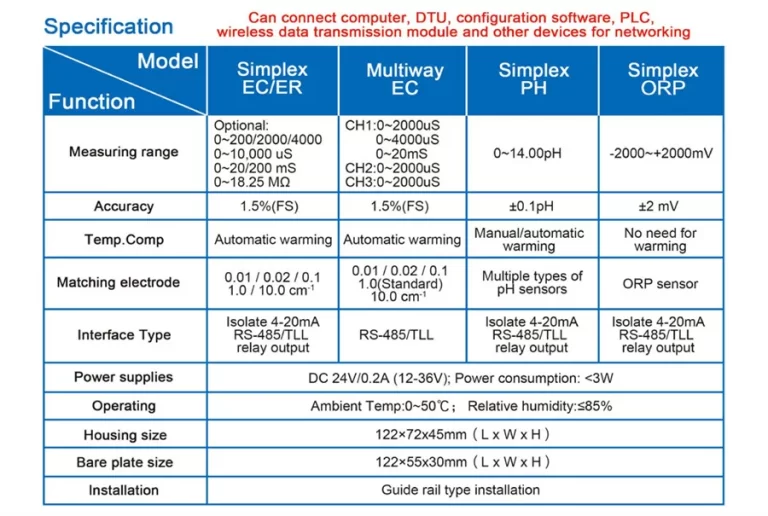
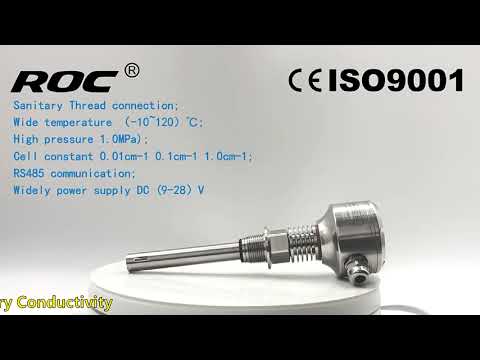
Fixed continuous monitoring using residual chlorine transmitters shows what is happening right now at the points that matter. These detect the variation that a sampling round would miss, and the alarm on a low reading is what triggers a field response.
Monitoring locations should be chosen on residence time, pipe material and history: plant entry, storage tank outlets, pressure zone boundaries, dead ends, and the customer sites where a residual failure has consequences — hospitals, dialysis centres, food processors.
Grab sampling does two things continuous monitoring cannot: it verifies that the analysers are reading correctly, and it covers parameters that have no reliable online method.
Online chlorine analysers using amperometric or colorimetric measurement feed SCADA directly. Amperometric instruments need regular electrode cleaning and pH compensation; colorimetric analysers are more accurate but consume reagents and generate waste.
Shanghai ChiMay’s residual chlorine transmitters are built for continuous municipal service, with the automatic temperature and pH compensation that keeps readings meaningful as water quality moves.
Strategies for Maintaining Chlorine Residual
Booster chlorination adds chlorine at intermediate points rather than relying on a single dose at the plant. It is the standard fix for long networks and high-demand zones, though each booster adds a control point and a monitoring obligation.
Cross-connection control prevents the contamination events that would overwhelm any residual. Backflow preventers plus an inspection program are the mechanism; there is no substitute.
Pipe condition management attacks chlorine demand at its source. Mains rehabilitation and controlled flushing remove the corrosion products and biofilm that consume disinfectant.
Operational adjustments — improving velocity in problem mains, increasing turnover in storage tanks, reducing dead ends, managing water age through pump scheduling — all reduce decay without adding chemical.
Disinfection Byproduct Considerations
Chlorine management is a trade-off. Higher residual means better microbial protection and more DBP formation. The EPA’s Stage 2 Disinfectants and Disinfection Byproducts Rule sets maximum contaminant levels of 80 µg/L for total trihalomethanes (TTHMs) and 60 µg/L for haloacetic acids (HAA5), calculated as locational running annual averages. Those limits shape most residual strategies in practice, because the sites with the highest DBP levels are often the sites with the longest residence time — the same ones you were planning to push more chlorine through.
The available levers:
Source water management reduces precursor material before it reaches disinfection. Enhanced coagulation, filter optimization and watershed protection all lower the organic load that eventually becomes TTHM.
Chloramination — switching from free chlorine to chloramine — dramatically cuts TTHM and HAA5 formation and holds residual longer in large networks. Many utilities that converted did so specifically to stay inside the DBP limits. The trade-off is a different set of operational demands, including nitrification control and a more complex analytical picture.
Dose optimization using continuous monitoring keeps chlorine at the minimum effective level rather than at a comfortable default. Instrumented control reduces both chemical use and DBP loading, and it is usually the cheapest improvement available.
Regulatory Compliance and Best Practices
Residual management touches several requirements at once:
The Safe Drinking Water Act underpins the treatment technique requirements in the Surface Water Treatment Rule, including the 0.2 mg/L entry point floor and the detectable-residual requirement in the distribution system. Utilities must also monitor total coliform as an indicator of distribution system integrity. Failures trigger public notification, and the notice itself has a cost in customer confidence.
State and provincial rules often add requirements on monitoring frequency, location and the response to low residual. Always work from the local rule, not from the federal minimum.
Industry guidance from AWWA, EPA and CDC goes beyond regulatory minimums and reflects current operational experience. That is where most of the practical detail on booster siting and residual targets comes from.
Getting residual management right is mostly a matter of knowing your network: which zones lose chlorine fastest, why, and what it costs to fix. Utilities that track decay zone by zone and instrument the problem areas get reliable protection at lower chemical cost than those that simply raise the plant dose in response to complaints.