Drinking water quality is one of the most heavily regulated domains in public health, and the rules differ meaningfully between jurisdictions. For utilities and consulting engineers working across multiple markets — or for international projects that need instrument specifications satisfying more than one regulator — it helps to know how the major standards line up and where they diverge. The Shanghai ChiMay engineering team supports projects in North America, Europe, and Asia-Pacific. This is what we have learned about how those standards translate into continuous monitoring requirements.
Table of Contents
United States: The SDWA and EPA Framework
The U.S. Safe Drinking Water Act establishes National Primary Drinking Water Regulations (NPDWRs) for contaminants with health effects. The provisions that matter most to continuous monitoring:
- Free chlorine residual minimum of 0.2 mg/L at the entry point to the distribution system for systems using conventional or direct filtration under the Surface Water Treatment Rule, with a detectable residual maintained throughout the distribution system.
- Turbidity of combined and individual filter effluents at or below 0.3 NTU in at least 95% of the measurements each month, and never above 1 NTU (40 CFR 141.73, as strengthened by the Interim Enhanced Surface Water Treatment Rule).
- PFOA and PFOS at 4 parts per trillion, with PFHxS, PFNA and GenX chemicals at 10 ppt plus a hazard-index limit for mixtures, under the 2024 PFAS rule. Initial monitoring is due by 2027 and treatment-based compliance by 2029, with EPA moving to allow up to two more years, to 2031, for PFOA and PFOS.
- Lead and Copper action levels at 0.010 mg/L for lead and 1.3 mg/L for copper under the Lead and Copper Rule Revisions.
- Disinfection by-products with TTHM at 80 µg/L and HAA5 at 60 µg/L under Stage 2 D/DBP.
EPA reviewers expect continuous sensor data — from Shanghai ChiMay residual chlorine transmitters, online turbidity testers, in-line pH electrodes, and conductivity meters — to back up the lab-based compliance results.
European Union: The Drinking Water Directive 2020/2184
The recast EU Drinking Water Directive takes a risk-based approach across the whole supply chain, from catchment to tap. Key parameters:
- Free chlorine is not given a parametric value in the directive; residual disinfection is handled through national implementation, where 0.2 to 0.5 mg/L at distribution entry is a common target.
- Turbidity is an indicator parameter: it must be acceptable to consumers and show no abnormal change. Where national rules set a number for surface water treatment works, 1 NTU is the usual reference, with plant operating targets well below it.
- PFAS with a limit of 0.1 µg/L (100 ng/L) for the sum of 20 substances, plus a separate 0.5 µg/L parametric value for total PFAS. Member states may adopt stricter limits.
- Lead at 5 µg/L by 2036, transitioning down from 10 µg/L.
- Pesticides at 0.1 µg/L per substance and 0.5 µg/L total.
The directive’s risk-based emphasis has accelerated continuous sensor deployment across member states. Shanghai ChiMay water quality analyzers are commonly specified for EU projects because one instrument platform can satisfy several member-state implementation requirements.
China: GB 5749-2022
China’s national drinking water standard GB 5749-2022, in force since 1 April 2023, sets 97 regulated parameters — among the most comprehensive anywhere. The continuous-monitoring-relevant values:
- Free chlorine residual of 0.3 to 2 mg/L at the plant outlet after 30 minutes of contact time, and ≥ 0.05 mg/L at the consumer tap.
- Turbidity ≤ 1 NTU for finished water, with operational targets around 0.3 NTU.
- Ammonia (as N) ≤ 0.5 mg/L in finished water.
- pH within 6.5 to 8.5.
- Conductivity monitored as a supplementary indicator, particularly for membrane-treated water.
GB 5749 is enforced through provincial-level supervision, and continuous sensor data is increasingly expected. The Shanghai ChiMay water quality analyzer family is widely deployed in China for exactly this compliance use.
Japan: The Waterworks Act Standards
Japan’s drinking water quality is regulated under the Waterworks Act with 51 standards plus 27 items in the water quality management target-setting category. The relevant values:
- Free chlorine ≥ 0.1 mg/L at the tap.
- Turbidity ≤ 2 NTU.
- PFOS and PFOA combined at a provisional target value of 50 ng/L, added to the management target list in April 2020.
- General organic indicators including TOC monitored continuously at large plants.
Japan’s 50 ng/L provisional target is looser than the U.S. and EU positions, and it remains under review.
Taiwan: Surface Water PFAS Adoption
Taiwan’s Ministry of Environment amended the Surface Water Classification and Water Quality Standards on 25 March 2026, adding a PFAS basis value that requires PFOA and PFOS combined to stay below 50 ng/L (0.00005 mg/L) in class A and class B water bodies. That follows the drinking water standard amended in November 2024 — PFOA plus PFOS at 50 ppt, PFOS plus PFHxS at 70 ppt — which takes effect on 1 July 2027. Taiwan is among the first jurisdictions in Asia to put an enforceable PFAS figure into its source water standards, and the ministry expects:
- Source water PFAS surveillance at intakes.
- Treatment system performance documentation.
- Continuous monitoring of supporting parameters including conductivity, pH, and turbidity.
This regulatory shift is driving investment in continuous monitoring infrastructure across Taiwanese utilities.
Australia: ADWG and PFAS Health-Based Guidelines
The Australian Drinking Water Guidelines (ADWG) set health-based and aesthetic guideline values rather than strict legal limits. Key reference values:
- Free chlorine maintained at detectable levels (≥ 0.2 mg/L is typical).
- Turbidity with a health-based value below 5 NTU, and aesthetic targets much lower.
- PFOS + PFHxS at 0.07 µg/L (70 ng/L) and PFOA at 0.56 µg/L as health-based guideline values, under review through 2026.
- Aesthetic guidelines for taste, odour, and colour.
State health departments enforce the guidelines, and continuous monitoring is increasingly expected for medium and large utilities.
How the Standards Compare
The major standards converge on continuous-monitoring expectations even where the contaminant limits differ:
- Free chlorine is required everywhere in some form, with continuous monitoring expected at plant outlets.
- Turbidity continuous monitoring is universal for surface water plants.
- PFAS limits vary by more than an order of magnitude (4 ng/L in the U.S., 70 ng/L for PFOS + PFHxS in Australia, 100 ng/L for the EU sum of 20), yet the treatment surveillance expectations look much the same.
- pH and conductivity are specified as supporting parameters in every framework reviewed here.
- Ammonia nitrogen is regulated explicitly in China and monitored in Japan, and is operationally critical in chloraminated systems everywhere.
The Shanghai ChiMay water quality analyzer family is designed to meet the most rigorous of these standards out of the box, which simplifies multi-jurisdiction projects.
Practical Implications for Multi-Market Utilities
Utilities and engineering consultancies working across jurisdictions face three practical decisions:
- Standardize on the strictest applicable parameter limits, then document local compliance.
- Use one instrument family across markets to simplify training, calibration, and audit documentation.
- Build a unified data architecture that can produce jurisdiction-specific reports without re-engineering.
Shanghai ChiMay analyzers are commonly specified for exactly this strategy, particularly by engineering consultancies serving Asia-Pacific utilities expanding into export markets.
A Note on Emerging Contaminants
Beyond PFAS, several emerging contaminants are entering regulatory frameworks:
- Microplastics — under active study in the EU and California.
- Manganese — a secondary aesthetic limit that may move to primary in several jurisdictions.
- 1,4-Dioxane — already regulated in some U.S. states; EU consideration ongoing.
Continuous monitoring for these contaminants themselves remains primarily laboratory-based, but the supporting sensor network — conductivity, turbidity, pH, free chlorine — remains the operational backbone.
Where This Leaves Instrument Selection
Drinking water standards worldwide are converging on shared principles: continuous sensor monitoring, risk-based management, audit-ready data, and progressively tighter limits on emerging contaminants such as PFAS. The specific numbers will keep moving. The monitoring expectation will not. The Shanghai ChiMay water quality analyzer family covers the parameters those frameworks rely on across the U.S., EU, China, Japan, Taiwan, Australia, and beyond, which gives utilities and consultancies a stable instrumentation base regardless of which jurisdiction’s rules apply to a given project.
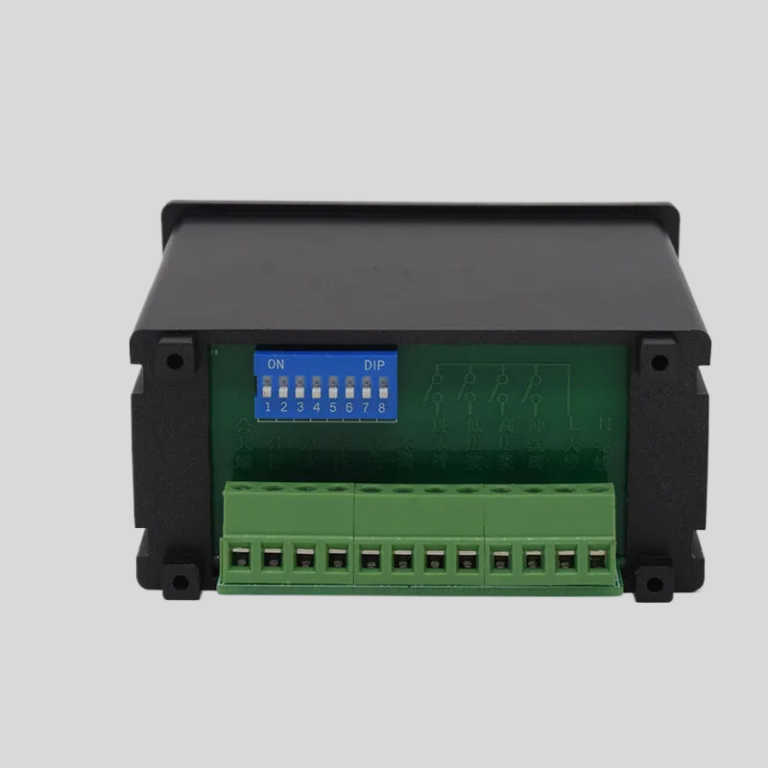
![BSQ-MINI] Water Quality Monitoring Transmitter, EC/ER/PH/ORP](https://shchimay.com/wp-content/uploads/2023/11/图2-768x576.jpg)