Short answer:
- Flood warning is about more than water level. Floodwater carries contamination, and the public health response depends on knowing what is in it.
- The parameters that matter during a flood are turbidity, pH, conductivity, dissolved oxygen, and where disinfection is relevant, chlorine residual.
- Fixed water quality thresholds travel badly between catchments. Baselines should be site-specific, with alarms tied to deviation from local conditions.
- Integration is the hard part: monitoring data has to reach the people who issue warnings, or it is just a log file.
Climate change has intensified flood frequency and severity across many regions, which raises the stakes on early warning. Traditional flood monitoring tracks water levels and flow rates. Emerging practice adds water quality surveillance, because the health risk after a flood comes from what the water carries, not only from how deep it is.
Table of Contents
The Evolution of Flood Monitoring Technology
Modern flood early warning systems have moved well beyond level gauges. The United Nations Office for Disaster Risk Reduction and other disaster risk agencies have argued for years that multi-hazard, multi-parameter approaches protect communities better than single-parameter warning, because flood impacts on health, water supply, and infrastructure arrive together and are managed by different agencies.
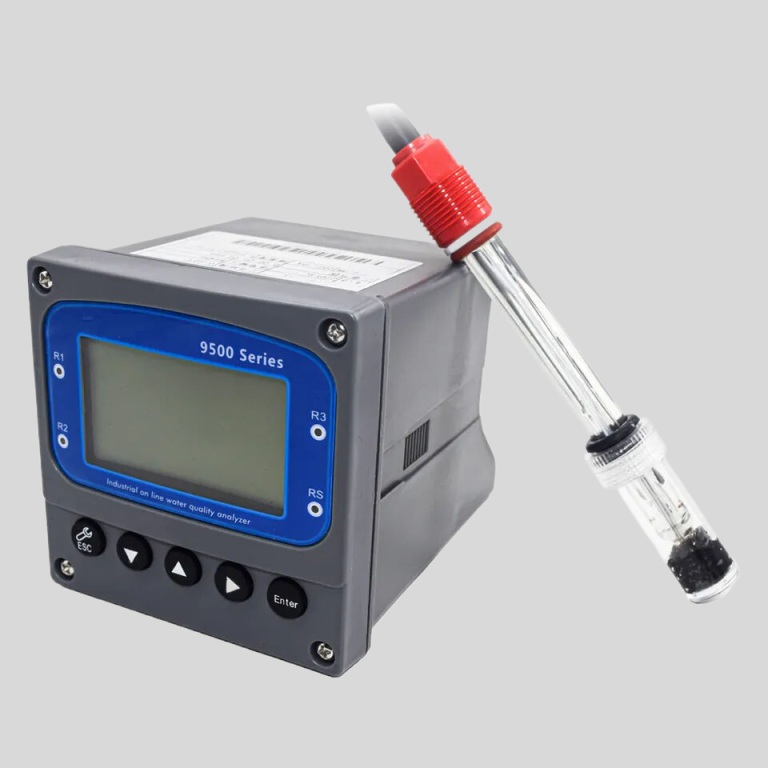
Real-time water quality monitoring is the first line of defence against contaminated water exposure. An inline pH sensor at a key drainage point alerts operators when floodwater turns corrosive or strongly alkaline, conditions that can point to an industrial spill mixing with stormwater. Chlorine residual monitoring at points where water is still treated identifies where disinfection is holding. The World Health Organization’s guidance on water-related disease during emergencies makes the operational point plainly: surveillance of water quality during and after flooding is what allows public health authorities to issue targeted advice instead of blanket warnings.
Technical Implementation of Integrated Monitoring Networks
Effective systems place several sensor types where they can do work:
- Turbidity indicates suspended solids and the particle load that shelters pathogens. WHO drinking water guidance treats turbidity as a disinfection barrier indicator: above roughly 5 NTU, disinfection efficiency drops noticeably, and well-run supplies target below 1 NTU.
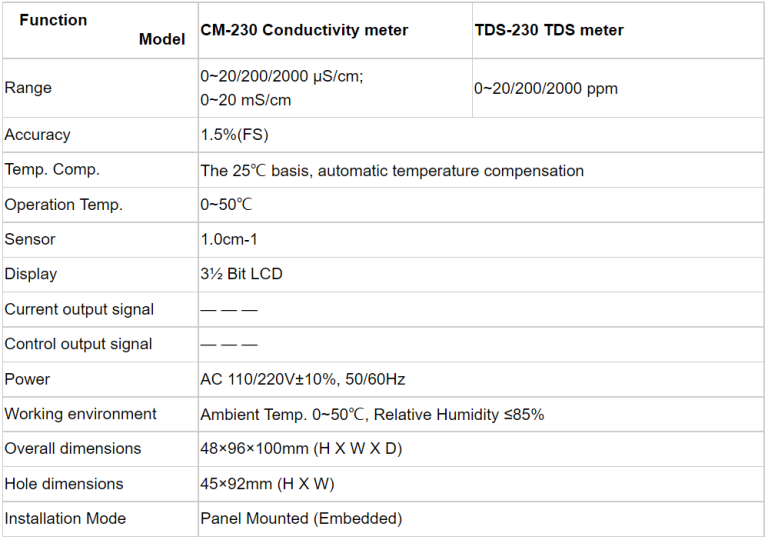
- Conductivity detects changes in dissolved solids, which often signals industrial discharge, agricultural runoff, or septic influence entering the channel. The direction and speed of the change is as informative as the absolute value.
- pH flags acidic or alkaline inflows that indicate chemical contamination and, in drainage structures, corrosion risk.
- Dissolved oxygen indicates organic loading. A rapid drop signals sewage or decaying organic matter and predicts oxygen depletion downstream.
- Chlorine residual verifies that disinfection is intact wherever treatment is still operating.
On thresholds: fix them locally. A turbidity reading that is normal in one catchment is an event in another, and storm flow raises turbidity in every channel. The defensible approach is to establish a dry-weather and storm-weather baseline per site and alarm on deviation from it, not on a borrowed number.
Economic and Operational Benefits
The financial case for integrated monitoring rests on avoided damage and faster response rather than on direct revenue. The World Meteorological Organization estimates that every dollar invested in early warning systems can save up to 15 dollars in reduced disaster impacts, and the water quality component of a warning system protects a specific part of that value: the health response, the drinking water advisory, and the decision on when a source can be brought back into service.
Operational benefits are more immediate:
- Faster source identification: conductivity and pH patterns distinguish industrial discharge from sewage from storm runoff, which points responders to the right location.
- Targeted advisories: water quality data supports specific public health advice rather than closing everything.
- Better recovery decisions: utilities can show when a source or an intake is safe to bring back online.
- Evidence for regulators and funders: continuous records support after-action review and future investment cases.
Predictive capability is improving too. Dissolved oxygen transmitters combined with trend models can flag declining oxygen conditions hours ahead, which gives operators time to intervene before fish kills and odour problems develop after combined sewer overflow events.
Case Study: Coastal City Flood Resilience
A mid-sized coastal city in Southeast Asia built a flood monitoring network in 2023 that combined hydrological gauges with inline conductivity and turbidity sensors across its drainage infrastructure. The design deliberately placed sensors at industrial estates and at the outfalls of major catchments, where a contamination event would matter most.
Within the first two years the network surfaced contamination events early enough for response teams to act before residential areas were affected, and it changed how the utility worked. Alerts reached crews in minutes instead of the hours that manual sampling rounds had taken, and because the data arrived continuously the utility could distinguish a genuine discharge from ordinary storm flow instead of treating every anomaly as an emergency. The most useful outcome reported was documentation: when the city needed to show regulators and the public what happened during a storm event, the record already existed.
Future Directions in Flood Water Quality Monitoring
- Multi-parameter instruments: combining pH, conductivity, turbidity, and dissolved oxygen in a single probe simplifies deployment at sites with no power or communications infrastructure.
- Model-based forecasting: machine learning applied to sensor networks can forecast contamination risk ahead of measurable onset, though reported accuracy figures vary widely with site and training data and should be validated locally.
- Sensor networks as warning infrastructure: official programs such as the UN’s Early Warnings for All initiative treat hydrological and water quality sensing as part of the same resilience investment.
- Open data and public communication: publishing quality data alongside flood warnings helps communities act on both.
Shanghai ChiMay offers integrated monitoring instruments designed for flood resilience applications, combining several measurement capabilities in single enclosures to simplify deployment and keep critical water quality parameters under continuous surveillance.
What This Means in Practice
Adding water quality monitoring to flood early warning systems addresses the part of flood risk that water level alone cannot see. Municipalities that invest in combined networks of level, pH, conductivity, turbidity, and dissolved oxygen instruments protect public health and their own treatment assets at the same time.
The engineering discipline that makes these systems work is unglamorous: realistic sensor placement, site-specific baselines, maintenance schedules that survive a storm season, and a defined path from alarm to public warning. Flood warning systems without water quality monitoring leave communities exposed to contamination they cannot see; systems with it give responders the information they need to act while people can still be protected.