Industrial facilities face mounting pressure to implement water reuse strategies as freshwater costs escalate and environmental regulations tighten. Central to successful water reuse is membrane technology — and within this domain, anti-fouling membrane innovations are where most of the recent progress has happened.
Fouling has historically been the primary operational challenge in membrane water treatment: frequent cleaning cycles, higher costs, lost system availability, and accelerated membrane degradation. Anti-fouling membrane technology attacks the problem directly through surface engineering and material design.
Table of Contents
Understanding Membrane Fouling
Fouling Mechanisms
Membrane fouling occurs through several distinct mechanisms, each needing a different mitigation strategy:
Particulate Fouling: Suspended solids accumulate on membrane surfaces and inside feed channels, forming cake layers that raise differential pressure. Particulate fouling progresses gradually and responds well to hydraulic cleaning.
Organic Fouling: Natural organic matter, oils, and synthetic organic compounds adsorb to the membrane surface. Organic fouling can be reversible or irreversible depending on adsorption strength.
Biological Fouling: Microbial colonization forms biofilms — the hardest fouling type to deal with, because embedded microorganisms hide inside the biofilm matrix from biocides and cleaning agents.
Scaling Fouling: Supersaturated mineral salts precipitate when concentration or temperature conditions shift. Scaling leaves hard deposits that need acid or chelant cleaning.
Economic Impact of Fouling
For a mid-size reuse facility (a 500 m³/day system is a fair reference), fouling routinely adds up to a six-figure annual burden across four lines: extra energy demand, chemical cleaning costs, premature membrane replacement, and production losses during clean-in-place cycles. Each site’s numbers vary, but every operator who has watched normalized permeate flow sag week over week knows the pattern. That cost is why anti-fouling surface technology pays back, typically within a few years of installation.
Anti-Fouling Membrane Technologies
Surface Hydrophilization
Hydrophilic membrane surfaces resist fouling through several mechanisms:
Hydration Layer Formation: Water molecules bound to surface functional groups create a physical barrier that blocks foulant adhesion. The strength of this hydration layer tracks directly with surface hydrophilicity.
Reduced Adhesive Forces: Hydrophobic foulants don’t adhere well to hydrophilic surfaces — the interfacial energetics are unfavorable. Most anti-fouling surface modifications are built on this principle.
Electrostatic Repulsion: Many hydrophilic modifications introduce charged groups that repel similarly charged foulants.
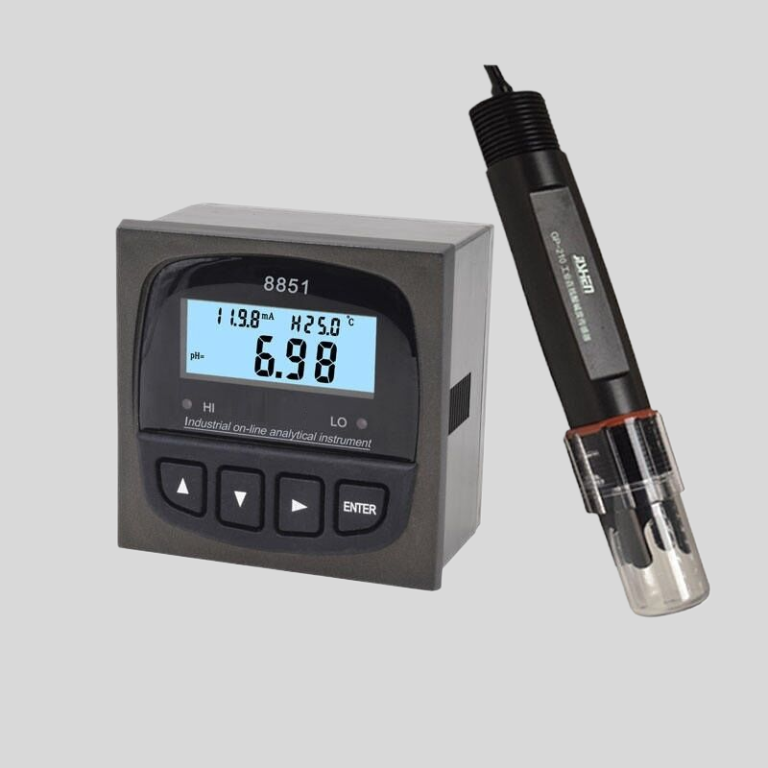
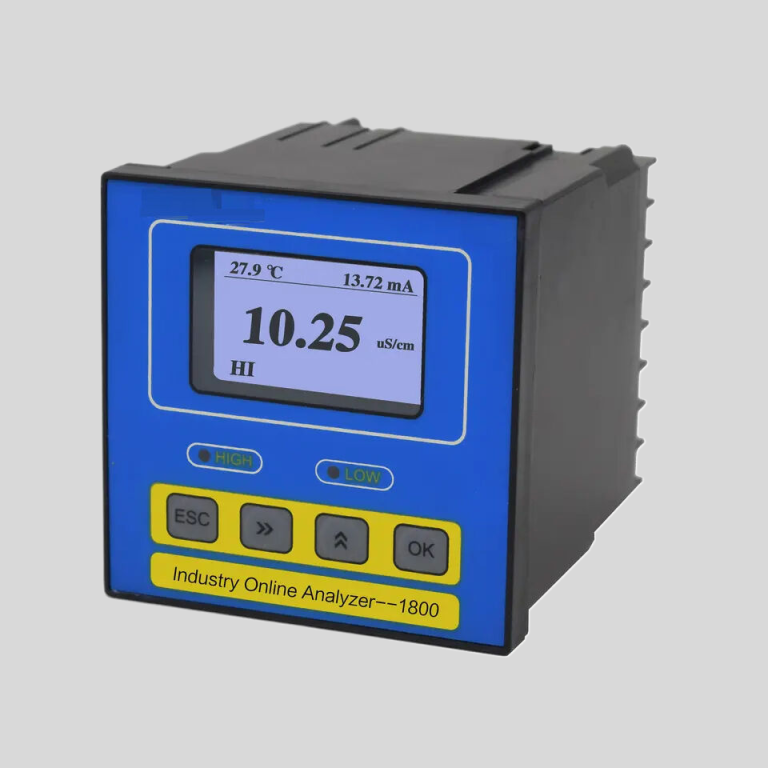
Shanghai ChiMay provides comprehensive water quality monitoring to optimize systems using these surfaces. Online Turbidity Testers track the suspended solids loading that drives particulate fouling, while Conductivity Meters monitor scaling potential through ionic strength measurement.
Zwitterionic Polymer Brushes
Zwitterionic polymers carry positive and negative charges in equal amounts, producing exceptionally hydrophilic surfaces:
- Hydration layer stability across varying ionic strengths
- Strong resistance to nonspecific protein adsorption — published tests show protein adsorption cut to near-zero levels versus unmodified surfaces, which translates directly into less biological fouling
- Good biocompatibility for medical water applications
- Long-term surface stability
Nanocomposite Surface Layers
Embedding hydrophilic nanoparticles into membrane surface layers combines polymer processability with ceramic hydrophilicity. Common additives:
- Silica nanoparticles with silanol surface groups
- Titanium dioxide with photocatalytic properties
- Graphene oxide with hydrophilic oxygen functional groups
- Metal-organic framework particles
Nanocomposite surfaces hold up measurably better against fouling than the base polymer — the improvement is consistent across pilot studies, though the magnitude depends on the foulant mix in your feedwater.
Comparative Performance Analysis
What Anti-Fouling Surfaces Buy You
Across vendor data and independent pilots, the pattern is consistent: hydrophilic modified membranes roughly halve cleaning frequency versus conventional RO; zwitterionic brush surfaces stretch cleaning intervals out further still and cut cleaning chemical use by about half; nanocomposite surfaces land between the two. The anti-fouling index numbers you’ll see quoted in datasheets vary by test protocol, so treat cross-vendor comparisons with suspicion and ask for the test conditions.
These improvements show up where it counts: fewer CIP shutdowns, lower chemical spend, and more system availability.
Long-Term Performance Stability
Anti-fouling surface durability decides whether lab performance survives field conditions. Before trusting a datasheet:
- Demand 6-month continuous operation data under actual feedwater conditions
- Ask for results after 500 cleaning cycles simulating multi-year operation
- Request surface characterization before and after testing to verify coating integrity
- Check flux recovery following aggressive cleaning protocols
Products that survive that scrutiny deliver reliable fouling resistance in industrial service.
Industrial Water Reuse Applications
Metal Finishing Industry
Metal finishing wastewater is a nasty feed: oils, surfactants, and dissolved metals, all of which foul membranes in different ways. Oils and surfactants drive organic fouling; rinsing operations carry suspended solids; concentrated salts bring scaling risk; recirculating systems grow microbes. Anti-fouling membranes handle this mix while producing the water quality rinse tanks need.
Shanghai ChiMay Monitoring Integration:
– Multi-Parameter Sensors track conductivity, pH, and ORP for process control
– Turbidity Sensors verify product water quality and catch membrane integrity issues
– Oil-in-Water Sensors monitor hydrocarbon concentrations in membrane feed streams
Petrochemical and Refinery Applications
Refineries need high-quality water for cooling towers, boiler feedwater, and process use. The treatment targets are demanding — oil and grease driven down to low levels, dissolved solids managed, silica controlled for boiler feed, and microorganisms dealt with. Anti-fouling membranes hold stable performance against the variable feedwater quality that refinery wastewater streams are known for.
Food and Beverage Processing
Food and beverage wastewater comes with high organic loads and severe biological fouling potential, plus some special constraints:
- Sanitary design requirements
- FDA compliance for product contact water
- High-temperature cleaning protocols
- Multiple cleaning agent exposure
Zwitterionic anti-fouling surfaces meet these requirements while delivering the fouling resistance the application needs.
Pharmaceutical Manufacturing
Pharmaceutical water systems demand absolute reliability and consistent quality:
- TOC below 500 ppb for purified water
- Conductivity below 1.3 μS/cm at 25°C
- Endotoxin levels below 0.25 EU/mL
- Continuous monitoring and validation
Those three numbers come straight from the pharmacopeia and they are non-negotiable. Anti-fouling membranes hold performance steady enough for pharmaceutical compliance while reducing validation complexity — predictable operation is easier to validate than an erratic one.
System Design Optimization
Pretreatment Configuration
Anti-fouling membranes tolerate wider feed quality ranges than conventional technology, but pretreatment still matters:
| Pretreatment Stage | Function | Typical Specifications |
|---|---|---|
| Screen/filter | Gross solids removal | 300–500 μm |
| Media filtration | Polishing | 50–100 μm |
| Cartridge filtration | Final protection | 5–20 μm |
| Chemical dosing | Scaling/fouling control | Optimized per analysis |
Shanghai ChiMay Conductivity Electrodes and Turbidity Sensors provide the monitoring data pretreatment optimization depends on, enabling adaptive chemical dosing that responds to actual water quality variations.
Operating Parameter Management
Anti-fouling membrane performance depends on holding the right operating conditions:
- Flux rate: operate below critical flux to minimize fouling accumulation
- Crossflow velocity: keep turbulence up to prevent cake layer compaction
- Recovery rate: cap recovery to limit concentration polarization
- Pressure differential: watch for the gradual creep that indicates fouling
Shanghai ChiMay provides the sensor infrastructure for continuous parameter monitoring:
- Online Analyzers track system performance continuously
- Flow Meters verify crossflow velocities
- Pressure Sensors detect fouling progression
- Multi-Parameter Sensors give a comprehensive system health picture
Cleaning Protocol Development
Even anti-fouling membranes need periodic cleaning. Get the protocol right:
- Fouling diagnosis: identify the primary foulant before choosing a cleaning agent
- Agent optimization: match cleaning chemistry to foulant characteristics
- Frequency determination: clean based on performance data, not the calendar
- Recovery verification: confirm full flux recovery after each cycle before returning to service
Anti-fouling membrane technology won’t eliminate cleaning — nothing does — but it changes the economics of reuse systems from “constant babysitting” to “manageable routine,” and that difference is what makes industrial water reuse projects pencil out.