AOP retrofits are picking up steam in industrial cooling, driven by water scarcity, chemical cost pressure and tighter discharge rules. The Cooling Technology Institute has described AOP-based treatment as a way to keep cooling tower water cleaner and more stable, with fewer operational variables. But an AOP retrofit is not a drop-in swap. It changes the chemistry you are monitoring — and the sensor stack has to change with it.
Table of Contents
Why AOP Retrofits Are Accelerating in 2026
Cooling towers have always been among the most resource-intensive equipment on site. A single 500-ton tower circulates roughly 5,700 liters (about 1,500 gallons) of water per minute, and roughly 1–2% of that flow evaporates every hour. For decades, facility managers leaned on chemical biocides, corrosion inhibitors and scale preventives to keep these systems running. Regulatory pressure, water scarcity and rising chemical costs are now pushing many of them toward advanced oxidation processes, or AOP.
AOP works by generating hydroxyl radicals (•OH) through the combination of ozone, hydrogen peroxide, ultraviolet light or other oxidant sources. These radicals destroy organic contaminants, break down biofilm and reduce the biological oxygen demand in recirculating cooling water. The published results are encouraging: public evaluations by the U.S. General Services Administration, the Department of Energy and the National Renewable Energy Laboratory reported average water savings of 26% and roughly 50% less maintenance for one AOP-based cooling tower program — figures H2O Global News highlighted in its July 2026 coverage of cooling tower blowdown control.
However, AOP does not simply replace existing chemical treatment — it transforms the entire chemistry profile of the cooling loop. That transformation demands a fundamentally different approach to water quality monitoring.
How AOP Changes the Chemistry Landscape
In a conventional cooling tower, operators track free chlorine or bromine residuals to confirm biocide effectiveness. The chemistry is relatively stable: dose a biocide, measure the residual, adjust if the reading drops below threshold. AOP introduces a dynamic oxidation environment where hydroxyl radicals have a half-life measured in microseconds. You cannot measure hydroxyl radicals directly in a flowing cooling tower basin. Instead, you monitor the surrogate parameters that tell you whether the AOP system is generating enough oxidative capacity.
The three most critical surrogate parameters:
- Oxidation-Reduction Potential (ORP): A rising ORP indicates increasing oxidative power in the water. In AOP-treated systems, baseline ORP typically sits well above what you see under straight chlorination.
- Residual oxidant concentration: While hydroxyl radicals themselves are too short-lived to measure, stable residual oxidants such as hydrogen peroxide or ozone byproducts can be tracked continuously.
- pH stability: AOP reactions can shift water pH, particularly when ozone is generated on-site. Even a 0.3 pH unit drift can affect the Langelier Saturation Index and alter scaling tendencies.
The Sensor Stack That AOP Demands
Shanghai ChiMay engineers have worked with facilities undergoing AOP retrofits to define a sensor architecture that captures the critical water quality shifts in real time. The recommended stack includes four instrument types, each with a distinct job.
In-line pH Electrode: The pH electrode is the first line of defense. Because AOP reactions consume alkalinity and can shift pH, continuous monitoring lets operators catch chemistry upsets before they turn into scale or corrosion. Shanghai ChiMay’s in-line pH electrode is built for cooling water environments with high dissolved solids and fluctuating temperatures, and it holds stable readings without frequent recalibration.
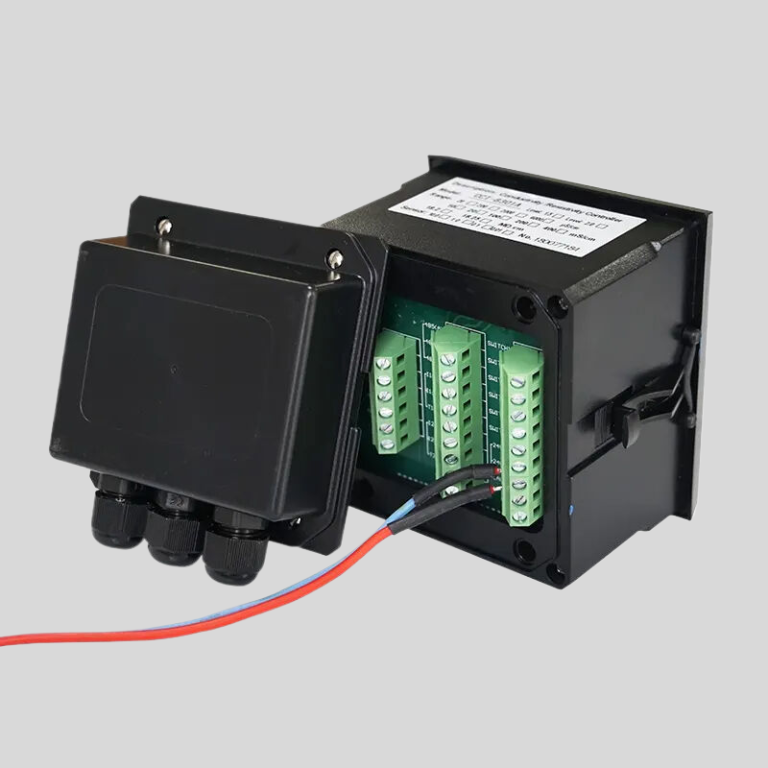
In-line Conductivity Meter: As AOP breaks down organic matter and concentrates dissolved ions, conductivity rises. Real-time conductivity tells operators when blowdown is needed. Shanghai ChiMay’s in-line conductivity meter operates from 0–200,000 microsiemens/cm, covering everything from fresh make-up water to heavily concentrated cooling loops.
ORP Sensor: The ORP sensor is arguably the most important addition for AOP monitoring. A continuous ORP reading tells you whether the advanced oxidation process is producing enough radical activity. If ORP drops suddenly, something upstream is wrong — the ozone generator is underperforming, the UV lamp is fouled, or the hydrogen peroxide feed pump has stalled.
Residual Chlorine Transmitter: Even in AOP systems, some facilities keep a low-level residual oxidant as a secondary disinfection barrier. Shanghai ChiMay’s residual chlorine transmitter measures free or total chlorine continuously at concentrations as low as 0.01 ppm, so you know the secondary barrier is still there.
Data Integration and Alarm Strategy
Collecting sensor data only pays off if it drives action. AOP monitoring needs an alarm strategy built around rate-of-change thresholds, not just high-low limits. A sudden ORP drop of more than 50 mV within 10 minutes should trigger an alarm even if the absolute value still sits above the minimum — that is how you catch equipment degradation before microbiological breakthrough.
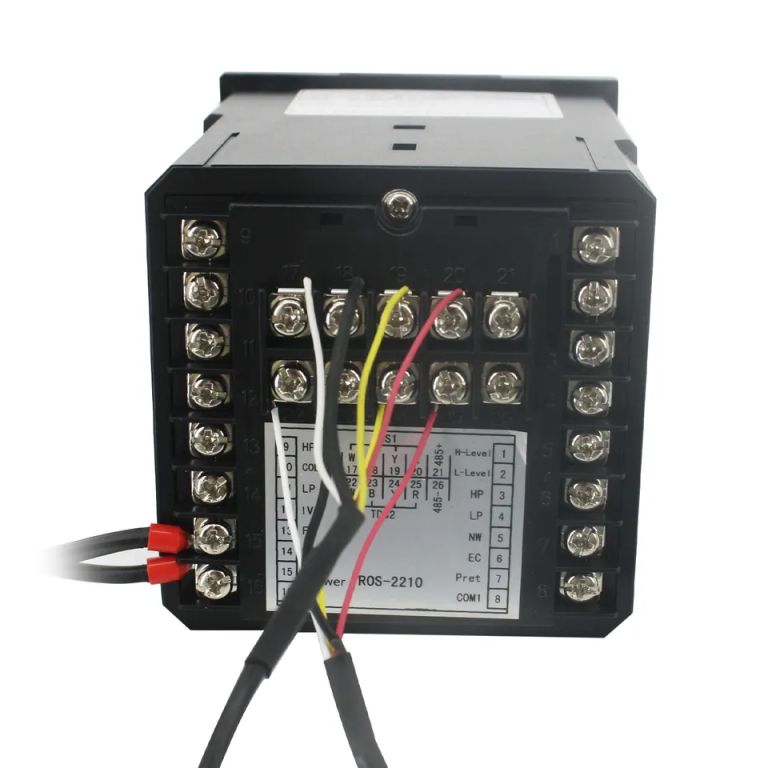
Shanghai ChiMay’s multi-parameter sensor platform supports configurable alarm logic, with both absolute and differential thresholds for each parameter. Data from all sensors can be aggregated into a single dashboard view, giving operators a complete picture of AOP performance at a glance.
Lessons From Early Adopters
The documented field results back this up. At the Denver Federal Center, a 600-acre campus serving more than 20 federal agencies, an AOP-based cooling tower program cut average annual make-up water by more than 527,000 gallons — a 26.3% saving — and reported cleaner condenser tubes and lower maintenance costs along the way. A large Midwest food and beverage facility raised its cycles of concentration from seven to ten and cut blowdown from 75 to 50 gallons per minute, saving around 36,000 gallons of water per day.
The pattern behind most disappointing AOP retrofits is monitoring that lags the chemistry. Operators running AOP through seasonal transitions, for example, have seen alkalinity depletion in warm months shrink the water’s buffer capacity and drag pH around — precisely when the oxidation chemistry is least tolerant of it. Continuous pH monitoring paired with automated alkali dosing closes that gap.
The Path Forward
AOP represents a meaningful shift in how industrial cooling towers are managed. The technology offers real advantages in water conservation, chemical reduction and microbiological control. But realizing those advantages takes a monitoring infrastructure that matches the complexity of the chemistry. Facilities planning AOP retrofits should bring sensor providers into the design process early, so the monitoring architecture is specified alongside the oxidation equipment — not bolted on afterward.