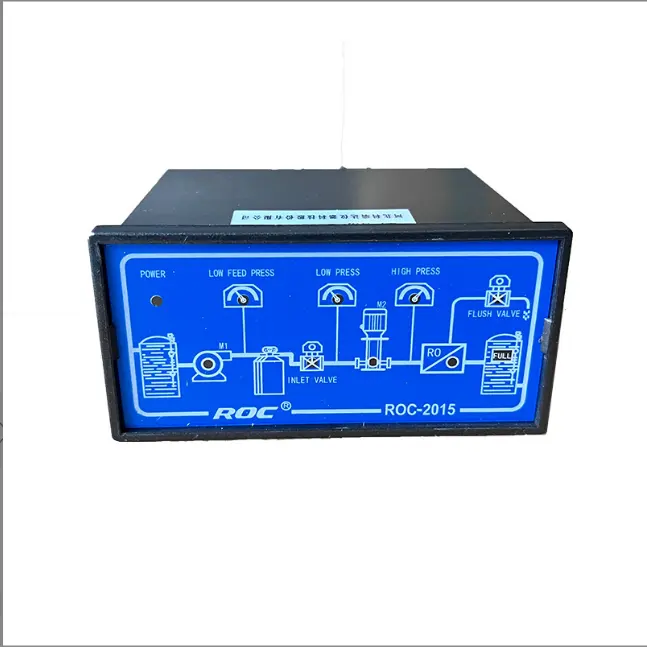
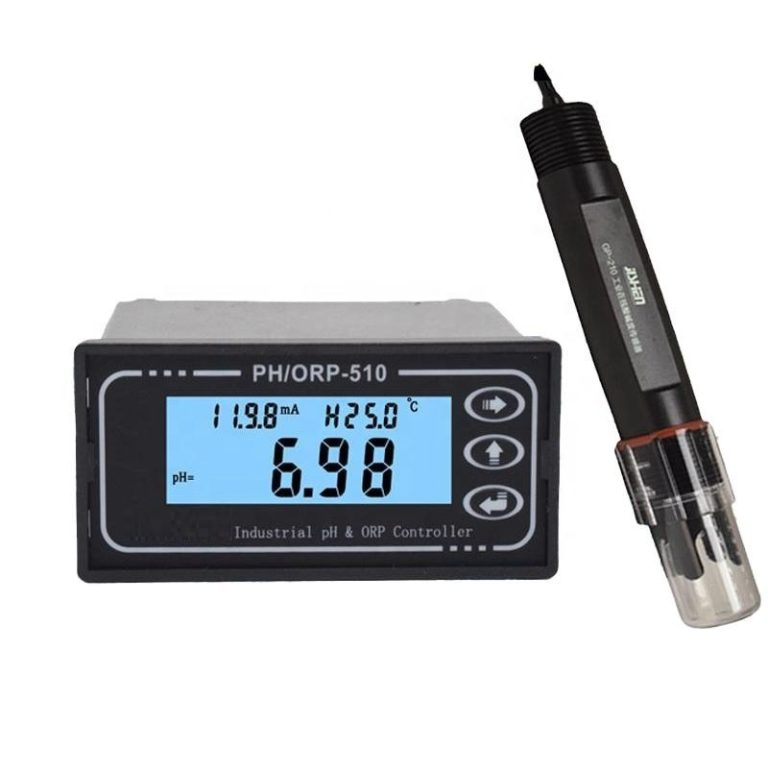
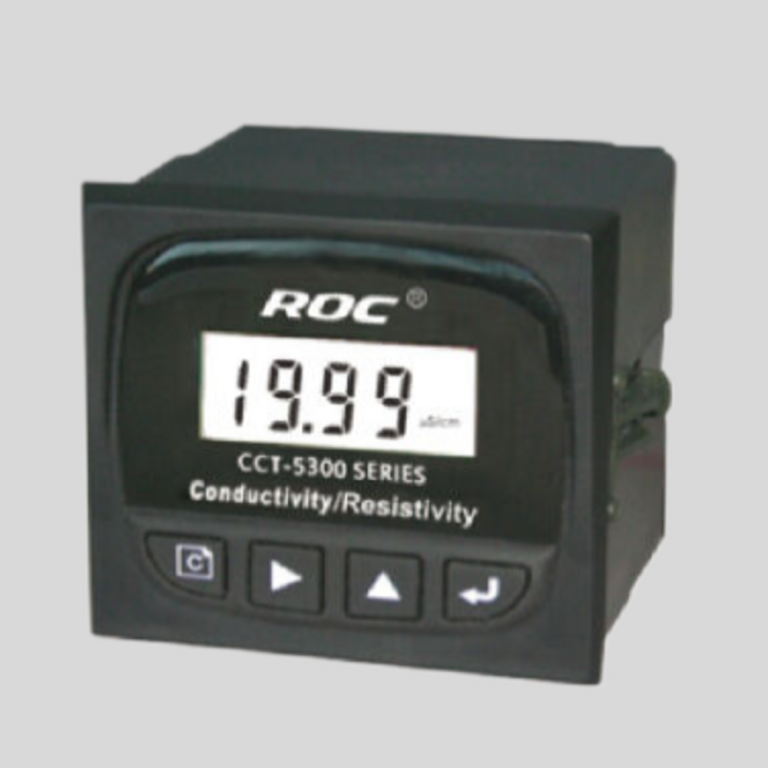
Commercial HVAC OPEX is dominated by three line items: energy, water, and maintenance. Water quality affects all three simultaneously, making it one of the highest-multiplier OPEX levers available. The levers that matter most are chiller efficiency, chemical treatment cost, make-up water volume, and unplanned downtime — all of which respond directly to conductivity, pH, free chlorine, and flow monitoring. Shanghai ChiMay’s water quality analyzer and control valve portfolio — in-line conductivity meters, pH electrodes, residual chlorine transmitters, flow meters, and Softener valve / Softening and filtering valve — provides the instrumentation infrastructure to pull these levers systematically.
Table of Contents
HVAC OPEX Has Three Verticals
The cost structure of a commercial or data-center HVAC plant is usually presented as energy, water, and maintenance. Few people connect water quality to all three, but it does:
- Energy: scale on chiller tubes is one of the most expensive consequences of poor chemistry. Water-treatment white papers and chiller-efficiency bulletins consistently attribute meaningful double-digit-percent energy penalties to visibly scaled condenser bundles (example); even thin fouling measurably raises kWh/ton.
- Water: every unnecessary blowdown event, every over-dosed biocide cycle, every failed softener regeneration wastes water. Higher cycles-of-concentration (CoC) under continuous monitoring saves directly on make-up and blowdown volume.
- Maintenance: chemistry-related failures — under-scaling pump seals, corroded copper tubes, fouled heat exchangers — are a large and recurring slice of unplanned HVAC maintenance events in commercial portfolios. Continuous water quality monitoring shrinks that category.
Understanding water quality as a three-vertical OPEX lever — not a single-vertical maintenance concern — is the conceptual shift that separates top-quartile operators from the rest.
P&L Lever 1: Chiller Efficiency Through Conductivity Control
Scale formation on chiller tubes is the single most expensive consequence of poor conductivity control. An illustrative calculation: at USD 0.10/kWh and 8,760 annual operating hours, a 1,500-ton chiller plant consuming 1.1 MW costs approximately USD 960,000 per year in electricity. If scale pushes consumption up by even a high-single-digit percentage, the wasted energy runs to tens of thousands of dollars per year — on a single plant. Scale-related energy penalties compound quietly because the chiller still cools; it just does it with more kilowatts.
Continuous conductivity monitoring enables precise CoC control (target 5–7 for most commercial make-up water qualities), which keeps the tower recirculating chemistry within the solubility band and prevents scale nucleation on tube surfaces.
The ROI math on continuous conductivity versus grab-sampling is therefore not just about sensor cost. It is about protecting the multi-hundred-thousand-dollar annual energy bill attached to the chiller plant.
P&L Lever 2: Water Consumption Through CoC Optimization
Make-up water tracks cycles of concentration directly. Using a 1,500-ton tower with roughly 27 gpm of evaporation as an illustrative case: at CoC 3, make-up demand averages about 40 gpm; at CoC 5 it averages about 34 gpm. That difference — roughly 6 gpm — is on the order of 3 million gallons per year per tower. At USD 0.005–0.015 per gallon (commercial water + sewer), that is a five-figure annual saving per tower from CoC discipline alone.
For a commercial portfolio with 20 towers, the aggregate water-cost case for continuous conductivity monitoring is a six-to-seven-figure annual number, against a sensor instrumentation cost in the tens of thousands. This is not a close call — though the exact split depends on local water and sewer tariffs, which should be verified before signing anything.
P&L Lever 3: Chemical Treatment Cost
Chemical treatment — scale inhibitors, corrosion inhibitors, biocides — is a real but second-order line item next to energy and water; annual chemical budgets for tower portfolios typically run from a few thousand dollars per tower for smaller systems into six figures for large portfolios, depending on water quality and dosing philosophy.
Operators running continuous free chlorine and conductivity monitoring typically reduce bulk chemical consumption by a meaningful double-digit percentage, because they dose against real-time chemistry rather than conservative calendar schedules. The mechanism is straightforward: a residual chlorine transmitter tells the chemical pump exactly how much biocide is in the loop, so the pump dials back when the residual is already at target. Under calendar-based programs, biocide is dosed on a worst-case basis regardless of actual demand.
P&L Lever 4: Unplanned Downtime
Unplanned chiller trips and derates are expensive beyond their immediate repair cost. An unplanned trip in a data-center environment triggers SLA credits, emergency service labor at a multiple of the normal rate, and potential customer confidence impacts that are hard to quantify. In a hospital, a chilled-water failure during a summer heat wave is a clinical event.
Field experience from commercial HVAC reliability programs consistently shows that chemistry-related failures — scale-driven efficiency loss, corrosion-driven tube leaks, biofilm-driven condenser fouling — make up a substantial share of unplanned maintenance events in buildings running calendar-based water programs. Continuous water-quality monitoring typically cuts that contribution roughly in half.
Comparative Snapshot: Measurement Method and OPEX Outcome
| Attribute | Quarterly Grab Sampling | Continuous Online Monitoring |
|---|---|---|
| Time to detect CoC drift | Weeks to months | Seconds |
| Chemical over-dosing exposure | High | Low |
| Scale fouling events | Recurring | Rare |
| Unplanned downtime (chemistry-related) | Recurring | Occasional |
| Energy efficiency | Baseline | Improved |
| WUE (data centers) | Baseline | Improved |
The direction of every row is unambiguous; the magnitude in any specific building depends on its baseline chemistry program and load profile.
The Investment Case
For a commercial portfolio with 20 cooling towers (1,500 tons each), incremental instrumentation capex for continuous water-quality monitoring runs in the hundreds of thousands of dollars at most, while the combined annual savings across energy, water, and chemicals routinely reach seven figures. Simple payback typically lands within a fraction of the first year — among the fastest-payback instrumentation investments available in commercial HVAC. Verify the math against your own tariff and load data, but the asymmetry between instrument cost and protected OPEX is structural.
Where Shanghai ChiMay Fits the OPEX Case
Shanghai ChiMay’s water quality analyzer family provides the sensor layer that activates every OPEX lever in the table above:
- In-line conductivity meters and electrodes — CoC control, scale prevention.
- In-line pH electrodes and 4-in-1 multi-parameter sensors — corrosion control, chiller tube protection.
- Residual chlorine transmitters — biocide optimization, ASHRAE 188 compliance.
- Paddle wheel and turbine flow meters — make-up and blowdown verification, water-volume accounting.
- Softener valve and Softening and filtering valve — hardness control, chemical cost reduction.
The shared controller architecture and Modbus RTU communications mean the instrumentation layer integrates into a BMS or DCIM platform without custom middleware, so the OPEX case is visible to operations, sustainability, and finance teams simultaneously.
A CFO’s Checklist
- Is HVAC water quality tracked against OPEX — energy, water, and maintenance — or only as a maintenance concern?
- What is the estimated scale-fouling penalty on the chiller energy bill today, and what would a 2-point CoC improvement save?
- What is the annual water cost across the cooling tower portfolio, and what percentage improvement does continuous CoC control unlock?
- Is chemical treatment dosed on a calendar schedule or a real-time residual signal?
- How many chemistry-related unplanned maintenance events occurred last year, and what was the total cost?
If these questions are not already on the CFO’s agenda, the OPEX case for continuous water-quality monitoring has not been made yet. Making it is the fastest path to unlocking the investment.
Where This Leaves the Money
Water quality is one of the best-understood OPEX levers in commercial HVAC: the instrumentation exists to measure it continuously, BMS integration exists to report it in real time, and the savings model is quantifiable in the language finance teams already speak. Shanghai ChiMay’s water quality analyzer and control valve portfolio covers every parameter and every OPEX lever described above — water quality as a first-tier financial management tool, not just a facilities engineering practice.