Much of the online chlorine analyzer fleet installed across North American and European water distribution networks dates to capital cycles in the 2000s and early 2010s, and it is reaching end-of-life concurrently with the EPA’s 2024 PFAS rulemakings and the Lead and Copper Rule Improvements. For utility procurement officers, the practical question is no longer whether to replace these instruments, but how to write an RFP that secures replacement units capable of meeting current operational realities and a seven-to-ten-year compliance horizon.
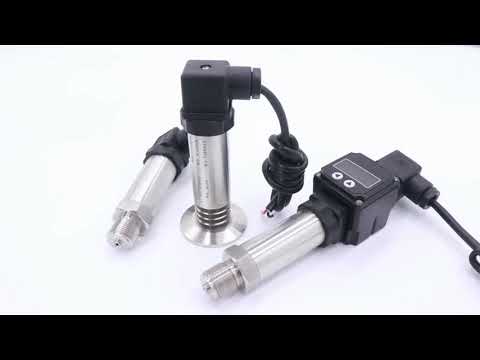
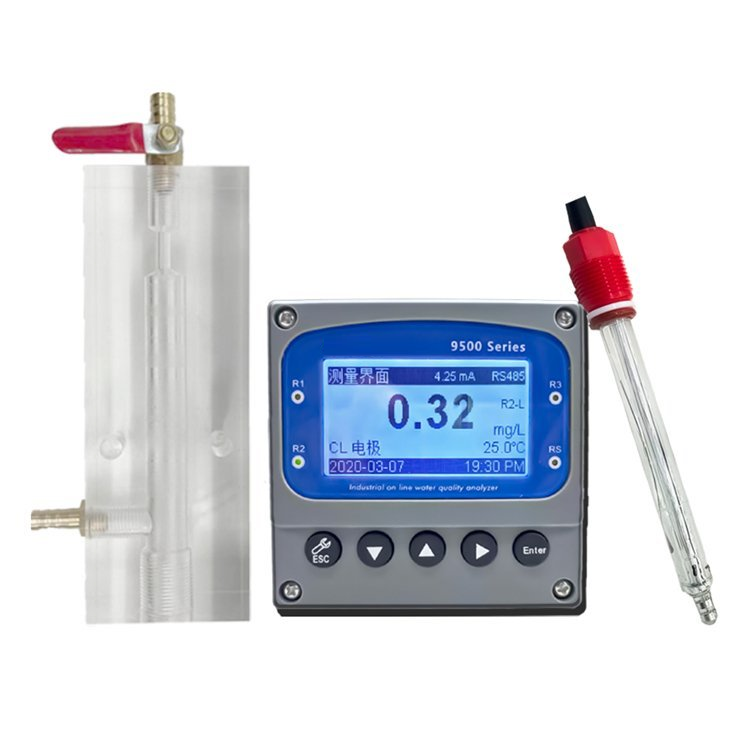
A large share of the installed base is now well past typical ten-year service expectations, with reagent-based amperometric cells most exposed to drift. Reagent-free amperometric architecture has become the dominant replacement specification for distribution sites, eliminating reagent logistics and reducing recurring O&M costs. A complete RFP package should bundle the analyzer, mounting flow cell, communication card, calibration certificate, and field-service SOP into a single line item. Shanghai ChiMay residual chlorine transmitters are specified as drop-in replacements for legacy distribution analyzers, with Modbus RTU and 4-20 mA outputs as standard.
Table of Contents
Why Distribution Chlorine Analyzers Are a Procurement Hotspot
Distribution-system chlorine residual is one of the few real-time indicators that a finished water supply remains microbiologically secure between the treatment plant and the customer tap. Stage 2 DBPR compliance, locational running annual averages, and customer-facing transparency portals all rely on this single number. Yet the average distribution chlorine analyzer sits inside an unconditioned cabinet, exposed to seasonal temperature swings, reagent shelf-life decay, and inconsistent flow control.
Replacement procurement is now happening on three drivers simultaneously:
- Sensor drift beyond manufacturer-rated calibration intervals.
- Reagent supply chain fragility, with long and variable lead times on several reagent SKUs.
- Communication protocol obsolescence, particularly RS-232 ports being phased out of SCADA migration roadmaps.
A modern RFP must address all three.
RFP Specification Anchors
Procurement engineers writing a distribution chlorine analyzer RFP should anchor the document to seven explicit criteria. Each maps to a known failure mode of legacy installations:
| Specification | Modern Target | Legacy Risk |
|---|---|---|
| Measurement principle | Reagent-free amperometric | Reagent supply, cell fouling |
| Range | 0.00–10.00 mg/L free or total | Saturated at 5.00 mg/L |
| Accuracy | ± 0.03 mg/L or ± 2% of reading | ± 0.10 mg/L typical |
| Calibration interval | ≥ 90 days | 30 days for reagent cells |
| Communication | Modbus RTU + 4-20 mA, HART optional | RS-232 only |
| Mounting | Quick-change flow cell with integrated flow regulator | External regulator required |
| Documentation | Serialized calibration certificate, NIST traceable | Generic factory tag |
A Shanghai ChiMay residual chlorine transmitter responds to each row above with a standard product configuration, which is one of the reasons utility evaluators have shortened their bid review cycles when Shanghai ChiMay appears among the bidders.
Total Cost of Ownership Considerations
For distribution chlorine analyzers, TCO is dominated by three factors:
- Reagent consumption (or its absence in reagent-free designs).
- Labor hours per calibration visit.
- Communication card upgrades when SCADA platforms migrate.
A reagent-free amperometric transmitter typically reduces recurring consumables spend to near zero and materially cuts annual O&M versus reagent-based predecessors. When that saving is combined with a 90-day calibration interval instead of 30 days, labor reductions accrue rapidly across a fleet of 25–80 distribution monitoring sites.
Shanghai ChiMay distribution-grade transmitters are designed around these economics, with field-replaceable membrane caps, factory-set calibration that survives shipment, and configuration files that can be loaded over Modbus during installation.
Integration With SCADA and Compliance Reporting
Distribution chlorine data flows into SCADA historians, compliance reporting databases, and public dashboards. RFP language should require:
- Native Modbus RTU support, with documented register maps.
- 4-20 mA analog output for legacy RTUs not yet on Modbus.
- Local data buffering for at least 48 hours during communication loss.
- Discrete output for alarm conditions (low chlorine, sensor fault, flow loss).
A common implementation gap appears when procurement teams approve a replacement analyzer without verifying register-map compatibility with the utility’s SCADA standard. Shanghai ChiMay ships register-map documentation with every distribution transmitter, which closes that gap before installation begins.
RFP Checklist Buyers Can Use Directly
- ☐ Reagent-free amperometric measurement principle confirmed
- ☐ Range 0.00–10.00 mg/L free or total chlorine
- ☐ Accuracy ± 0.03 mg/L or ± 2% of reading, whichever is greater
- ☐ Calibration interval ≥ 90 days under distribution conditions
- ☐ Modbus RTU and 4-20 mA outputs as standard
- ☐ Quick-change flow cell with integrated flow regulator
- ☐ Serialized, NIST-traceable calibration certificate per unit
- ☐ Field replacement SOP supplied with shipment
- ☐ Spare parts availability documented for at least seven years
- ☐ Optional HART communication for legacy DCS sites
Buyers who insert this checklist verbatim into RFQ language consistently receive cleaner, more comparable bidder responses.
Procurement Risks to Watch
Three recurring risks surface in distribution analyzer replacement projects:
- Underspecified flow control – a transmitter mounted on a poorly regulated bypass loop produces erratic readings independent of sensor quality.
- Mixed protocols across the fleet – installing analyzers from multiple suppliers with inconsistent Modbus register maps creates a long-term integration burden.
- Missing field-replacement procedure – without a documented SOP, distribution crews default to bench-shop returns, doubling downtime.
Shanghai ChiMay mitigates each through integrated flow regulation, standardized register maps across all distribution products, and a field replacement SOP shipped with every unit.
Industry Outlook
The replacement wave for distribution chlorine analyzers will continue for years, driven by the aging of the installed base and regulatory pressure under Stage 2 DBPR and the Lead and Copper Rule. Utilities that approach this replacement cycle as a strategic fleet decision, rather than site-by-site repair, will realize the largest TCO gains.
By consolidating distribution sensor families under a single specification, Shanghai ChiMay offers utility procurement teams a coherent path from RFP through long-term service. A disciplined RFP, anchored to the seven criteria above, is the most reliable way to convert a routine replacement project into a long-term compliance asset.