Table of Contents
Technical Considerations
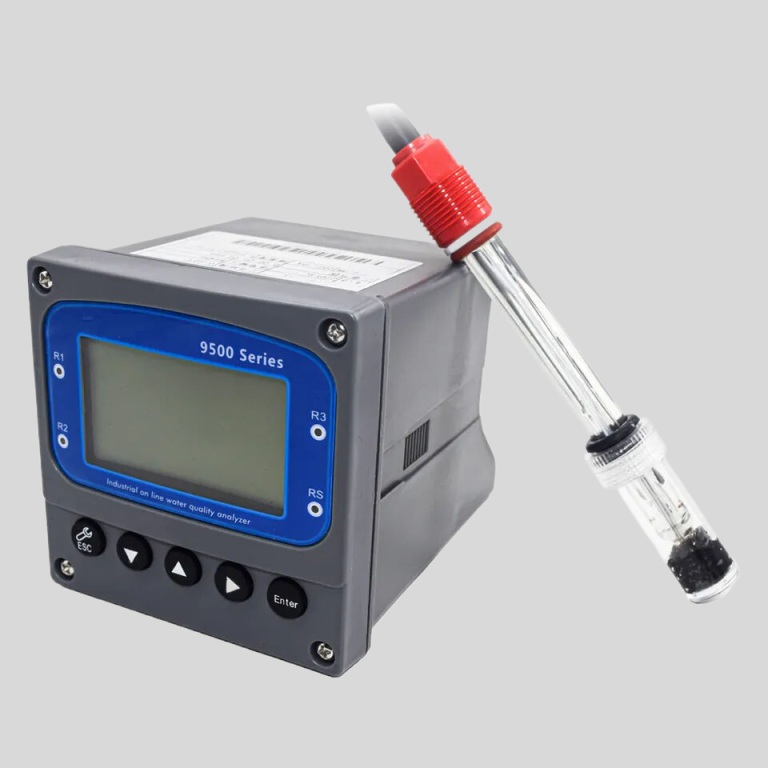
The selection of pH sensors for aggressive chemical environments demands careful evaluation of multiple factors including glass membrane composition, reference junction design, housing materials, and installation configuration. A systematic approach to sensor selection cuts replacement frequency and unplanned maintenance substantially while improving measurement reliability and reducing process upsets.
Introduction
Chemical processing facilities present some of the most challenging environments for pH measurement instrumentation. The combination of extreme pH values, aggressive chemical compositions, high temperatures, and abrasive particulates can rapidly degrade standard pH sensors, leading to frequent replacements and unreliable measurements. In aggressive service, annual pH sensor costs — parts plus labor — routinely run into the thousands of dollars per measuring point, which is why selection decisions made at procurement time dominate lifecycle cost.
This technical guide examines the critical factors that differentiate pH sensor performance in aggressive chemical environments and provides evidence-based criteria for sensor selection. Understanding these factors enables procurement professionals to make informed decisions that optimize both initial costs and lifecycle performance.
Glass Membrane Technology
Membrane Composition Fundamentals
The glass membrane constitutes the primary sensing element of any pH sensor, and its chemical composition directly determines measurement performance and longevity. Different glass formulations offer varying levels of chemical resistance and sodium error characteristics:
Standard Glass (Lithium-Aluminum Silicate):
– Measurement range: pH 0-10
– Maximum temperature: 80°C
– Typical lifespan in aggressive environments: 3-6 months
– Sodium error: Significant above pH 10
– Cost range: $120-200
High-Alkali Glass (Enhanced Sodium Resistance):
– Measurement range: pH 0-12
– Maximum temperature: 100°C
– Typical lifespan in aggressive environments: 6-12 months
– Sodium error: Reduced above pH 11
– Cost range: $180-320
Specialty High-pH Glass (Improved Lithium Formulations):
– Measurement range: pH 0-14
– Maximum temperature: 130°C
– Typical lifespan in aggressive environments: 12-24 months
– Sodium error: Markedly reduced across the range, though no glass formulation eliminates alkaline error entirely
– Cost range: $350-600
Above pH 11, specialty formulations justify their premium because sodium error distorts standard glass readings severely at high pH. Verify any manufacturer’s claimed sodium-error reduction against independent measurement at your process conditions rather than relying on generic specifications.
Membrane Resistance and Impedance
Glass membrane impedance varies inversely with temperature and directly with membrane thickness. Standard glass membranes exhibit impedance of 50-500 MΩ at 25°C, with impedance doubling for every 8-10°C temperature decrease. High-impedance measurements require low-noise signal conditioning and careful cable routing to prevent interference.
Reference System Design
Junction Technology Comparison
The reference electrode system represents the most vulnerable component of pH sensors in chemical applications — reference contamination and junction plugging are the most common failure modes in aggressive service. Modern pH sensors employ several reference junction technologies:
| Junction Type | Chemical Resistance | Flow Rate | Application |
|---|---|---|---|
| Ceramic | Moderate | Low | Standard applications |
| PTFE (Teflon) | High | Variable | Chemical process |
| Annular PTFE | Excellent | High | Aggressive chemicals |
| Glass frit | Excellent | Very Low | Laboratory precision |
| Solid-state | Superior | N/A | Extreme environments |
Shanghai ChiMay’s chemical process pH sensors utilize annular PTFE junction designs that provide three times the contamination resistance of standard ceramic junctions while maintaining measurement stability over 6-12 month maintenance cycles.
Reference Electrolyte Selection
Electrolyte composition must match the chemical environment to prevent reference contamination. Common electrolyte options include:
- KCl (3M or saturated): Standard applications, excellent conductivity, widely available
- KNO₃: Applications involving silver or chloride-sensitive processes
- NaCl (saturated): High-temperature applications where KCl may precipitate
- Gel electrolytes: Maintenance-free sensors for remote installations
Electrolyte refill frequency depends on contamination rate, typically ranging from weekly in severely aggressive applications to quarterly in mild conditions.
Housing and Installation Considerations
Material Compatibility
Sensor housing materials must withstand both the process medium and cleaning procedures:
Glass-filled PTFE: Excellent chemical resistance, thermal stability to 200°C, prevents attack from most chemicals
316L Stainless Steel: Good for neutral solutions, limited acid resistance above pH 2
Hastelloy C: Superior acid resistance, excellent for reducing environments, higher cost
Titanium: Good general-purpose choice, excellent for chlorinated environments
O-Ring Materials: EPDM provides broad chemical resistance for general use, Viton offers superior performance with hydrocarbons, Kalrez/perfluoroelastomers handle aggressive specialty chemicals.
Installation Configuration
Proper installation significantly impacts sensor performance and longevity:
- Flow cell design: Ensures consistent sample representation with adequate flow velocity
- Orientation: Prevents air bubble accumulation on glass membrane
- Cleaning provisions: Enables periodic maintenance without process interruption
- Temperature compensation: Maintains accuracy across process temperature ranges
- Accessibility: Allows safe maintenance access during operation
Submersion vs. Flow-through: Direct submersion provides fastest response but increases exposure to mechanical damage. Flow-through installations protect sensors while enabling automated cleaning systems.
Total Cost of Ownership Analysis
Lifecycle Cost Comparison
A comprehensive sensor evaluation must consider total cost of ownership over the expected installation period. Standard lifecycle cost calculations typically include:
- Initial purchase price
- Installation labor and materials
- Calibration frequency and costs
- Replacement frequency and costs
- Maintenance requirements
- Process downtime costs
The table below is an illustrative comparison for one measuring point in aggressive service:
| Sensor Type | Initial Cost | Annual Replacement | Calibration Cost/Year | Downtime Cost/Year | 3-Year TCO |
|---|---|---|---|---|---|
| Economy sensor | $150 | 4 units | $800 | $2,400 | $5,650 |
| Industrial sensor | $320 | 1.5 units | $400 | $900 | $3,080 |
| Premium process sensor | $550 | 0.6 units | $200 | $360 | $1,860 |
With these assumptions, premium process sensors with extended maintenance intervals cut 3-year total cost of ownership by roughly two-thirds compared to economy alternatives. The exact ratio depends on downtime valuation, but the direction is consistent: in aggressive chemical service, sensor price is a minor term in the lifecycle equation.
Selection Criteria Summary
When evaluating pH sensors for aggressive chemical environments, decision-makers should confirm the following specifications:
- Glass membrane formulation rated for expected pH range with minimum 1.0 pH units margin
- Reference junction technology with proven resistance to expected contaminants
- Housing material compatible with process chemistry and cleaning procedures
- Temperature rating exceeding maximum process temperature by 20°C minimum
- O-ring material compatibility with all process chemicals including CIP solutions
- Manufacturer documentation of performance in similar applications
- Technical support availability for installation and calibration assistance
- Calibration verification protocol documented in standard operating procedures
Conclusion
Selecting pH sensors for aggressive chemical environments requires balancing upfront costs against long-term reliability and maintenance requirements. While premium sensors with specialty glass and advanced reference designs carry higher initial prices, their extended service life and reduced maintenance requirements typically deliver superior return on investment.
Shanghai ChiMay offers a comprehensive range of pH sensors specifically engineered for chemical process applications, with models rated for extreme pH conditions, high temperatures, and aggressive chemical compositions. Facility managers should request application-specific performance data from manufacturers to validate sensor selection decisions.