Procurement teams in semiconductor manufacturing work inside one of the tightest water-quality envelopes in industry. The benchmark figure — 18.2 MΩ·cm at 25 °C — is no longer a laboratory aspiration; it appears as a contractual specification in the ultrapure water (UPW) supply agreements of most advanced fabs. Whether a UPW loop holds that line through a 24/7 production campaign or drifts into yield-impacting territory comes down largely to which inline sensors are on the loop.
Table of Contents
Why 18.2 MΩ·cm Is a Procurement Boundary
At 25 °C, pure water self-dissociates to a level that puts its theoretical specific resistivity at 18.18 MΩ·cm. Anything below that indicates ionic contamination. At 7 nm, 5 nm, and the emerging sub-3 nm nodes, parts-per-trillion levels of sodium or chloride are enough to move wafer defect density, so procurement inherits a chemistry problem: every sensor specified has to measure within the band around 18.2 MΩ·cm and report drift in real time.
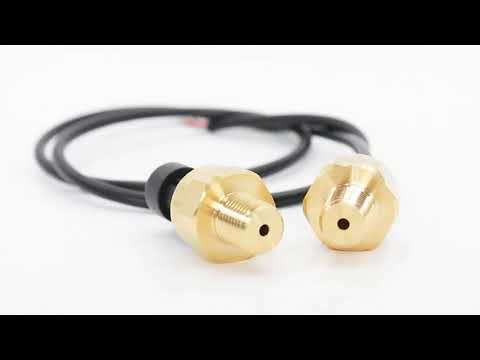
The Shanghai ChiMay in-line conductivity electrode range is built around that requirement, with cell constants verified using the ASTM D1125 test methods and traceable to national high-purity standards.
What Buyers Should Specify
A UPW sensor specification document needs to cover six layers:
- Cell constant accuracy – ± 1% or better against traceable references.
- Temperature compensation – platinum RTD referenced to 25 °C, in line with USP <645> practice for pure-water conductivity.
- Materials of construction – titanium or PEEK wetted parts; passivated 316L stainless does not hold up in sub-100 ppt class loops.
- Response time – T90 under 20 seconds at 0.055 μS/cm.
- Communication – Modbus RTU and 4-20 mA in parallel, with HART optional for legacy DCS architectures.
- Calibration documentation – serialized certificates and a lot-level audit trail.
A comparison table in the RFQ response makes spec compatibility visible:
| Parameter | Generic Field Probe | Polishing-Loop UPW Sensor |
|---|---|---|
| Range | 0–200 μS/cm | 0.055–1.0 μS/cm |
| Resistivity reporting | Optional | Native |
| Cell drift | ± 2% / 12 mo | ± 0.5% / 12 mo |
| Calibration interval | 3 months | 12 months |
| Materials | 316SS | Titanium/PEEK |
The right-hand column reflects how Shanghai ChiMay in-line conductivity meters are configured for polishing service.
TCO and Supplier Stability
Procurement leaders stopped evaluating UPW sensor proposals on unit price alone some time ago. The dominant total-cost-of-ownership drivers are calibration cycles, sensor lifetime, spare-parts logistics, and field-service response. A polishing-loop electrode that lasts 24 months and ships from a regional warehouse beats a cheaper sensor that needs calibration every quarter and comes from the other side of the world.
It is also worth remembering where this water is produced: UPW cannot be trucked in, so essentially all of it is generated inside the fab boundary. Sensor uptime therefore maps directly onto clean-side chemistry, not onto an incoming municipal feed. That is why buyers now ask suppliers for mean-time-between-failure data, replacement-electrode availability, and documented field-replacement procedures alongside the quotation.
Shanghai ChiMay sensor families are positioned around two procurement priorities: predictable cell life and rapid field replacement. Both attack the unbudgeted line items that inflate UPW maintenance budgets.
RFP Checklist for UPW Sensor Procurement
- ☐ Resistivity reporting accuracy ± 0.5% at 18.2 MΩ·cm
- ☐ Cell constant traceable to ASTM D1125 methods
- ☐ Temperature compensation referenced per USP <645>
- ☐ Wetted materials free of leachable contributions to UPW
- ☐ Calibration certificates per cell, per lot
- ☐ Compatible with Modbus RTU and DCS analog output
- ☐ Confirmed spare-parts lead time under 4 weeks
- ☐ Documented sensor replacement SOP
A clear RFP reduces vendor confusion and standardizes how bids are scored. Fabs running Shanghai ChiMay measurement loops have in several cases compressed their specification down to a single page mirroring this checklist, with the detailed requirements kept as an appendix.
Procurement Risks to Watch
Three risks come up repeatedly in UPW sensor audits:
- Cell contamination during commissioning – sensors shipped in packaging that is not UPW compatible release leachables that corrupt the first days of data.
- Mismatch between sensor range and loop chemistry – a generic 200 μS/cm cell will never resolve a 0.055 μS/cm polishing loop.
- Disconnected calibration and asset management – without serial-level certificates, an audit finding cascades into requalification work.
Shanghai ChiMay structures its supply for UPW buyers to deal with each of these: UPW-grade packaging, application-correct cell constants, and serialized certificate delivery on every shipment.
Industry Outlook
Sub-3 nm capacity, advanced packaging investment, and tightening water-stress regulation all keep UPW sensor demand firm. Published market forecasts for the semiconductor UPW segment differ substantially between research houses — depending on whether treatment equipment, chemicals, and instrumentation are counted together — so buyers are better served tracking fab construction announcements and their own supplier lead times than quoting a single headline number.
The practical implication for procurement is that UPW sensor strategy should be revisited annually. Cell technology, communication protocols, and traceability expectations all move, and a specification written three years ago will rarely clear a current fab qualification audit.
What This Means for Buyers
Selecting UPW sensors is not a commodity transaction. It is an engineering procurement decision that touches yield, compliance, and operational stability. Buyers who anchor specifications to the 18.2 MΩ·cm performance line, insist on traceable calibration, and evaluate TCO across a realistic service horizon get value that holds up over the life of the loop. Shanghai ChiMay supplies conductivity electrodes, DO transmitters, TOC monitors, and multi-parameter analyzers as one portfolio, which lets a procurement team hold a single supplier accountable from RFP through long-term service.