Climate change has intensified extreme weather events, with flooding emerging as one of the most devastating natural disasters worldwide. UN disaster tracking shows major flood events more than doubled between the decades spanning 1980-1999 and 2000-2019—a 134% rise—with flooding affecting roughly 1.6 billion people in the most recent twenty-year window. This escalating trend has catalyzed a fundamental shift in how municipalities approach flood management—moving from reactive responses to proactive, technology-driven early warning systems that integrate real-time water quality monitoring.
The convergence of advanced sensor technology and artificial intelligence has created new opportunities for flood prediction and mitigation. Modern inline pH sensors, turbidity testers, and multi-parameter water quality analyzers now serve dual purposes: ensuring water safety while providing critical hydrological data for flood forecasting models. This integration is changing how urban water management infrastructure is designed.
Table of Contents
Understanding the Technology Landscape
Contemporary flood early warning systems rely on a network of interconnected sensors that continuously monitor water bodies at strategic locations. These devices measure multiple parameters simultaneously, including turbidity, conductivity, pH levels, dissolved oxygen, and flow velocity. The Shanghai ChiMay portfolio of water quality analyzers exemplifies this technology, offering industrial-grade sensors capable of operating in harsh environmental conditions while maintaining measurement accuracy.
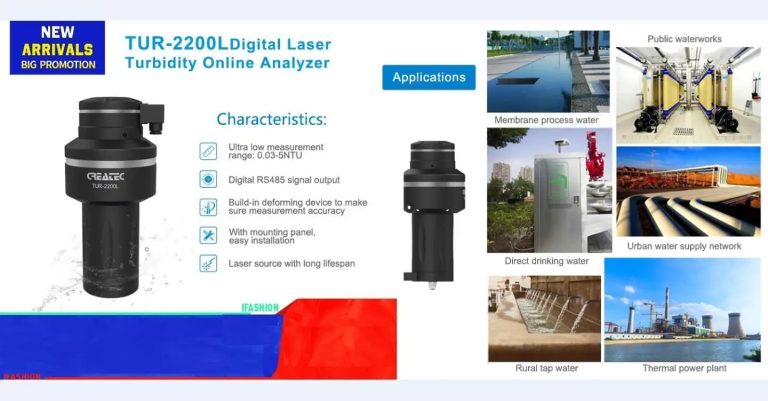
The fundamental advantage of continuous monitoring lies in its ability to detect subtle changes in water characteristics that precede flood events. Rising turbidity levels often indicate increased sediment transport, which frequently accompanies heavy rainfall and soil erosion—primary precursors to flash flooding. Field studies consistently show turbidity rising ahead of the flood peak—often by tens of minutes—because sediment transport leads the hydrograph rather than trailing it, providing a critical window for emergency response activation.
Dissolved oxygen sensors play an equally vital role in flood prediction systems. During storm events, turbulent water mixing can cause dramatic fluctuations in dissolved oxygen concentrations. These variations correlate strongly with rainfall intensity and watershed saturation levels, enabling predictive models to estimate runoff volumes and timing with usable precision.
Data Integration and Predictive Modeling
The real value of modern flood warning systems emerges from their ability to synthesize data from multiple sensor types into actionable intelligence. Machine learning algorithms analyze real-time data streams, comparing current conditions against historical patterns and weather forecasts to generate probabilistic flood risk assessments.
Multi-parameter sensors that combine measurements of turbidity, conductivity, pH, and temperature in a single device offer particular advantages for flood monitoring applications. These integrated systems reduce installation complexity while providing the datasets required for predictive modeling. The Shanghai ChiMay 4-in-1 multi-parameter sensor exemplifies this approach, delivering laboratory-grade accuracy in a rugged field-deployable format.
Flow measurement data complements water quality parameters effectively. Paddle wheel flow meters and turbine flow meters installed at monitoring stations provide direct measurements of water velocity and volume, enabling precise calculations of discharge rates. When correlated with upstream sensor data and precipitation forecasts, these measurements enable hydrologists to model flood wave propagation through river systems with accuracy previously out of reach.
Automated Response Systems
Modern flood management extends beyond prediction to include automated response mechanisms. RO system controllers and DO transmitters integrate with central control systems to trigger predefined responses when sensor readings exceed critical thresholds. These responses may include activating barrier systems, adjusting reservoir release rates, or initiating public warning systems.
The integration of control valves with flood monitoring networks is one of the more promising developments in automated flood management. Softener valves and softening and filtering valves equipped with motorized actuators can respond to flood conditions by adjusting water flow patterns, isolating damaged infrastructure, or redirecting floodwaters to containment areas. This automation reduces response times from minutes to seconds—often the difference between controlled water management and catastrophic flooding.
Emergency response coordination represents another critical application of integrated sensor networks. Real-time water quality data enables first responders to assess contamination risks associated with flooded industrial sites, sewage overflows, or chemical storage facilities. This information proves invaluable for prioritizing rescue operations and implementing appropriate protective measures for rescue personnel.
Economic and Social Impact
The implementation of comprehensive flood monitoring systems yields economic benefits that extend well beyond direct damage prevention. Municipalities running integrated sensor networks report savings across emergency response, insurance, and infrastructure repair—amounts that vary widely with city size and flood exposure but accumulate quickly. In the United States, flood damages still average in the billions of dollars per year, and improved forecasting and early warning have kept those losses well below what the same weather would have caused decades ago.
Beyond economic considerations, flood monitoring systems provide significant social benefits. Communities with access to reliable flood warnings experience lower mortality rates and reduced displacement from flooding events. The psychological benefits of enhanced safety and preparedness contribute to improved quality of life in flood-prone regions, supporting more stable economic development and community resilience.
Implementation Considerations
Successful flood monitoring system deployment requires careful attention to several key factors. Sensor placement strategy significantly impacts system effectiveness—monitoring stations should be positioned at hydrologically significant points including river confluences, urban drainage inputs, and locations with historical flooding patterns. Placement should follow hydrology rather than a fixed density rule: confluences, drainage inputs, and historically flood-prone reaches deserve instruments first.
Equipment selection must balance measurement accuracy against environmental durability. Sensors deployed in flood-prone areas face extreme conditions including high sediment loads, rapid flow velocities, and potential debris impact. Industrial-grade instruments with hardened construction and automated cleaning systems offer superior long-term reliability despite higher initial costs.
Data communication infrastructure requires similar consideration. Flood events frequently disrupt power and communication networks precisely when monitoring data becomes most critical. Solar-powered sensors with cellular or satellite communication capabilities ensure continued operation during grid failures. Many modern systems incorporate edge computing capabilities that maintain basic monitoring functions even when cloud connectivity is unavailable.
Future Directions
Emerging technologies promise continued improvement in flood monitoring capabilities. Advanced oil-in-water sensors now enable detection of hazardous material releases that may accompany flooding events, expanding the scope of environmental protection. Integration with satellite imagery and drone-based monitoring systems provides complementary data sources for comprehensive watershed surveillance.
The development of digital twin technology offers useful new possibilities for flood management. By creating detailed digital replicas of urban water systems, engineers can simulate flood scenarios, optimize response strategies, and test infrastructure modifications without risking actual systems. The Shanghai ChiMay range of IoT-enabled sensors provides the high-resolution data streams required to maintain accurate digital twin models.
Climate change projections indicate that flood risks will continue escalating for the foreseeable future. Investment in comprehensive monitoring and early warning systems represents an essential strategy for protecting communities, infrastructure, and economic assets from this growing threat. The technology exists today—implementation requires only the will to prioritize resilience over short-term cost savings.
This article provides technical information about water quality monitoring technologies for flood management applications. For specific equipment recommendations or system design consultation, engineering professionals should be consulted.
![BSQ-MINI] Water Quality Monitoring Transmitter, EC/ER/PH/ORP](https://shchimay.com/wp-content/uploads/2023/11/变送器模拟器界面截图-768x477.png)