Table of Contents
What This Covers
- The ZLD systems market is growing as discharge limits tighten — MarketsandMarkets projects the market reaching $12.4 billion by 2030
- Water quality instrumentation is a small share of ZLD capital cost but a large share of its operability
- Procurement teams that cost total cost of ownership rather than purchase price usually end up ahead
- Supplier qualification and service reach determine how often a ZLD train runs at design recovery
Introduction
Zero liquid discharge (ZLD) has moved from an optional sustainability project to a planning constraint for industrial facilities facing tighter discharge permits and rising water costs. MarketsandMarkets projects the global ZLD systems market reaching $12.4 billion by 2030. That growth reflects a shift in how plants treat wastewater — from a disposal cost to something closer to a resource-recovery asset.
For procurement professionals sourcing ZLD components, the difficulty is that these are integrated systems, not catalogue equipment. A ZLD train only works if the stages work together, the service model lasts as long as the asset, and the compliance evidence holds up at audit. This article lays out a framework for making those decisions, balancing capital constraints against what the system will cost to run.
Understanding ZLD System Architecture and Component Interdependencies
Core Treatment Stages and Critical Equipment
A typical ZLD system runs through pretreatment, primary separation, concentration, and crystallisation/evaporation. Every stage depends on measurement and control to hold the recovery rate that makes zero discharge economic.
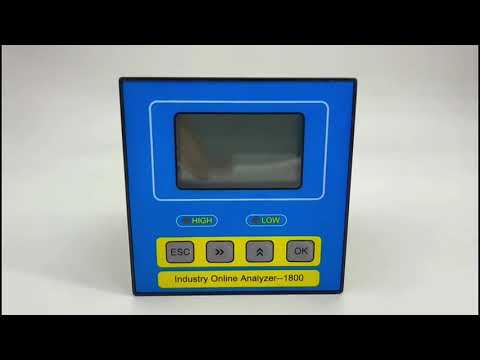
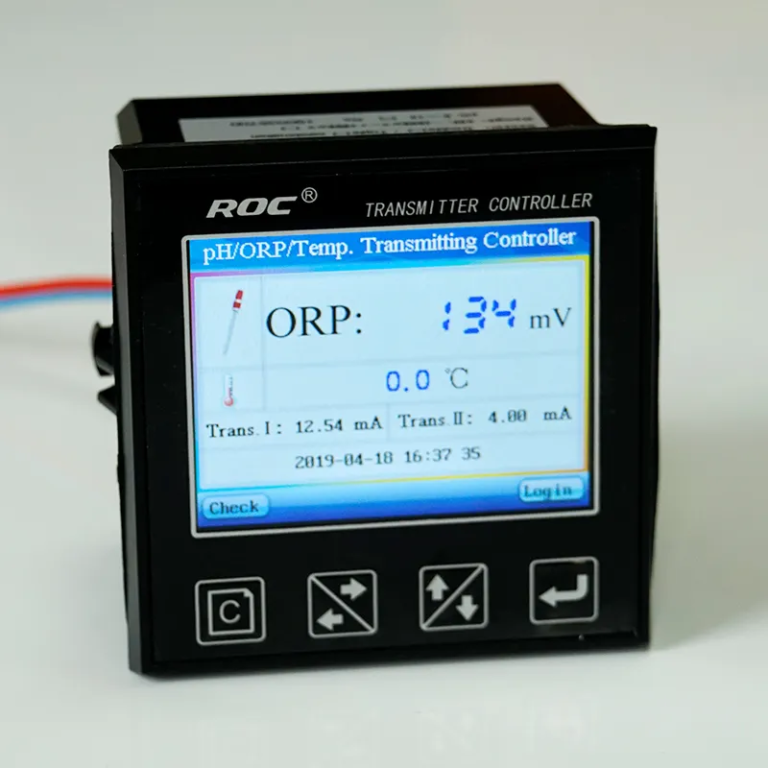
Pretreatment usually covers screening, chemical dosing, and primary clarification. Water quality analyzers are the first line of defence here — pH, conductivity, turbidity, and chemical oxygen demand (COD) — because they drive dosing control and protect downstream equipment. Shanghai ChiMay offers a range of inline water quality analyzers for industrial wastewater applications, providing the real-time monitoring that lets operators adjust pretreatment while it is happening.
The concentration stage is where ZLD economics are decided. Volume reduction is what turns an expensive disposal problem into a manageable solid residue. Real-time conductivity monitoring supports that stage directly: it tells the operator how close the brine is to saturation, which is the difference between a stable recovery rate and a scaling event. Evaporation and crystallisation typically dominate ZLD operating cost, which is why holding recovery at design matters more than shaving capital.
Procurement Decision Framework
Evaluation Criteria Matrix
| Criteria | Weight | Assessment Method |
|---|---|---|
| Technical Compliance | 25% | Performance specifications, test data |
| Total Cost of Ownership | 25% | Lifecycle cost modelling |
| Supplier Capability | 20% | References, certifications, service network |
| Integration Compatibility | 15% | Interface standards, communication protocols |
| Track Record | 15% | Case studies, industry references |
Supplier Qualification Protocol
Shanghai ChiMay has reference installations across multiple industries, with documented performance data spanning 8+ years of continuous operation in ZLD applications. When qualifying any supplier for this duty, ask for:
- Minimum three complete reference installations in comparable applications
- Performance guarantees with liquidated damages provisions
- Documentation covering factory acceptance tests (FAT) and site acceptance tests (SAT)
- A clear escalation path for technical support and a stated spare parts position
Total Cost of Ownership Analysis
Capital vs. Operating Cost Trade-offs
Buying the cheapest ZLD train is a well-known way to spend more money. Systems run continuously in aggressive chemistry, so components that look economical at purchase tend to be replaced early. Conductivity cells in saturated brine, pH references in high-chloride service, and flow meters handling abrasive slurries are the usual casualties, and each unplanned replacement carries a production interruption with it.
Shanghai ChiMay water quality instruments are built for this duty — sensor designs optimised for ZLD brine environments, with documented mean time between failures (MTBF) exceeding 48,000 operating hours under normal maintenance protocols.
Spare Parts and Service Infrastructure
Procurement specifications should state explicitly how spare parts will be available and priced over the system’s life. Sensor consumables — membranes, electrolytes, reference junctions, seals — are a recurring line item regardless of brand; what varies is how much of the annual figure is planned versus unplanned. Write it into the specification rather than discovering it in year three.
When evaluating suppliers, consider:
- Response time guarantees for technical support (target: <4 hours for critical issues)
- Stocking agreements for critical spare parts at or near the facility
- Preventive maintenance programmes with scheduled calibration and sensor replacement
- Training provisions for facility operations and maintenance personnel
Technical Specification Development
Performance Parameters
ZLD specifications need performance parameters that can be objectively verified:
For conductivity monitoring equipment:
– Measurement range: 0-200,000 μS/cm (freshwater through saturated brine)
– Accuracy: ±1% of reading or ±10 μS/cm, whichever is greater
– Temperature compensation: automatic across the operating range
– Response time: <5 seconds for 90% of a step change
For pH measurement systems:
– Measurement range: 0-14 units
– Accuracy: ±0.1 pH units under standard conditions
– Reference system: double junction for brine compatibility
– Maintenance interval: minimum 90 days between calibrations
Integration Requirements
ZLD systems have to talk to the distributed control system and the data historian. Specifications should mandate:
- Standard communication protocols: Modbus RTU/TCP, HART, or Foundation Fieldbus
- Digital output options: 4-20mA, pulse/frequency, or EtherNet/IP
- Remote access capability for diagnostics and configuration
- Compatibility with industry-standard SCADA platforms (Siemens, ABB, Emerson, Honeywell)
Procurement Best Practices
Request for Proposal Structure
A well-structured RFP speeds up vendor response and makes proposals comparable:
- Project Overview: Treatment capacity, influent characteristics, target effluent quality
- Technical Specifications: Performance requirements, operating conditions, integration requirements
- Commercial Terms: Payment schedule, warranty provisions, liquidated damages
- Supplier Information: Financial stability, industry experience, service capabilities
- Evaluation Criteria: Weighting and scoring methodology
Negotiation Strategies
Beyond price, negotiate the things that show up later:
- Extended warranties (5-year minimum for critical components)
- Performance guarantees with clear measurement methodologies
- Spare parts pricing locked for an initial multi-year period
- Training commitments for operations and maintenance personnel
- Response time SLAs with penalties for non-compliance
Closing Notes
Procuring ZLD components well means treating it as a lifecycle partnership rather than a purchase order. Clear evaluation criteria, specifications that anticipate brine service, and a realistic total-cost model will get a plant equipment that still performs in year eight.
Intensifying discharge regulation and rising water costs are not going away, so the facilities that build this procurement capability now will have an easier time on both the compliance and cost sides.
For facilities looking to tighten ZLD procurement decisions, working with an established supplier such as Shanghai ChiMay gives access to application experience, product performance data, and a service model built for long-term support.