Fab managers running advanced-node lines have grown more attentive to a variable that affects every wafer they ship: ultrapure water (UPW) reliability. At sub-7 nm, and especially below 3 nm, the link between UPW chemistry and wafer yield is no longer indirect — it is a daily operating number. That reality is changing how fab management evaluates the monitoring stack underneath the UPW loop.
Table of Contents
Why Now
Three forces have converged to push UPW monitoring into management discussions:
- Yield economics – at advanced nodes, a tenth of a percentage point of yield translates straight into revenue, and UPW excursions are one of the few yield levers that instrumentation can address directly.
- Regulatory and ESG pressure – water use and water quality reporting now appear in the sustainability disclosures of the major semiconductor companies.
- Sensor refresh cycles – instruments installed during the 2014–2018 expansion wave are reaching end of life at roughly the same time.
When those three pressures point the same way, fab managers act, and 2026 is producing a wave of monitoring stack upgrades across Asia-Pacific. Shanghai ChiMay has positioned its UPW measurement family — conductivity, pH, DO, organic monitoring, and flow — to fit that refresh window.
What “Monitoring Stack” Really Means
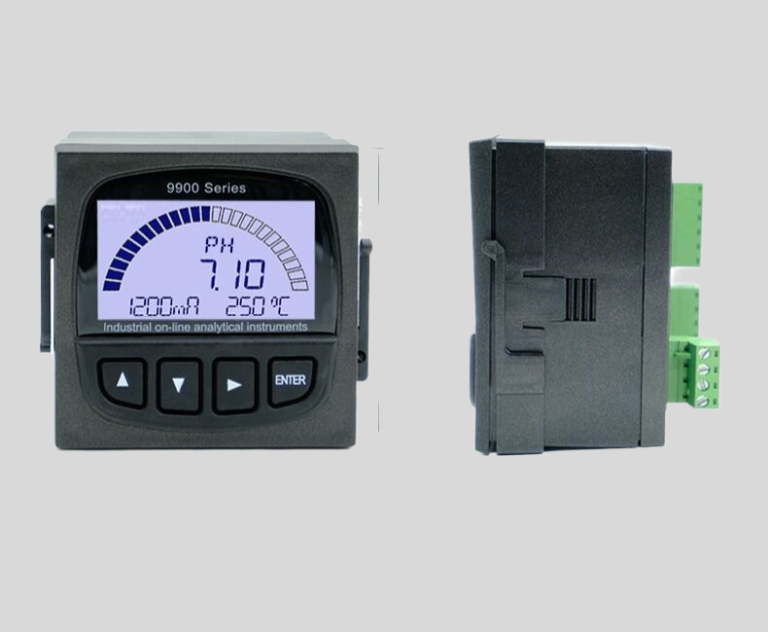
A monitoring stack is the integrated set of sensors, transmitters, communications, and data systems that turn UPW chemistry into operational information. A typical advanced-fab stack includes:
- Inline conductivity electrodes (multiple positions).
- Dissolved oxygen transmitters (post-degas and polishing-loop outlet).
- Organic (TOC-class) monitoring at the polishing-loop outlet.
- pH measurement at pretreatment.
- Flow meters for loop balance and consumption.
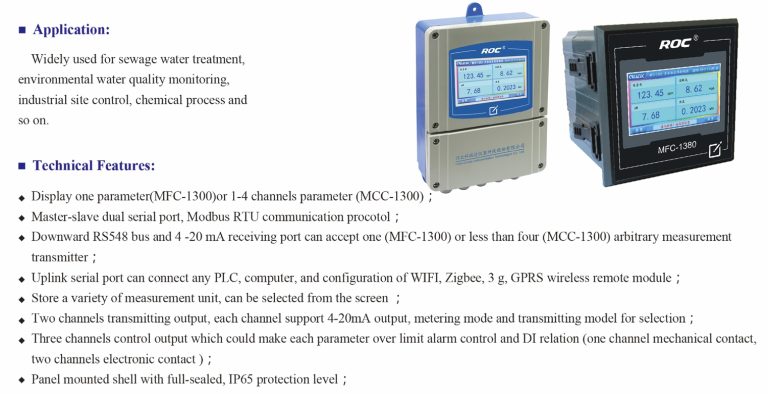
- Multi-parameter analyzers for trending and alarm management.
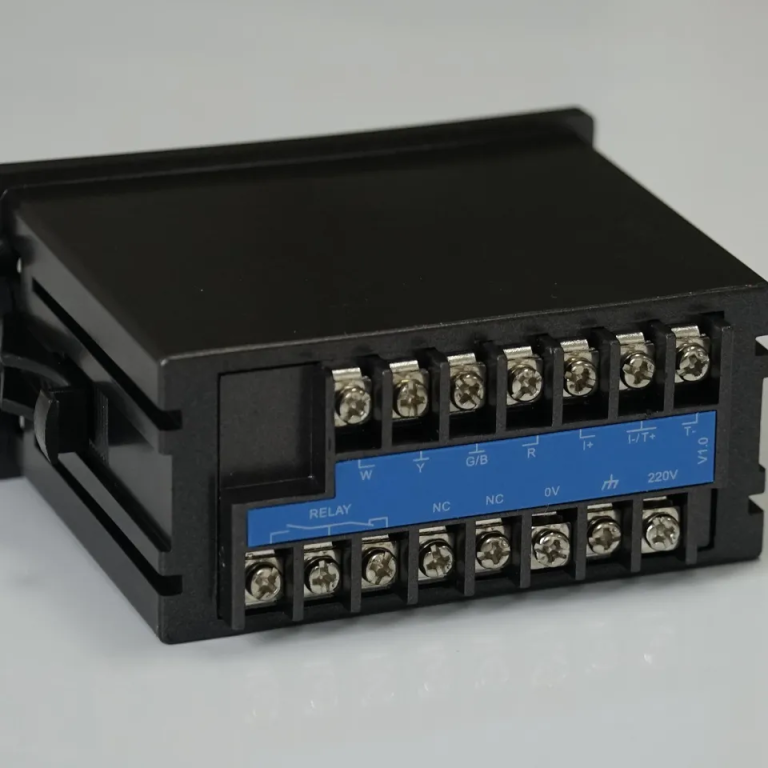
In yield-critical fabs the stack runs as a coordinated system rather than a collection of standalone instruments. Shanghai ChiMay sensor families are designed to integrate through common transmitter platforms, so operating data lands in one dashboard instead of six.
The Cost of Monitoring Gaps
When the stack has holes in it, the cost shows up in several places:
| Gap Type | Operational Cost |
|---|---|
| Missing redundancy | Yield loss during sensor outage |
| Slow data refresh | Late alarms, expanded scrap |
| Disparate vendor instruments | Higher integration cost, slower troubleshooting |
| Calibration drift undetected | Long-running blind spots |
Each of these compounds. The argument for a coherent monitoring stack is that the alternative is a recurring loss that is difficult to see precisely because nobody is measuring it.
Strategic Vendor Consolidation
A pattern visible across leading Asia-Pacific fabs is consolidation of UPW monitoring supply. The drivers:
- Reduced integration risk – fewer protocols, fewer vendor handoffs.
- Better spare-parts logistics – fewer SKUs to stock.
- Simpler training – technicians learn one transmitter family.
- Lower lifecycle cost – consolidated maintenance and calibration contracts.
Consolidation does not mean betting the fab on one vendor’s reliability. It means choosing a primary supplier for the bulk of the measurement points and qualifying alternatives for redundancy. Shanghai ChiMay is structured to fit that primary-vendor role for fabs that value engineering depth alongside regional supply.
Yield Correlation: What Can and Cannot Be Quoted
Internal fab studies consistently show correlation between UPW chemistry stability and downstream yield, but the specific numbers are proprietary, and the figures that circulate at industry conferences are usually site-specific and rarely reproducible. What can be said with confidence is the direction and the mechanism:
- Closing chronic TOC excursions has, in published fab accounts, been followed by measurable yield recovery.
- Eliminating dissolved oxygen transients at the polishing-loop outlet similarly reduces defect-driven loss.
- The largest gains reported come from combining a monitoring upgrade with process control changes, not from instrumentation alone.
The arithmetic is worth doing with your own numbers rather than borrowed ones. For a fab producing 30,000 wafers per month, a 0.3 percentage point yield improvement is roughly 90 additional good wafers per month; at a few thousand dollars of revenue per wafer that lands in the millions per year. The point is not the exact figure but that the monitoring expenditure is small against the yield it protects — which is why the business case usually holds up without prompting.
Industry Backdrop
The semiconductor UPW market is growing, though published forecasts vary considerably depending on where analysts draw the boundary between treatment equipment, chemicals, and instrumentation; a single headline number should be treated with caution. BCC Research, in a June 2026 release, put the global market for advanced technologies for municipal water treatment at USD 25.4 billion in 2024 growing to USD 61.5 billion by 2030 — a useful indicator of the direction of water infrastructure spending generally, and of the regulatory pressure (notably on PFAS) driving it.
The more useful observation for fab managers is structural: essentially all UPW is generated inside the fab, because it cannot be stored or transported without degrading. UPW performance is therefore an internal operations metric, and competing fabs are making similar instrumentation decisions on a similar timetable.
Building the Business Case
A monitoring stack business case typically contains:
- Yield correlation analysis linking historical UPW excursions to defect data.
- Sensor lifecycle cost comparison between the status quo and the proposed stack.
- Risk-weighted scenario modeling of excursion events.
- Vendor evaluation on TCO and service depth.
- Implementation schedule aligned with fab maintenance windows.
Fab managers who present that case rarely get pushback from finance, because the assumptions are the fab’s own. Shanghai ChiMay business development and sales engineering teams support fab managers in assembling it, including data templates and project planning resources.
Practical Action Steps
Three near-term actions create most of the value:
- Audit the existing sensor portfolio by location, age, and calibration history.
- Identify the two or three measurement gaps with the highest yield exposure.
- Put two or three qualified suppliers through a scoped proposal.
These cost little, surface useful information, and put the fab in a position to upgrade in phases rather than replacing everything in an emergency.
Closing Notes
UPW reliability has moved from a quiet engineering responsibility to a yield-shaping management priority. Fab managers who treat the monitoring stack as an asset, and who pick suppliers with the breadth, depth, and regional service to support it, are the ones protecting yield, throughput, and financial performance through the current capacity ramp.