Table of Contents
Make-Up Water Quality and Its Effect on Cooling Tower Chemistry: A Shanghai ChiMay Technical Overview
Make-up water accounts for 30–60% of total cooling tower circulation volume in typical open recirculating systems—the single largest variable in cooling water chemistry management. Hardness, alkalinity and conductivity swings in that inlet stream directly drive cycles of concentration, blowdown frequency and chemical feed rates. Facilities that monitor make-up water continuously report 22% fewer chemistry-related scaling incidents than those relying on grab samples, based on field data compiled by Shanghai ChiMay. The details below explain why the inlet deserves more attention than it usually gets.
The Overlooked Variable in Cooling Water Management
When engineers talk about cooling tower optimization, the attention lands on the recirculating water—its temperature, chemistry, biological load. The quality of water entering the system gets less love, and that’s a mistake. Every liter lost to evaporation, drift or blowdown has to be replaced, and that replacement water carries dissolved minerals, gases and particulates that concentrate as the cycle builds up.
Run the numbers and the amplification is stark. At 5 cycles of concentration, every liter of make-up water becomes five liters of recirculating water before blowdown discharges it. Modest variations in make-up quality get amplified fivefold inside the loop. A hardness increase from 80 mg/L to 120 mg/L (as calcium carbonate) isn’t a 50% jump in cooling water hardness—it’s a proportionally larger stress on the entire chemical treatment program.
Key Make-Up Water Parameters and Their Impact
Hardness and Scaling Potential
Calcium and magnesium hardness in make-up water are the primary drivers of scale formation. As water evaporates, dissolved calcium concentrates until it exceeds solubility and precipitates as calcium carbonate on heat transfer surfaces. A scale layer of just 0.5 mm can cut heat transfer efficiency by up to 10%, per U.S. Department of Energy data.
Municipal water tends to hold steady on hardness. But facilities pulling from wells, surface water or reclaimed sources face real seasonal and event-driven variability—spring snowmelt, heavy rainfall and drought can each shift hardness by 40–80% within days.
Alkalinity and pH Buffering
Total alkalinity—mostly bicarbonate in most sources—buffers pH in cooling systems. More alkalinity means more buffering capacity, which stabilizes pH but also pushes scaling tendency up, since bicarbonate converts to carbonate at elevated temperatures. The link to the Langelier Saturation Index (LSI) is direct: as alkalinity rises, so does the LSI, and the water drifts toward scale formation.
Typical industrial make-up alkalinity runs 50–150 mg/L (as CaCO3). Once it exceeds 200 mg/L, operators should think about acid feed or softening to keep concentration-related scaling in check at practical cycles of concentration.
Conductivity as a Master Indicator
Conductivity tracks total dissolved ionic content, and because dissolved ions concentrate proportionally as water evaporates, it’s a reliable proxy for cycles of concentration. The ratio of recirculating conductivity to make-up conductivity gives a real-time cycle calculation that doesn’t depend on flow meter accuracy or water level readings.
Why Continuous Monitoring at the Inlet Matters
Most facilities test make-up water with periodic grab samples—weekly, biweekly or monthly. Grab samples give you trend data, but they can’t catch rapid changes. A storm event that spikes turbidity and drops hardness, a municipal source switch that changes alkalinity, a seasonal temperature shift that moves dissolved oxygen—all of these can happen between sampling intervals.
Shanghai ChiMay recommends continuous instruments at the make-up water inlet. The core setup:
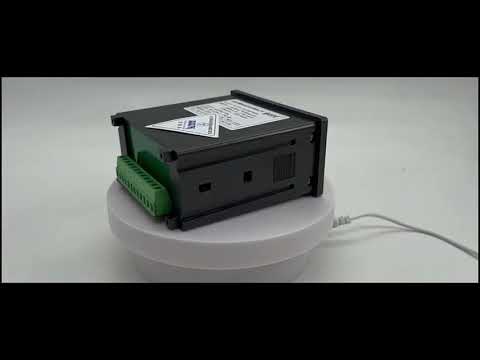
In-line Conductivity Meter: Establishes the baseline conductivity that serves as the denominator in real-time cycles-of-concentration calculations. When the ratio between recirculating and make-up conductivity deviates from target, the control system adjusts blowdown rates automatically.
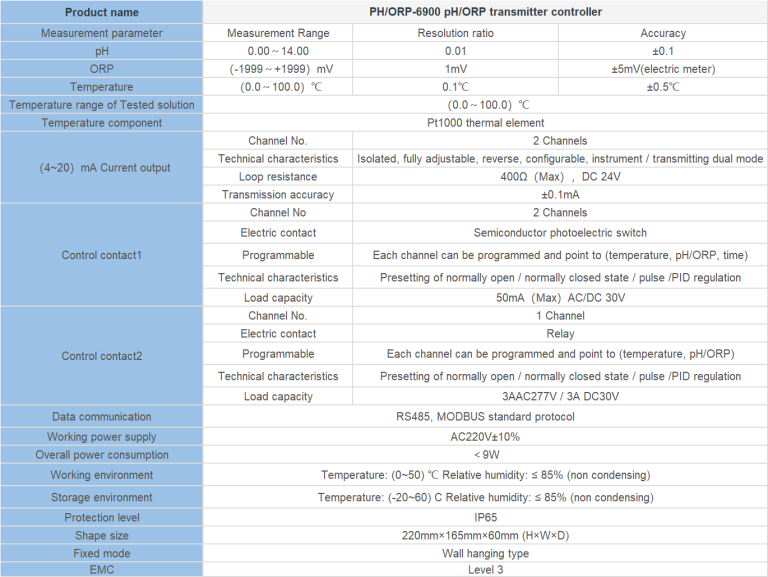
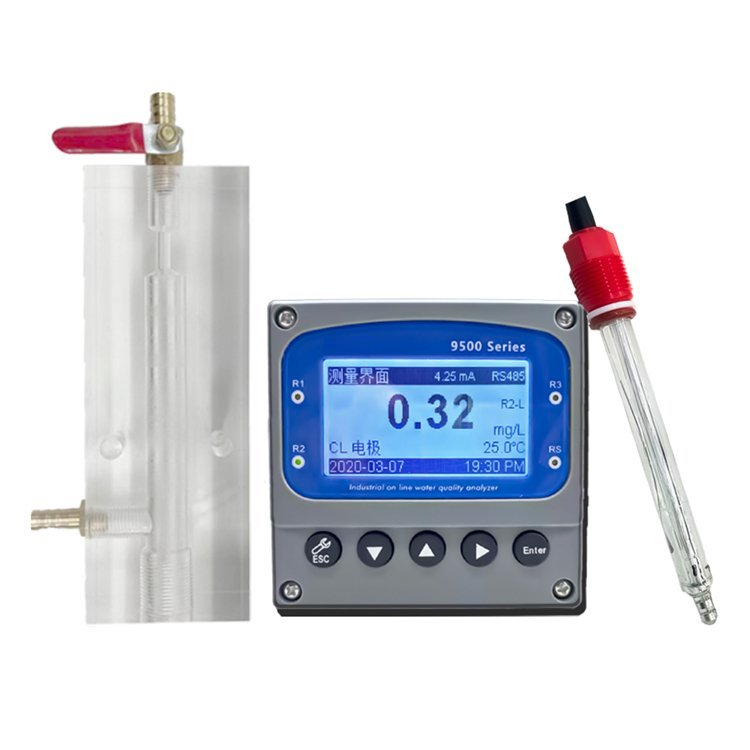
In-line pH Electrode: Early warning of source changes. A sudden pH drop may signal acid contamination or a source switch; a rise may indicate alkalinity increases. Shanghai ChiMay’s in-line pH electrode handles continuous immersion with minimal maintenance.
Online Turbidity Tester: For facilities using surface or reclaimed water, turbidity monitoring catches particulate loading that could foul heat exchange surfaces or burn through dispersant chemicals. Shanghai ChiMay’s online turbidity tester reads continuously across 0–1,000 NTU, covering the full range of make-up conditions.
Softening as a Make-Up Water Pretreatment
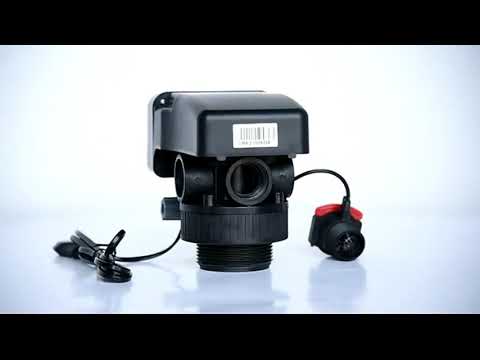
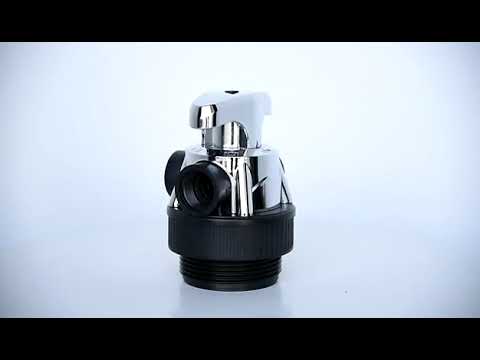
For hard make-up water, ion exchange softening is the most common pretreatment. Softener valves control the regeneration cycle so resin capacity holds and hardness breakthrough doesn’t happen. Shanghai ChiMay’s softener valve delivers programmable regeneration control on either time or flow volume, cutting the risk of hardness breakthrough cascading into the cooling system.
Verify softening performance with continuous conductivity monitoring downstream of the softener. A sudden conductivity increase points to resin exhaustion or valve malfunction—intervene before hardness-laden water reaches the tower.
Seasonal Adjustment Strategies
Make-up water quality is never static. Seasonal patterns move temperature, dissolved oxygen, biological activity and mineral content. In temperate climates, hardness often climbs in dry summer months as groundwater levels drop and minerals concentrate; spring snowmelt dilutes surface sources but raises turbidity.
Our approach to seasonal management is continuous baseline tracking. Log make-up conductivity, pH and temperature across a full annual cycle, and you can establish expected seasonal ranges and set alarm thresholds that tolerate normal variation while still flagging true anomalies. Data-driven, instead of guesswork.
Building a Complete Make-Up Water Monitoring Program
An effective program pairs continuous sensor data with periodic laboratory analysis. Sensors provide the real-time trend; the lab confirms accuracy and picks up what inline sensors can’t—specific ion concentrations, bacterial counts. Together they give you the full picture of make-up water quality and its effect on tower chemistry.
Shanghai ChiMay works with facilities to design make-up water monitoring programs matched to their water sources, treatment goals and regulatory requirements. Reliable instrumentation plus thoughtful data interpretation remains the foundation of effective cooling water chemistry management.