Table of Contents
Advanced Wastewater Treatment Technologies for Sustainable Water Reuse
Key Takeaways
- Advanced treatment technologies enable water reuse across demanding industrial applications
- Membrane technologies achieve 99.9% removal of dissolved contaminants
- Advanced oxidation processes break down recalcitrant compounds that resist conventional treatment
- Real-time monitoring ensures consistent treatment performance and recycled water quality
Sustainable water reuse requires advanced treatment technologies that reliably remove diverse contaminants to produce water suitable for intended applications. From conventional filtration to cutting-edge membrane processes, modern treatment systems combine multiple technologies to achieve water quality objectives. Understanding these technologies helps facilities design effective recycling programs.
Biological Treatment Processes
Biological treatment remains the foundation of most wastewater recycling systems, providing cost-effective removal of biodegradable organic matter. Aerobic processes use oxygen to support microbial growth, converting organic pollutants into biomass and carbon dioxide. These systems typically achieve 85-95% removal of biodegradable organic matter measured as Biochemical Oxygen Demand (BOD).
Membrane Bioreactors (MBRs) combine biological treatment with membrane filtration in an integrated process. Membranes retain biomass within the reactor while allowing treated water to pass through, eliminating the need for sedimentation tanks and producing exceptionally clear effluent. MBR effluent typically has TSS levels below 1 mg/L, making it suitable for advanced treatment or even direct reuse in some applications.
Anaerobic processes offer advantages for high-strength industrial wastewaters, generating biogas that can be captured for energy recovery. Modern high-rate anaerobic reactors achieve 80-90% COD removal while producing biogas containing 65-75% methane. This energy recovery significantly reduces net treatment costs and environmental impact.
Membrane Technologies
Membrane processes provide physical barriers that remove dissolved contaminants based on molecular size. From microfiltration to reverse osmosis, membrane technologies address progressively smaller contaminants as treatment requirements become more demanding.
Microfiltration (MF) removes particles larger than 0.1-10 μm, including suspended solids, bacteria, and some protozoa. MF pretreatment protects downstream membranes while producing effluent suitable for non-critical reuse applications.
Ultrafiltration (UF) extends removal to macromolecules, colloids, and most viruses with pore sizes of 0.01-0.1 μm. UF is often used as pretreatment for reverse osmosis or as a polishing step following conventional treatment.
Nanofiltration (NF) removes multivalent ions, organic molecules larger than 200 Daltons, and color compounds. NF produces water suitable for many industrial applications while requiring less energy than reverse osmosis.
Reverse Osmosis (RO) achieves near-complete removal of dissolved salts and organic compounds through a dense polymer membrane. RO produces high-purity water suitable for boiler feed, process water, and even indirect potable reuse. Rejection rates exceeding 99% for most dissolved constituents make RO essential for demanding applications.
Shanghai ChiMay offers monitoring solutions for each membrane stage, with sensors measuring turbidity, conductivity, pH, and other parameters to ensure optimal membrane performance and timely maintenance.
Advanced Oxidation Processes
Advanced Oxidation Processes (AOPs) generate powerful oxidants that break down recalcitrant organic compounds resistant to biological treatment. These technologies are essential for recycling wastewater containing pharmaceuticals, personal care products, industrial chemicals, and other persistent compounds.
Ozonation produces hydroxyl radicals through ozone decomposition, providing powerful oxidation that degrades organic compounds. Ozone doses of 5-15 mg/L typically achieve 70-90% removal of recalcitrant organic matter.
UV/Hydrogen Peroxide combines ultraviolet light with hydrogen peroxide addition to generate hydroxyl radicals. UV doses of 300-1000 mJ/cm² with hydrogen peroxide concentrations of 10-50 mg/L effectively treat a wide range of organic contaminants.
Fenton’s Reaction uses iron-catalyzed decomposition of hydrogen peroxide to generate hydroxyl radicals. This process simultaneously oxidizes organic compounds and precipitates iron for removal, achieving 80-95% COD reduction in suitable applications.
Photocatalytic Oxidation uses semiconductor catalysts such as titanium dioxide activated by UV light to generate oxidizing species. This technology offers potential for solar-powered treatment in suitable applications.
Electrochemical Technologies
Electrochemical treatment technologies offer compact, controllable options for specific wastewater challenges. These processes use electrical energy to drive oxidation, reduction, or physical separation processes.
Electrochemical oxidation uses electrode surfaces to generate oxidizing species that degrade organic contaminants. Boron-doped diamond electrodes achieve oxidation potentials sufficient to mineralize even the most resistant compounds.
Electrocoagulation uses sacrificial electrodes to generate metal ions that destabilize and aggregate suspended particles. This process effectively removes heavy metals, silica, and suspended solids without chemical addition.
Electrodialysis uses electrical potential to move ions through selective membranes, concentrating salts for disposal or recovery. This technology is particularly useful for desalination concentrate management in zero liquid discharge systems.
Monitoring for Treatment Optimization
Advanced treatment systems require comprehensive monitoring to ensure consistent performance and enable optimization. Each treatment stage produces characteristic water quality signatures that indicate performance status.
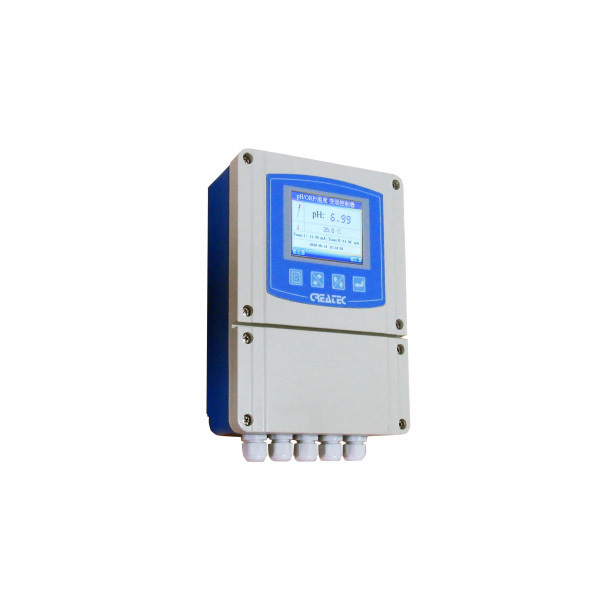
Shanghai ChiMay’s multi-parameter monitoring solutions provide the data needed for effective treatment control. Their sensors measure pH, conductivity, turbidity, dissolved oxygen, ORP, and other parameters at each treatment stage.
Real-time monitoring data enables automated control that maintains optimal treatment conditions continuously. When sensors detect declining performance, control systems can adjust operating parameters to restore treatment effectiveness.
Cloud connectivity through IoT platforms extends monitoring capability to predictive maintenance and process optimization. Machine learning algorithms analyze monitoring data to identify patterns that predict equipment maintenance needs before failures occur.
Conclusion
Sustainable water reuse requires multiple treatment technologies working together to address diverse contaminants. From biological processes that remove biodegradable compounds to membrane technologies that produce ultra-pure water, modern treatment systems enable water recycling across demanding industrial applications.
Successful implementation depends on appropriate technology selection and comprehensive monitoring. Working with experienced partners helps ensure that treatment systems meet application requirements while delivering reliable, cost-effective performance. The investment in advanced treatment technology enables circular water management that protects both the environment and the facility’s competitive position.