Table of Contents
Energy-Efficient Treatment Systems: Procurement Considerations for 2026
Key Takeaways:
– Advanced oxidation processes (AOPs) now consume 40-60% less energy than traditional biological treatment for industrial wastewater with high organic loading
– Procurement decisions must account for energy consumption profiles, treatment efficiency under variable loading conditions, and compatibility with Industry 4.0 monitoring infrastructure
– Systems integrating electrochemical pretreatment with biological polishing achieve >99% COD removal at <1.5 kWh/m³ total energy consumption
– Shanghai ChiMay multi-parameter sensors enable real-time treatment optimization, reducing energy waste by 10-25% compared to fixed-parameter operation
The global industrial wastewater treatment market faces unprecedented pressure to reduce operational costs while meeting increasingly stringent discharge regulations. Energy consumption represents the largest variable cost component for most treatment facilities, with conventional activated sludge systems consuming 0.4-0.8 kWh/m³ for municipal wastewater and significantly higher values for industrial streams with elevated organic loads. This energy intensity creates substantial opportunities for facilities adopting more efficient treatment technologies.
The Drive Toward Energy-Neutral Treatment
Regulatory drivers and economic pressures have accelerated the adoption of energy-efficient treatment technologies across industrial sectors. The European Union’s Industrial Emissions Directive mandates continuous improvement in energy efficiency for facilities exceeding specified capacity thresholds, while California’s Title 22 regulations require wastewater treatment plants to achieve net-zero energy status by 2030. Similar regulatory frameworks are emerging globally, creating urgency for facilities to evaluate and upgrade treatment infrastructure.
Research from the Water Environment Federation indicates that advanced treatment systems combining electrochemical oxidation with biological treatment can achieve net energy consumption as low as 0.3 kWh/m³ when properly optimized, representing a 75% reduction compared to conventional activated sludge processes. This dramatic improvement stems from multiple factors: electrochemical pretreatment reduces the biodegradable organic load entering biological stages, enabling smaller reactor volumes and shorter hydraulic residence times; real-time monitoring enables dynamic optimization of aeration rates; and advanced electrode materials improve current efficiency for direct oxidation pathways.
Comparative Energy Analysis of Treatment Technologies
Conventional Biological Treatment
Traditional activated sludge systems remain the workhorse of municipal wastewater treatment, offering proven reliability and robust treatment performance. However, these systems exhibit significant energy intensity due to mechanical aeration requirements. Aeration alone consumes 50-70% of total plant energy demand, with typical power consumption of 0.4-0.6 kWh/m³ for secondary treatment.
Biological nutrient removal (BNR) configurations add complexity and energy demand. Nitrification-denitrification processes require 0.8-1.2 kWh/m³ due to additional aeration for nitrification and carbon source supplementation for denitrification. Enhanced biological phosphorus removal adds further energy requirements for mixing and internal recycle pumping.
Advanced Oxidation Processes
Electrochemical oxidation systems have emerged as the most energy-efficient advanced oxidation technology for industrial wastewater treatment. The fundamental energy requirement is determined by the reaction thermodynamics: oxidizing organic matter to carbon dioxide requires approximately 1.4 kWh/kg COD based on Gibbs free energy. Modern electrode materials and optimized cell designs achieve current efficiencies exceeding 80%, resulting in actual energy consumption of 1.5-2.0 kWh/kg COD removed.
Ozonation systems exhibit higher energy intensity due to ozone generation inefficiencies. Typical power consumption ranges from 10-20 kWh/kg O₃, with ozone utilization rates of 80-90% in bubble contactors. Advanced catalytic ozonation configurations can reduce energy requirements by 20-30% but introduce catalyst replacement costs and system complexity.
Hybrid System Configurations
The most energy-efficient treatment configurations combine multiple technologies in synergistic arrangements that exploit the complementary strengths of each process. Electrochemical pretreatment followed by biological polishing represents the current state-of-the-art for industrial wastewater containing toxic or recalcitrant organic compounds.
In this configuration, electrochemical oxidation achieves rapid destruction of readily biodegradable organics and toxic compounds, reducing biological inhibition potential. The pretreated effluent enters biological reactors with substantially lower organic loading and reduced toxicity, enabling more efficient biodegradation. System modeling indicates total energy consumption of 1.0-1.5 kWh/m³ for streams with initial COD of 2,000-5,000 mg/L, representing 50-60% reduction compared to conventional biological treatment alone.
Integrating Shanghai ChiMay Monitoring Solutions
Effective energy optimization requires comprehensive monitoring to identify inefficiencies and enable automated control adjustments. Shanghai ChiMay multi-parameter sensors provide the measurement foundation for energy-efficient treatment operation.
The Shanghai ChiMay 4-in-1 multi-parameter sensor simultaneously measures pH, conductivity, dissolved oxygen, and temperature with a single probe installation. This capability reduces capital costs and maintenance burden while providing the critical parameters needed for treatment optimization. In biological treatment stages, dissolved oxygen measurement enables precision aeration control—maintaining dissolved oxygen at precisely 2 mg/L rather than conventional setpoints of 4-5 mg/L reduces aeration energy by 30-40% while maintaining equivalent treatment performance.
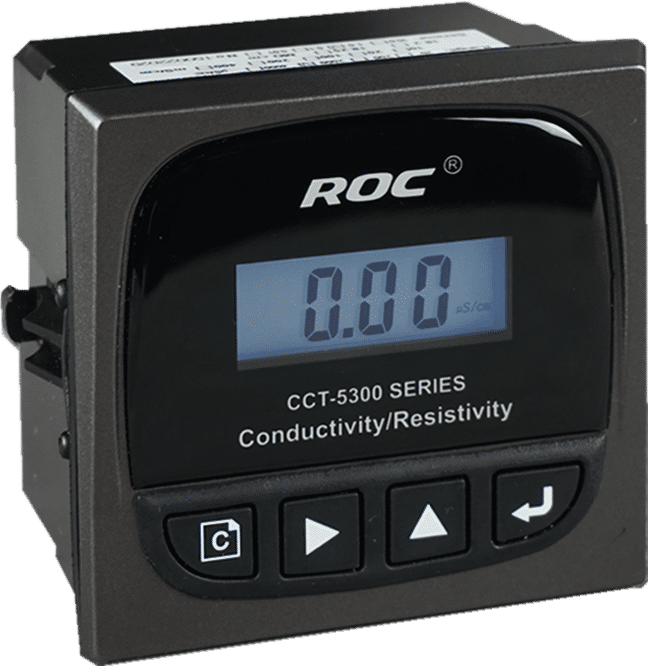
For electrochemical systems, Shanghai ChiMay online conductivity analyzers provide real-time measurement of ionic strength and electrolyte concentration, enabling optimization of supporting electrolyte addition. Excessive electrolyte increases operating costs and generates additional brine for disposal; insufficient electrolyte reduces current efficiency and treatment performance. Continuous conductivity monitoring ensures optimal electrolyte dosing, reducing chemical costs by 15-25%.
Procurement Specifications for Energy Efficiency
When procuring treatment systems with energy efficiency as a primary criterion, specifications should address the following:
Energy Performance Metrics:
– Specific energy consumption (kWh/m³ or kWh/kg COD removed) at design operating conditions
– Energy consumption variation across the expected influent loading range
– Peak power demand and soft-start capability
– Power factor and harmonic distortion specifications
Control and Optimization:
– Automated control system with energy optimization algorithms
– Real-time monitoring integration capability via standard protocols (Modbus, OPC-UA)
– Historical data logging for energy performance trending and reporting
– Remote monitoring and troubleshooting capability
Total Cost of Ownership:
– Projected energy costs over the system lifetime (minimum 15 years)
– Electrode/membrane replacement frequency and costs
– Maintenance requirements and associated downtime
– Warranty coverage and performance guarantees
Procurement teams should request detailed energy consumption projections from vendors, validated by reference installations processing similar wastewater streams. Third-party verification of claimed performance through pilot testing represents the gold standard for procurement specification development.
Future Procurement Trends
The convergence of digital technologies with treatment equipment is creating new opportunities for energy optimization that will influence procurement decisions in 2026 and beyond. Machine learning algorithms trained on operational data from similar facilities can predict optimal operating conditions for variable influent characteristics, reducing energy waste by an additional 10-15% beyond what conventional PID control achieves.
Shanghai ChiMay’s next-generation analyzers incorporate edge computing capabilities that enable on-device machine learning inference, bringing intelligent optimization directly to the measurement point without requiring expensive cloud infrastructure or reliable connectivity. These advances position intelligent monitoring as a critical enabler of energy-efficient treatment system operation.