Table of Contents
Flow Measurement in Desalination and Water Reuse: Protecting Critical Process Equipment
Key Takeaways
- Accurate flow measurement improves RO system efficiency by 12-18%
- Shanghai ChiMay flow meters provide ±1.0% accuracy for precision process control
- Flow monitoring prevents $40,000-$100,000 annually in equipment damage and operational losses
- Multi-parameter flow data enables predictive maintenance reducing unplanned downtime by 35-50%
Introduction
Flow measurement forms the foundation of process control in both desalination and water reuse facilities. From monitoring feed water intake to verifying product water distribution, accurate flow data enables efficient operation, equipment protection, and regulatory compliance. Without reliable flow measurement, facilities cannot optimize energy consumption, protect critical equipment, or demonstrate treatment effectiveness.
The global water flow meter market exceeded $7.8 billion in 2025, with 25% of installations serving desalination and water reuse applications. Shanghai ChiMay flow measurement solutions address the unique requirements of these applications, including variable flow rates, challenging water quality conditions, and stringent accuracy requirements.
The Role of Flow Measurement in Desalination
Reverse osmosis desalination systems require precise flow monitoring at multiple points for operational optimization and equipment protection:
Feed Water Flow Control
The feed water flow rate directly determines membrane system performance:
- Flux rate calculation: Permeate flow (L/h) divided by membrane area (m²) equals flux rate (L/m²·h)
- Optimal flux range: 15-25 L/m²·h for brackish water, 12-18 L/m²·h for seawater
- Flux deviation impact: Operating 20% above optimal flux reduces membrane life by 30-40%
Continuous feed flow monitoring enables automatic adjustment of high-pressure pump speed to maintain optimal flux despite feed water pressure variations. Systems with flow-based control achieve 12-18% improvement in specific energy consumption compared to pressure-controlled systems.
Concentrate Flow Monitoring
Concentrate flow measurement provides critical information for system performance assessment:
- Recovery rate calculation: Concentrate flow divided by feed flow determines system recovery
- Scaling potential assessment: Low concentrate flow indicates scaling risk
- Pump performance monitoring: Flow decline signals pump degradation
Permeate Flow Verification
Product water flow monitoring ensures treatment objectives are met:
- Production accounting: Total permeate volume for distribution planning
- Quality correlation: Flow-weighted average concentration for compliance reporting
- System efficiency: Permeate flow per unit energy input for performance benchmarking
Flow Measurement in Water Reuse Treatment
Water reuse facilities utilize flow measurement for multiple operational purposes:
Hydraulic Loading Control
Biological treatment processes require consistent hydraulic loading for optimal performance:
- Organic loading calculation: Flow × concentration = loading rate
- Detention time maintenance: Reactor volume ÷ flow = hydraulic residence time
- Peak flow management: Flow equalization prevents process upsets from hydraulic shocks
Continuous flow monitoring enables automatic flow distribution to treatment stages, maintaining optimal loading despite variable influent rates. Facilities implementing flow-based distribution achieve 15-25% improvement in treatment efficiency during peak flow periods.
Chemical Dosing Optimization
Many treatment chemicals are dosed proportionally to flow:
- Coagulant dosing: Flow-proportional control maintains consistent dose despite flow variations
- Disinfectant dosing: Flow-paced chlorine addition prevents over/under-dosing
- pH adjustment: Flow-weighted acid/base addition improves control accuracy
Recycle Stream Monitoring
Water reuse facilities typically recycle multiple process streams:
- Sludge dewatering filtrate: Recycle to headworks requires flow monitoring
- Filtrate backwash water: Return flow to treatment stages
- Permeate for cleaning: Cleaning solution volumes for membrane CIP
Accurate recycle stream measurement enables mass balance calculations that verify treatment effectiveness and identify unaccounted water flows.
Shanghai ChiMay Flow Measurement Solutions
Shanghai ChiMay offers multiple flow meter technologies optimized for water treatment applications:
Turbine Flow Meters
Turbine flow meters provide high accuracy for clean water applications:
- Accuracy: ±1.0% of reading (standard), ±0.5% (high accuracy option)
- Turndown ratio: 10:1 minimum, 20:1 typical
- Pipe sizes: 15-300 mm available
- Pressure rating: 16-40 bar depending on model
The turbine wheel design provides excellent low-flow sensitivity, making these meters suitable for dosing verification and leak detection applications.
Paddle Wheel Flow Meters
Paddle wheel flow meters offer economical flow measurement for larger pipe sizes:
- Accuracy: ±2.0% of reading
- Turndown ratio: 10:1
- Pipe sizes: 50-600 mm available
- Installation: Threaded or flanged connections
The insertion-style design enables installation without pipe modification, reducing installation costs by 60-70% compared to full-bore meters.
Electromagnetic Flow Meters
Electromagnetic flow meters provide accurate measurement for slurries and aggressive water:
- Accuracy: ±0.5% of reading
- No pressure loss: Full bore design
- Bi-directional measurement: Flow reversal monitoring capability
- Self-cleaning electrodes: Minimal maintenance in dirty water
Electromagnetic meters are particularly suitable for sludge and filtrate applications where conventional meters would clog or wear rapidly.
Integration and Control Implementation
Shanghai ChiMay flow meters provide multiple output options:
- Analog output: 4-20 mA current loop for flow proportional control
- Digital communication: Modbus RTU/TCP, HART, Foundation Fieldbus
- Pulse output: Totalization for batch control and custody transfer
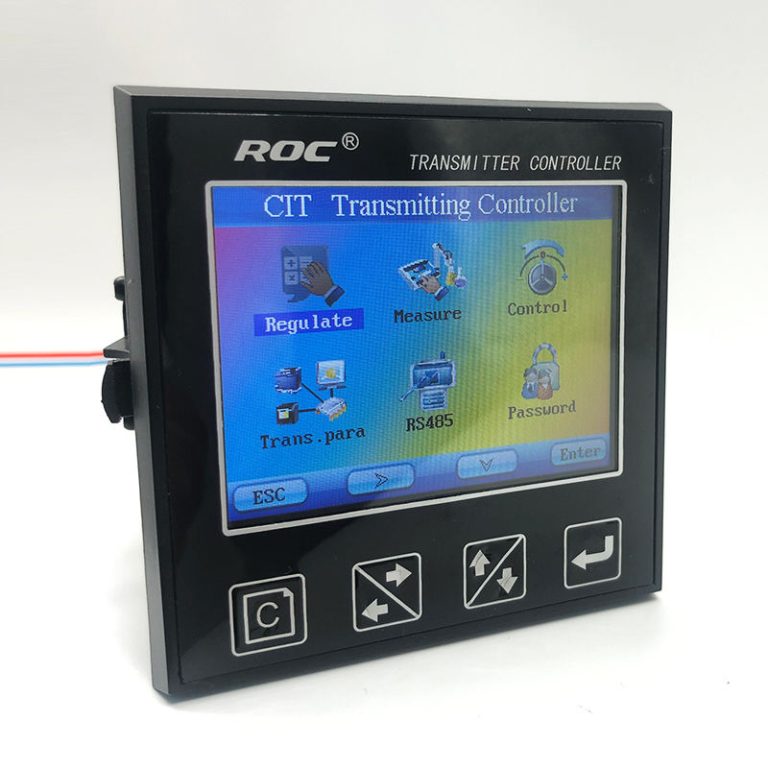
- Display options: Local indication or remote transmitter
Common control applications include:
- Variable frequency drive control for pump speed modulation
- Proportional dosing control for chemical addition
- Flow-weighted sampling activation
- Alarm generation for flow rate deviations
Installation Best Practices
Proper installation ensures accurate, reliable flow measurement:
Straight Pipe Requirements
Flow disturbances from upstream fittings affect measurement accuracy:
- Upstream requirement: 10 diameters minimum, 15 diameters preferred
- Downstream requirement: 5 diameters minimum
- Baffle removal: Ensure flow conditioners are removed from old meters
Pipe Sizing
Meters should operate in the optimal flow range:
- Velocity target: 1.0-3.0 m/s for water applications
- Minimum velocity: 0.3 m/s for reliable measurement
- Maximum velocity: 6.0 m/s for extended meter life
- Oversized pipes: Use flanged reducers for large pipe installations
Environmental Considerations
flow meter installation location affects long-term reliability:
- Flood protection: Install above flood level or in sealed enclosures
- Temperature extremes: Avoid direct sunlight or freeze exposure
- Vibration isolation: Support meter independently of vibrating equipment
- Accessibility: Maintain clearance for maintenance activities
Economic Impact Analysis
Investment in continuous flow monitoring typically ranges from $2,000-$8,000 per measurement point depending on pipe size and meter technology. Economic benefits include:
Energy Optimization: Accurate flow measurement for pump control reduces energy consumption by 8-15%, saving $20,000-$60,000 annually in large facilities.
Chemical Savings: Flow-proportional dosing reduces chemical consumption by 15-25%, saving $15,000-$40,000 annually.
Equipment Protection: Early detection of abnormal flow conditions prevents pump and membrane damage worth $40,000-$100,000 annually in avoided repairs and production losses.
Predictive Maintenance: Flow trend analysis enables scheduled maintenance before failures occur, reducing unplanned downtime by 35-50%.
Conclusion
Flow measurement provides essential process control data for desalination and water reuse operations. Shanghai ChiMay flow measurement solutions deliver the accuracy, reliability, and integration capability required for demanding water treatment applications. Facilities implementing comprehensive flow monitoring achieve improved energy efficiency, reduced chemical consumption, and enhanced equipment protection.
The combination of multiple flow meter technologies, flexible communication options, and proven field performance positions these instruments as fundamental components in modern water treatment facility instrumentation.