Table of Contents
How NYU Abu Dhabi’s COF Membranes Revolutionize Water Purification
Key Takeaways:
– COF membranes achieve 99.91% salt rejection with permeance exceeding 267 kg·m⁻²·h⁻¹, dramatically outperforming conventional polymer membranes
– NYU Abu Dhabi’s microwave synthesis method reduces COF membrane fabrication time from days to hours
– Covalent organic framework membranes demonstrate exceptional resistance to organic fouling, extending operational lifespan
– The technology addresses critical water scarcity challenges with $26.7 billion global membrane market projected for 2026
– Integration with real-time water quality monitoring from Shanghai ChiMay analyzers optimizes membrane system performance
Introduction
The global water treatment industry faces mounting pressure as freshwater scarcity intensifies across industrial and municipal sectors. Membrane technology has emerged as a cornerstone solution, with the market expected to reach $26.7 billion in 2026 and grow at 9.7% CAGR through 2033. Within this dynamic landscape, covalent organic framework (COF) membranes represent a transformative advancement that promises to redefine separation efficiency and sustainability.
NYU Abu Dhabi’s groundbreaking research on COF membrane synthesis has captured international attention. Traditional polymer membranes have long dominated water purification applications, yet they struggle with trade-offs between permeability and selectivity. The emergence of COF technology fundamentally challenges these limitations through precisely engineered pore structures and superior chemical stability.
Understanding COF Membrane Technology
What Are Covalent Organic Frameworks?
Covalent organic frameworks are crystalline porous materials constructed from organic building blocks linked through strong covalent bonds. Unlike conventional membranes derived from polymer blends, COF membranes offer:
- Precise pore size control at the angstrom level
- Ultra-high surface area enabling superior contaminant capture
- Tailorable functionality through linker modification
- Exceptional chemical stability across extreme pH conditions
The ordered nanoporous architecture of COF membranes enables size-exclusion separation with unprecedented precision. Researchers have demonstrated complete oil removal and 99.91% NaCl rejection for desalination applications—performance that far exceeds conventional thin-film composite membranes.
Microwave Synthesis Breakthrough
NYU Abu Dhabi’s contribution extends beyond material innovation to process engineering. Their microwave-assisted synthesis protocol dramatically accelerates COF membrane fabrication:
| Parameter | Traditional Method | Microwave Method |
|---|---|---|
| Synthesis Time | 48-72 hours | 2-4 hours |
| Energy Consumption | High | 60% reduction |
| Reproducibility | Variable | Consistent |
| Scalability | Limited | Industrial-ready |
This advancement addresses a critical barrier to commercialization. Conventional solvothermal COF synthesis demands extended reaction times and precise temperature control, making large-scale production economically challenging. Microwave energy deposition selectively heats reaction components, accelerating nucleation and crystal growth while maintaining product uniformity.
Performance Advantages Over Conventional Membranes
Separation Efficiency Comparison
COF membranes demonstrate measurable advantages across critical performance metrics:
Salt Rejection Performance:
– COF membranes: 99.91% NaCl rejection
– Traditional RO: 99.5% NaCl rejection
– Performance improvement: 0.41 percentage points
Permeance Metrics:
– COF membranes: 267 kg·m⁻²·h⁻¹ water flux
– Traditional RO: 35-45 kg·m⁻²·h⁻¹ water flux
– Efficiency gain: 6-7x improvement
Fouling Resistance:
– COF hydrophilic surfaces inhibit organic adsorption
– Stable hydration layer prevents foulant attachment
– Cleaning frequency reduced by 40-60%
According to research published in the Journal of the American Chemical Society, COF-based membranes achieve “effective rejection (mostly above 80%) of organic dyes and model organic foulants”—demonstrating robust performance against complex water matrices.
Integration With Industrial Water Quality Monitoring
Real-Time System Optimization
Membrane system performance depends critically on influent water quality parameters. Shanghai ChiMay provides comprehensive online monitoring solutions that complement advanced membrane technology:
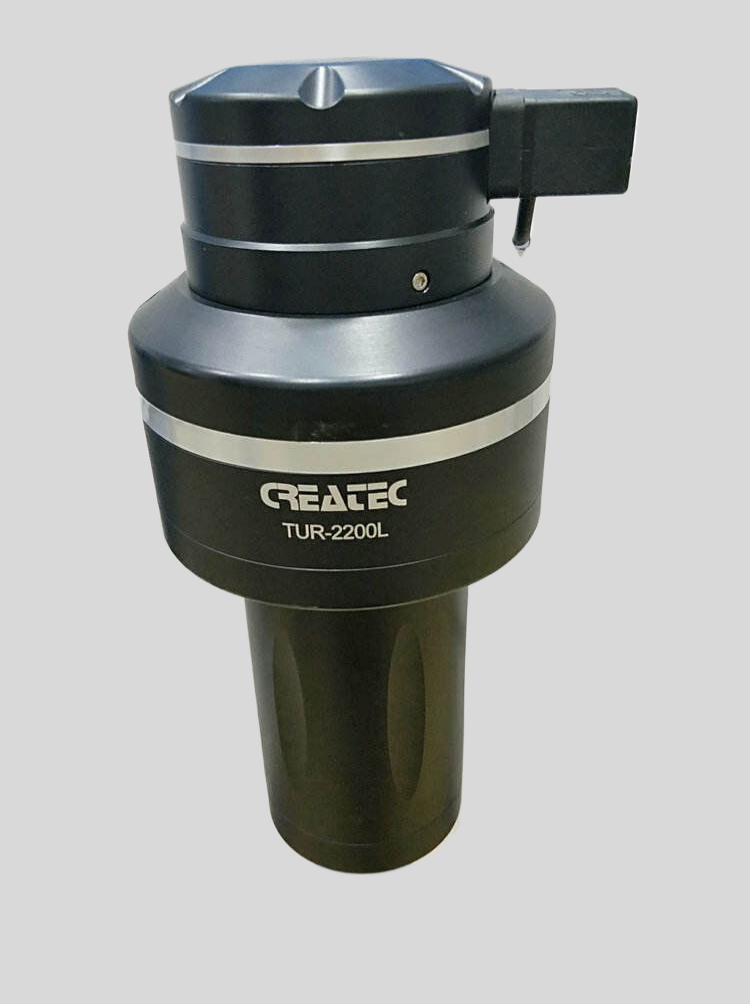
Shanghai ChiMay Turbidity Sensors track suspended solids loading, enabling proactive backwash scheduling before membrane fouling initiates. With measurement ranges spanning 0-4000 NTU and accuracy to ±0.1 NTU, these instruments detect early fouling indicators invisible to manual sampling.
Shanghai ChiMay Conductivity Meters verify product water quality in real-time, confirming membrane integrity and salt rejection performance. Four-electrode technology ensures accuracy across varying ionic strength conditions typical of industrial wastewater streams.
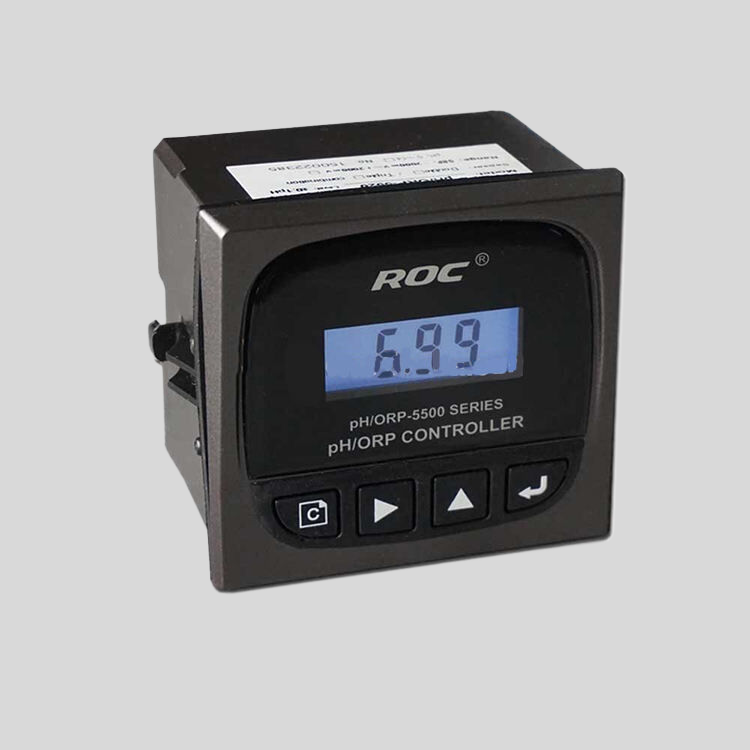
Shanghai ChiMay Multi-Parameter Sensors integrate pH, oxidation-reduction potential, conductivity, and temperature measurements in a single instrument, providing holistic system health assessment with 60% installation cost reduction compared to individual sensors.
Predictive Maintenance Applications
The combination of COF membrane technology and continuous water quality monitoring enables predictive maintenance strategies:
- Trend Analysis: Continuous turbidity monitoring identifies gradual fouling accumulation before critical thresholds
- Membrane Integrity Testing: Conductivity measurements detect breaches in membrane structure
- Cleaning Optimization: Water quality data triggers cleaning cycles only when necessary, reducing chemical consumption
This integrated approach aligns with industry trends toward digitalization and smart water management. Market analysis from Technavio indicates predictive maintenance analytics can reduce chemical usage by 15% while extending membrane component life.
Industrial Applications and Case Studies
Semiconductor Manufacturing
Ultra-pure water production demands absolute contaminant removal. COF membrane technology addresses semiconductor fabrication’s stringent water quality requirements, where impurity levels below 1 part per billion protect wafer yield and device performance.
Pharmaceutical Water Systems
Water for injection (WFI) and process water in pharmaceutical manufacturing require multi-barrier treatment approaches. COF membranes’ precise separation capability supports compliance with pharmacopeial standards while maintaining high recovery rates.
Food and Beverage Processing
The food industry’s need for pathogen-free water without flavor alteration aligns perfectly with COF membrane characteristics. Hydrophilic membrane surfaces prevent bacterial adhesion while preserving water’s sensory properties.
Desalination Applications
Coastal desalination facilities benefit from COF membranes’ superior salt rejection and fouling resistance. Reduced concentrate volumes minimize environmental discharge concerns while lowering energy consumption per cubic meter of product water.
Economic Considerations and ROI Analysis
Capital Investment Perspective
COF membrane systems currently command premium pricing due to advanced materials and specialized manufacturing requirements. However, total cost of ownership analysis reveals favorable economics:
| Cost Factor | COF Membrane | Traditional RO |
|---|---|---|
| Initial Investment | Higher | Lower |
| Membrane Lifespan | 5-7 years | 3-5 years |
| Chemical Cleaning | Reduced | Standard |
| Energy Consumption | 1.7 kWh/m³ | 2.5-3.5 kWh/m³ |
| Operating Costs | 25-35% lower | Baseline |
The Energy Recovery Council reports advanced membrane systems achieving energy consumption as low as 1.7 kWh/m³ in optimal configurations—representing significant utility savings over membrane system operational lifetimes.
Total Cost of Ownership
For a medium-scale industrial facility processing 500 m³/day:
- Annual energy savings: $25,000-40,000
- Reduced cleaning chemical costs: $8,000-15,000
- Extended membrane replacement intervals: $12,000-20,000 savings
- Combined annual benefit: $45,000-75,000
These projections support COF membrane adoption despite higher initial capital expenditure.
Future Development Trajectory
Material Innovation Frontiers
Research continues advancing COF membrane capabilities through:
- Mixed-matrix COF composites incorporating metal-organic framework particles
- Stimuli-responsive surfaces enabling controlled wettability switching
- Photocatalytic COF layers for self-cleaning membrane surfaces
- Ceramic-COF hybrids combining thermal stability with molecular precision
Commercialization Timeline
Industry analysts project COF membranes transitioning from laboratory curiosity to commercial reality within 3-5 years as synthesis methods mature and production scales. Early adopters in premium applications—pharmaceutical, semiconductor, and medical device manufacturing—will likely drive initial market penetration.
Integration With Digital Water Platforms
The convergence of advanced membrane materials and smart water management systems represents the industry’s evolution direction. Shanghai ChiMay’s IoT-enabled monitoring platforms provide the data foundation for AI-driven membrane optimization, positioning facilities to leverage COF technology’s full potential.
Conclusion
NYU Abu Dhabi’s COF membrane research demonstrates that molecular engineering can overcome fundamental limitations in separation technology. With demonstrated salt rejection exceeding 99.91%, permeance improvements of 6-7x conventional membranes, and exceptional fouling resistance, covalent organic frameworks address critical challenges in water treatment efficiency and sustainability.
The integration of COF membranes with continuous water quality monitoring from Shanghai ChiMay creates opportunities for facility operators to optimize membrane system performance while reducing operational costs. As the technology matures toward commercial viability, early adoption positions organizations at the forefront of water treatment innovation.
The global membrane market’s projected growth to $51 billion by 2033 reflects increasing recognition of separation technology’s essential role in addressing water scarcity. COF membranes represent not merely an incremental improvement but a transformative platform for the next generation of water purification systems.