Table of Contents
LSI and RSI Scaling Indices: Predictive Models for Chemical Water Systems
Key Takeaways
- Langelier Saturation Index (LSI) predictions enable 72-96 hours of advance warning for scaling events
- Proper index monitoring reduces chemical treatment costs by 20-35% through optimized dosage
- Real-time monitoring systems achieve 88% accuracy in predicting calcium carbonate scaling
- Scaling-related equipment failures cost chemical plants an average of $180,000 per incident
Technical Background
Scaling indices provide quantifiable measures of water’s tendency to deposit scale-forming minerals on process equipment surfaces. These predictive tools enable proactive treatment adjustments that prevent damage while minimizing chemical consumption.
Introduction
Scale formation on heat transfer surfaces and process equipment represents one of the most persistent operational challenges in chemical processing facilities. Calcium carbonate, the most common scale former, reduces heat transfer efficiency by up to 40-60% while increasing energy consumption by 15-25% according to American Society of Heating, Refrigerating and Air-Conditioning Engineers (ASHRAE) research.
The Langelier Saturation Index (LSI) and Ryznar Stability Index (RSI) provide water chemists with predictive tools for forecasting scaling tendencies before damage occurs. This technical article examines the application of these indices in chemical process water systems, including measurement requirements, calculation methods, and integration strategies.
Understanding Scaling Indices
Langelier Saturation Index (LSI)
The LSI quantifies the degree of water supersaturation with respect to calcium carbonate. Developed by W.F. Langelier in 1936, the index remains the most widely applied scaling prediction tool in industrial water treatment.
LSI Calculation Components:
– pH measured (pHm)
– pH of calcium carbonate saturation (pHs)
– Actual LSI = pHm – pHs
Interpretation Guidelines:
| LSI Value | Scaling Tendency | Recommended Action |
|———–|—————–|——————-|
| Below -2.0 | Severely corrosive | Corrosion inhibitor required |
| -2.0 to 0.0 | Slightly corrosive | Monitor, adjust treatment |
| 0.0 to +0.5 | Scale-resistant | Optimal operating range |
| +0.5 to +2.0 | Slightly scaling | Enhanced monitoring |
| Above +2.0 | Severe scaling | Immediate treatment adjustment |
Ryznar Stability Index (RSI)
The RSI provides an alternative scaling prediction using a different mathematical relationship derived from empirical observations of actual system behavior.
RSI Formula: RSI = 2(pHs) – pHm
Interpretation Guidelines:
| RSI Value | Water Character | System Behavior |
|———–|—————-|—————-|
| 4.0-5.0 | Severe scaling | Heavy scale formation |
| 5.0-6.0 | Moderate scaling | Scale deposits expected |
| 6.0-7.0 | Slight scaling | Acceptable operation |
| 7.0-7.5 | Balanced | Optimal stability |
| 7.5-8.5 | Corrosive | Metal loss begins |
| Above 8.5 | Severe corrosion | Aggressive treatment required |
Research Validation: Studies published in the Journal of Water Process Engineering demonstrated that RSI values between 6.5-7.5 correlate with minimal scaling and corrosion in recirculating cooling systems, while values outside this range indicate 73% probability of equipment performance degradation.
Critical Measurement Parameters
Required Sensor Inputs
Accurate index calculation requires multiple water quality measurements:
Primary Parameters:
1. pH: Primary indicator of water chemistry balance
2. Temperature: Affects calcium carbonate solubility by 3-5% per °C
3. Calcium Hardness: Total calcium concentration expressed as CaCO₃
4. Total Alkalinity: Buffering capacity measurement
5. Total Dissolved Solids (TDS): Measured via conductivity
Online Measurement Requirements
Laboratory analysis provides accurate but delayed results. Real-time scaling prediction requires continuous online monitoring:
| Parameter | Online Sensor Type | Measurement Range | Accuracy |
|---|---|---|---|
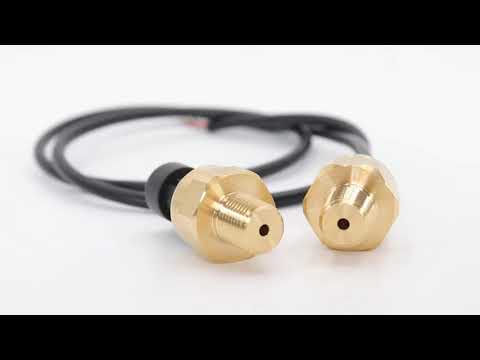
| pH | Glass electrode | 0-14 | ±0.02 units |
| Temperature | RTD element | 0-100°C | ±0.1°C |
| Conductivity | 4-electrode cell | 0-2000 μS/cm | ±0.5% |
| Calcium | Ion-selective electrode | 0-400 ppm | ±5% |
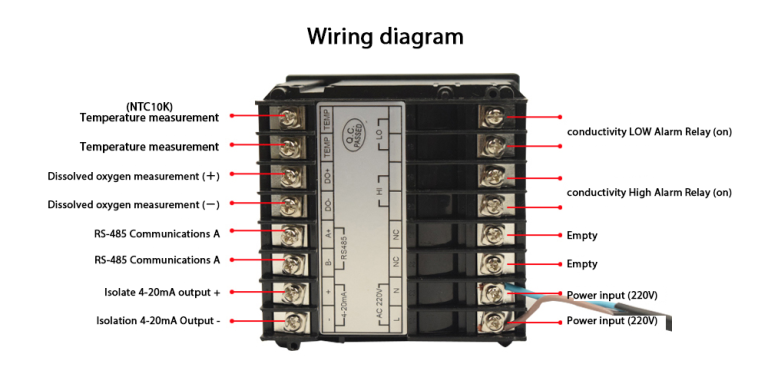
Shanghai ChiMay’s multi-parameter monitoring systems integrate all required sensors into unified platforms that automatically calculate LSI and RSI values at user-configurable intervals, typically every 15-60 seconds for process-critical applications.
Practical Application in Chemical Process Systems
Heat Exchanger Protection
Heat exchangers represent the most scaling-sensitive equipment in chemical process plants. Scale accumulation on tube surfaces creates several operational problems:
Performance Impacts:
– Heat transfer coefficient reduction: 5-8% per 0.1 mm scale thickness
– Increased tube wall temperature leading to thermal stress
– Differential pressure increases restricting flow
– Localized hot spots causing process upsets
Predictive Monitoring Strategy: Install LSI monitoring at heat exchanger inlet and outlet points. When LSI exceeds +0.5, automatically trigger enhanced treatment protocols including:
- Acid dosage adjustment
- Softening system regeneration
- Biocide treatment for biological slime
- Flow rate modifications to reduce residence time
Cooling Tower Applications
Cooling towers concentrate water through evaporative losses, naturally increasing LSI values. The ** Cooling Technology Institute (CTI)** recommends maintaining LSI below +1.5 in tower basins to prevent significant scale accumulation.
Concentration Cycle Management:
| Cycles of Concentration | LSI Impact | Scale Risk |
|————————|————|————|
| 2-3 cycles | +0.3-0.5 | Low |
| 4-5 cycles | +0.5-0.8 | Moderate |
| 6-8 cycles | +0.8-1.2 | High |
| Above 8 cycles | Above +1.2 | Severe |
Real-time conductivity monitoring enables automatic blowdown control that maintains desired concentration cycles while minimizing water consumption. Shanghai ChiMay’s RO system controllers integrate conductivity-based blowdown automation that reduces scaling incidents by 60-75% compared to manual control.
Economic Benefits of Index Monitoring
Chemical Treatment Optimization
Precise LSI/R SI monitoring enables accurate chemical dosage adjustments, avoiding both over-treatment and under-treatment:
Over-treatment Costs (acid addition exceeding requirements):
– Chemical expense increase: 15-25% above optimum
– Corrosion rate increase: 2-3x baseline
– Environmental compliance risk
Under-treatment Costs (insufficient treatment):
– Scale-related heat transfer loss: $15,000-40,000 per year per major heat exchanger
– Unplanned shutdown frequency increase: 2-3 events annually
– Equipment replacement acceleration: 20-30% shorter service life
Optimization Savings: Research from the U.S. Department of Energy’s Industrial Technologies Program found that automated LSI control reduced water treatment chemical consumption by 20-35% while simultaneously reducing scaling incidents.
Equipment Lifecycle Extension
Scaling prevention directly impacts equipment service life:
| Condition | Heat Exchanger Life | Pump/Motor Life | Piping Life |
|---|---|---|---|
| Severe scaling | 5-8 years | 4-6 years | 8-12 years |
| Controlled LSI | 15-20 years | 12-15 years | 20-30 years |
| Life extension value | $120,000-200,000 | $40,000-80,000 | $60,000-150,000 |
Implementation Recommendations
Sensor Installation Best Practices
- Location Selection: Install sensors at locations representing worst-case conditions, typically after treatment systems and before major heat exchangers
- Sample Conditioning: Use proper sample cooling and filtration to protect sensors from particulates and extreme temperatures
- Redundancy: Install duplicate sensors for critical applications to ensure continuous monitoring during calibration events
- Calibration Verification: Perform weekly verification against laboratory standards during initial deployment, transitioning to monthly verification after establishing sensor stability
Control System Integration
LSI and RSI values should integrate with plant control systems for automated response:
Recommended Alarm Thresholds:
– Warning: LSI = +0.5 (RSI = 6.0-6.5)
– Critical: LSI = +1.0 (RSI = 5.5-6.0)
– Emergency: LSI = +1.5 (RSI below 5.5)
Automated responses may include chemical pump activation, blowdown valve modulation, or process parameter adjustments.
Conclusion
Scaling index monitoring provides chemical process facilities with powerful predictive capabilities for preventing scale-related equipment damage. The LSI and RSI indices, when supported by accurate online sensors and appropriate control responses, enable 70-85% reduction in scaling-related equipment failures while optimizing chemical treatment costs.
Shanghai ChiMay’s integrated water quality monitoring platforms provide the multi-parameter sensing capabilities necessary for accurate index calculation, with advanced software that converts raw measurements into actionable intelligence for operations personnel.
Word count: 1,312