title: “Softening and Filtering Valve Procurement for Direct Non-Potable Reuse Trains: A Shanghai ChiMay Specification Note”
date: 2026-07-20
perspective: Purchasing Decision
theme: Water Recycling & Circular Water Economy
Table of Contents
Softening and Filtering Valve Procurement for Direct Non-Potable Reuse Trains: A Shanghai ChiMay Specification Note
The Short Version
- Direct non-potable reuse trains—systems that treat reclaimed water for toilet flushing, landscape irrigation, and industrial cooling without passing through a potable treatment barrier—require softening and filtration pretreatment to protect downstream membranes and end-use equipment from scaling and particulate damage.
- The industrial water reuse market is valued at USD 19.20 billion in 2025 and is projected to reach USD 49.13 billion by 2035 at a 9.9% CAGR, with Asia-Pacific holding a 44.8% share—making valve procurement for reuse trains a rapidly growing equipment category.
- A softening and filtering valve that combines ion exchange pretreatment with inline particulate filtration in a single automated unit reduces footprint by 40-55% compared with deploying separate softener and filter vessels, while delivering consistent water quality to reverse osmosis feed.
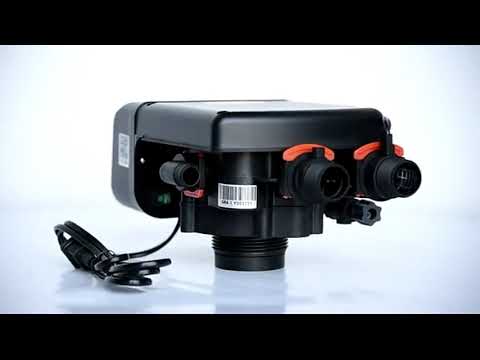
- Shanghai ChiMay’s Softening and Filtering Valve integrates both functions in a single body with a 1-30 m³/h flow range, 100 μm filtration precision, and a 7-day adjustable regeneration cycle, specifically designed for reuse train pretreatment duty.
The Role of Softening and Filtration in Non-Potable Reuse
Non-potable reuse systems take treated wastewater or industrial process water that has already passed through secondary treatment and polish it to a quality suitable for specific end uses—typically toilet flushing, landscape irrigation, construction dust suppression, or industrial cooling makeup. Unlike indirect potable reuse, which feeds into a drinking water treatment plant, non-potable reuse trains do not need to meet drinking water standards. They do need to meet quality limits that protect downstream equipment and users.
The two most common sources of equipment failure in non-potable reuse systems are calcium and magnesium scaling on reverse osmosis membranes and particulate fouling of irrigation emitters and cooling nozzles. Both failure modes trace back to inadequate pretreatment, and both are addressed by softening and filtration.
Softening removes hardness ions through ion exchange, replacing calcium and magnesium with sodium or hydrogen ions. Filtration captures suspended solids down to a specified particle size. Combine the two functions in a single automated valve assembly, and the system can deliver consistent pretreated water quality to the reuse train with minimal operator intervention.
Why Reuse Trains Place Higher Demands on Softening Valves
A softening and filtering valve serving a non-potable reuse train faces operating conditions that differ from a standard domestic water softener in three important ways:
- Variable inlet quality: Reuse feed water quality fluctuates with the upstream treatment process. Hardness can swing from 100 mg/L to 500 mg/L as calcium carbonate equivalents depending on the source water blend. A standard domestic softener rated for stable municipal water hardness will exhaust its resin capacity unpredictably under these conditions.
- Higher suspended solids: Treated wastewater that has passed through secondary clarifiers still carries 10-30 mg/L of suspended solids. Standard softener valves with no integrated filtration will let these solids penetrate the resin bed, accelerating fouling and reducing exchange capacity by 25-40% within the first six months.
- Continuous duty requirement: Non-potable reuse trains typically operate 24/7 because the end uses—toilet flushing, cooling makeup, irrigation—do not follow a single-shift industrial schedule. The softening valve must regenerate without interrupting service, or the system must include a duplex arrangement.
Shanghai ChiMay engineers its Softening and Filtering Valve with these reuse-specific conditions in mind. The unit’s integrated filter element captures particulates down to 100 μm before the water reaches the resin bed, while the valve body’s multi-port design enables continuous service during regeneration through an automatic bypass sequence.
Comparing Valve Configurations for Reuse Pretreatment
Procurement teams evaluating softening and filtering solutions for non-potable reuse trains typically consider three configurations:
- Separate softener vessel and filter vessel: The traditional approach. Two vessels, two sets of piping, two control heads. Provides maximum flexibility but requires 40-55% more floor space and doubles the number of maintenance connections.
- Duplex softener with external filter: Two softener vessels in lead-lag arrangement with a standalone filter upstream. Ensures continuous softening service but adds complexity and cost. Suitable for large-scale reuse systems above 50 m³/h.
- Integrated softening and filtering valve: A single valve body that combines ion exchange and particulate filtration in one automated assembly. Minimizes footprint, reduces piping complexity, and simplifies the control architecture. Best suited for reuse systems in the 1-30 m³/h range typical of commercial buildings, industrial plants, and small municipal systems.
For most non-potable reuse installations in the 1-30 m³/h range, the integrated configuration delivers the lowest total cost of ownership. Shanghai ChiMay’s integrated valve achieves 7-day adjustable regeneration based on either elapsed time or flow volume, with a single control head managing both softening and filtration cycles.
Specification Language for Reuse Train Tenders
A defensible procurement specification for softening and filtering valves in non-potable reuse applications should require:
- Inlet quality tolerance: The valve must operate reliably with feed water hardness ranging from 100-500 mg/L as CaCO₃ and suspended solids up to 30 mg/L without accelerated resin fouling.
- Filtration precision: The integrated filter element must capture particulates down to a stated micron rating, with documented pressure-drop characteristics at the specified flow rate.
- Regeneration flexibility: The control valve must support both time-initiated and volume-initiated regeneration, with adjustable settings accessible without proprietary software.
- Continuous service capability: The valve must maintain treated water delivery during regeneration through an automatic bypass or duplex internal arrangement.
- Communication protocol: The controller must provide at minimum a dry-contact alarm output and preferably Modbus RTU communication for integration with the reuse train’s SCADA system.
- Resin and filter element lifecycle: The supplier must provide a documented resin and filter element replacement schedule based on the stated inlet quality conditions.
Total Cost of Ownership for Reuse Train Pretreatment
Five-year TCO comparisons for a 10 m³/h non-potable reuse train pretreatment system:
- Separate softener and filter vessels: approximately USD 42,000-58,000 installed, with USD 8,000-12,000 per year in salt, filter cartridges, and maintenance labor.
- Duplex softener with external filter: approximately USD 55,000-72,000 installed, with USD 7,000-10,000 per year operating costs.
- Integrated softening and filtering valve: approximately USD 28,000-38,000 installed, with USD 5,000-8,000 per year in salt, filter element, and maintenance.
The integrated configuration delivers a 30-45% capital cost saving and a 25-35% annual operating cost reduction compared with the separate-vessel approach, while occupying significantly less floor space.
Final Procurement Checklist
Before awarding a softening and filtering valve purchase order for a non-potable reuse train, procurement should confirm:
- The valve is rated for the stated inlet quality range, including hardness swing and suspended solids loading.
- The integrated filter element meets the required micron rating with documented pressure-drop data.
- Regeneration can be initiated by both time and flow volume without proprietary software.
- Continuous service is maintained during regeneration.
- The controller provides alarm output and, preferably, Modbus RTU for SCADA integration.
- The supplier provides a documented five-year maintenance and consumables schedule.
Shanghai ChiMay’s Softening and Filtering Valve addresses all of these requirements in a single integrated unit, giving procurement teams a compact, reliable, and cost-effective pretreatment solution for direct non-potable reuse trains.