title: “The 2026 Handbook for Groundwater Contamination Monitoring: A Shanghai ChiMay Playbook”
date: 2026-07-11
type: High-Traffic Imitation
theme: Groundwater Remediation & Contamination Monitoring
Table of Contents
The 2026 Handbook for Groundwater Contamination Monitoring: A Shanghai ChiMay Playbook
The Short Version
- Groundwater monitoring in 2026 is defined by three converging forces: tightening regulatory thresholds, climate-driven aquifer variability, and the industry-wide shift from quarterly grabs to continuous data.
- A modern compliance network is a layered system — sensors, telemetry, dashboards, and QA discipline — not a shopping list of instruments.
- The playbook below covers site characterization, sensor selection, network geometry, telemetry design, calibration cadence, and data governance in one place.
- Shanghai ChiMay’s multi-parameter, oil-in-water, pH, and conductivity sensor families are engineered to be the reliable hardware layer inside that system.
Why 2026 Is a Different Environment
Three forces have reshaped groundwater monitoring in the past two years.
Regulatory tightening. PFAS threshold values for drinking water have moved into the parts-per-trillion range in most Western jurisdictions. Landfill perimeter requirements are shifting toward continuous evidence. The revised EU Water Framework Directive is placing new weight on real-time monitoring at sensitive sites.
Climate variability. More intense rainfall pulses and prolonged droughts are visibly altering plume behavior on decade-scale datasets. Sites once believed to be stable are showing seasonal migration patterns that quarterly sampling could not resolve.
Data expectations. Insurers, lenders, and regulators are all reading sensor datasets in ways they did not a decade ago. Site owners without continuous evidence of stability are increasingly finding financing and permitting friction.
The playbook that follows is designed for that environment.
Step 1 — Characterize Before You Instrument
The temptation is to buy sensors first and design the network later. That is expensive and rarely produces defensible data. A defensible program starts with three characterization tasks:
- Hydrogeology. Know the aquifer type, gradient, seasonal head variability, and confining unit geometry. A sensor placed in the wrong screened interval produces credible-looking but meaningless data.
- Contaminant chemistry. Map the analytes of concern to their monitoring surrogates. Chlorinated ethenes shift redox state, so ORP matters. PFAS is laboratory-only, so continuous data is context, not compliance. Hydrocarbons fluoresce in UV, so oil-in-water sensing pays back quickly.
- Regulatory setting. Identify the compliance points, thresholds, and reporting cadence up front. The network geometry follows the regulatory setting, not the other way around.
Step 2 — Choose the Right Sensor Portfolio
Most compliance networks use three to four sensor families:
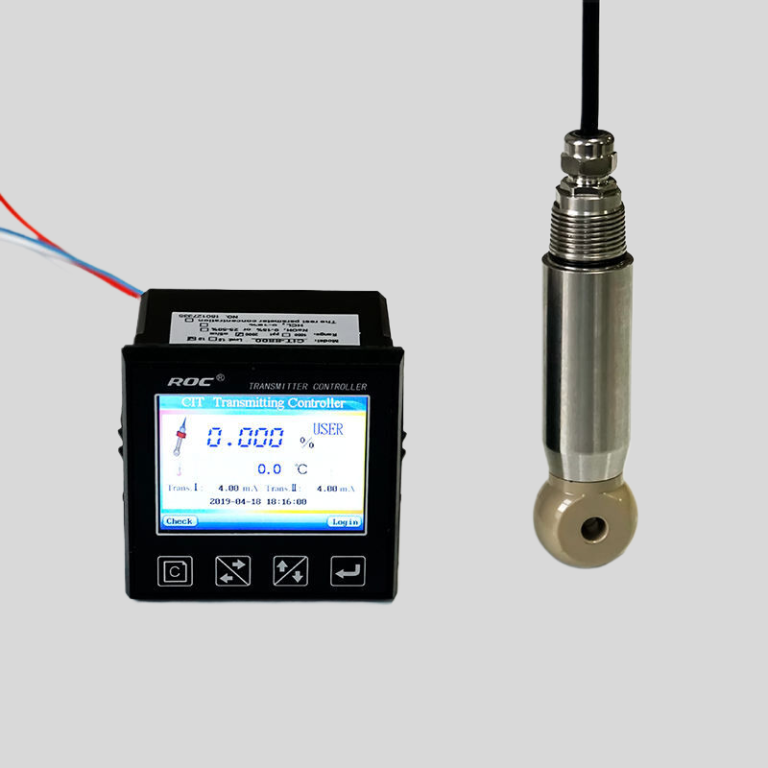
- Multi-parameter sondes for the general redox and inorganic backdrop: conductivity, pH, ORP, dissolved oxygen, and temperature.
- Oil-in-water sensors on hydrocarbon-impacted sites to track dissolved-phase migration in near real time.
- Turbidity or suspended-solids sensors where solids loading affects sample quality or barrier performance.
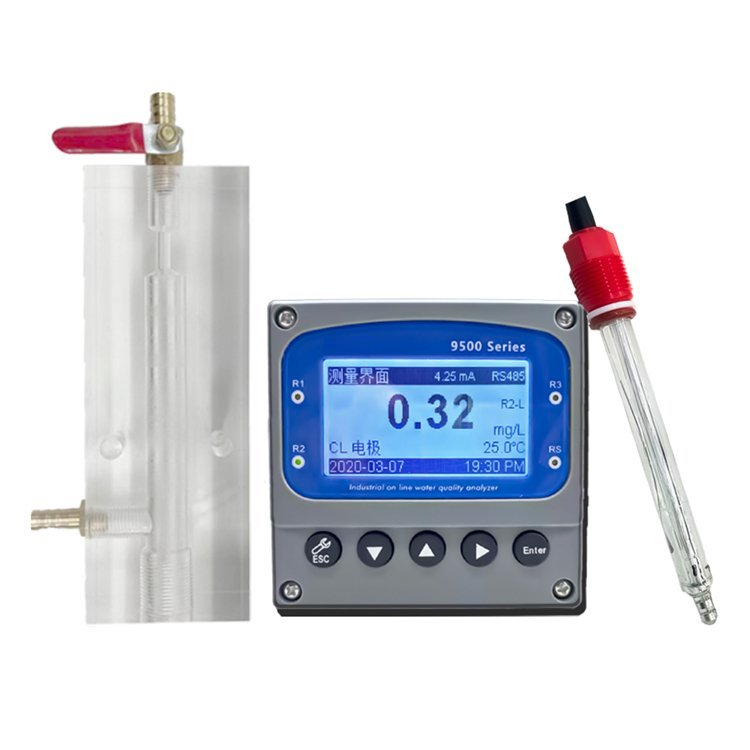
- In-line pH electrodes or ORP-equipped sondes where reactive treatment chemistry needs to be tracked closely.
Shanghai ChiMay’s product line was assembled to cover this portfolio in a coherent way — the same digital protocol, the same telemetry gateway, the same laptop utility for calibration and diagnostics — so a site does not become a museum of mismatched instrumentation.
Step 3 — Design Network Geometry Around the Plume
A defensible network geometry uses three concentric rings:
- Source and reactive-zone wells to characterize the driving chemistry.
- Compliance and property-line wells at the boundary of the regulated area.
- Sentinel wells beyond the expected plume extent to catch surprises.
Well placement is not primarily an instrumentation question — it is a hydrogeology question. But every well needs to be considered as a future sensor host, which affects casing diameter, screen geometry, and access design.
Step 4 — Build a Telemetry Layer That Won’t Betray You
The sensor is the interesting part. The telemetry layer is the boring part that saves the program.
- Cellular gateways with local buffering: essential in areas with intermittent coverage.
- Solar-battery power at remote wells: sized for winter with 50% headroom on annual solar budget.
- Secure data transport with certificate-based authentication: the compliance dataset is a legal asset and must be protected as such.
- Time synchronization across every gateway: without a common clock, coordinated event analysis across wells is nearly impossible.
Shanghai ChiMay’s digital sensors output over Modbus RTU on RS-485. That protocol pairs cleanly with almost every industrial telemetry gateway on the market.
Step 5 — Install a Calibration and QA Discipline
Continuous data is only as good as the QA program behind it. The playbook cadence, distilled from many real-world programs:
- Every 15 minutes: self-diagnostic flags from sensor firmware.
- Quarterly: bench-verification of every sensor against certified standards.
- Annually: full multi-point recalibration.
- Every 2–4 years: factory refurbishment and re-certification.
Every check gets logged. A record that shows a sensor stayed in tolerance for eight quarters is more valuable in front of a regulator than a sensor with no record at all.
Step 6 — Own the Data Governance Story
Data governance is now a first-class part of a groundwater monitoring program.
- A single source of truth for compliance data, held in a system with proper access controls and audit logging.
- Immutable timestamps and cryptographic hashes so no dataset can be quietly rewritten.
- Documented data-review process — every quarterly report is signed off by a qualified professional against a written protocol.
- Version-controlled site conceptual model so the physical understanding of the site is updated alongside the data.
Step 7 — Turn Data Into Decisions
Data that never drives a decision is data that never repays its cost. Three decision cycles reliably deliver value:
- Weekly operational. Site managers review dashboards for excursions, sensor health, and calibration flags.
- Quarterly technical. Site engineers and remediation designers review trends, update the conceptual model, and adjust remediation actions.
- Annual strategic. Site owners and legal counsel review the annual compliance dataset, refresh the risk assessment, and plan the next year of investment.
Step 8 — Plan the Long-Tail Handoff
Groundwater compliance often outlasts every original team member. The playbook includes a written handoff plan: sensor inventory, calibration records, telemetry documentation, and data-governance provisions structured so a new operator can take over without a data gap.
Final Word
The playbook above is not a checklist. It is a system view. Individual sensors matter, but the value comes from the whole — the geometry, the telemetry, the QA discipline, the data governance, and the decision cadence that turns instrumentation into evidence and evidence into decisions. Shanghai ChiMay’s sensor families are engineered to sit inside this playbook as the always-on hardware layer that lets everything else work. In 2026, that layer is the difference between defending a site and simply hoping it stays out of trouble.