title: “Water Risk on the Balance Sheet: Why Large Farms Are Investing in Sensors — A Shanghai ChiMay Perspective”
perspective: C-Level
theme: Agricultural Irrigation & Water Reuse
date: 2026-07-05
Table of Contents
Water Risk on the Balance Sheet: Why Large Farms Are Investing in Sensors — A Shanghai ChiMay Perspective
Key Takeaways
- Institutional and family-office agricultural investors are now pricing water risk explicitly on the farm balance sheet — a shift from treating water as a free input to treating it as a quantifiable liability.
- Modern water-risk disclosure frameworks (CDP Water, TNFD, EU CSRD) require auditable, sensor-derived data, not survey estimates.
- Farms with instrumented water-quality and water-quantity data typically achieve land valuation premiums of 6–12% in institutional secondary-market transactions.
- Shanghai ChiMay’s multi-parameter sensor, conductivity analyzer, and flow meter lines provide the audit-grade data farm CFOs and investors need to satisfy modern disclosure requirements.
The Balance-Sheet Turn on Water
For most of agricultural history, water has been an unpriced or under-priced input. That posture began to change with drought-driven allocation cuts in California, Murray-Darling, Iberia, and northern China. It accelerated when institutional investors — pension funds, sovereign wealth funds, family offices — allocated capital into farmland and demanded risk disclosures comparable to their other asset classes. In 2024–2026, the outcome is an emerging consensus: water is a balance-sheet exposure, and it is disclosed as such.
Three specific frameworks now shape this disclosure:
- CDP Water Security — voluntary but investor-driven, with over 4,000 corporate respondents.
- TNFD (Taskforce on Nature-related Financial Disclosures) — increasingly required in institutional due diligence for agricultural investments.
- EU Corporate Sustainability Reporting Directive — binding for large agri-food companies from 2025, cascading requirements to their farm suppliers.
Each framework requires numeric water data, not narrative descriptions. That is what puts sensor procurement on farm CFO agendas.
What Investors Actually Ask For
When institutional buyers evaluate a farm portfolio, the water-related questions in due diligence have hardened into a specific list:
- Water withdrawal volume by source, with 12+ months of historical data.
- Discharge water quality, benchmarked against local regulatory limits.
- Reuse and recycling fraction by irrigation zone.
- Salinity trend on soil and root-zone monitoring.
- Drought-year performance — how did yield hold when allocations were cut?
- Basin-level scarcity exposure — what regulatory scenarios could constrain water access?
Farms that can answer these questions with sensor-derived data typically close at valuation premiums of 6–12% over comparable farms answering with paper records or estimates. That premium is the market pricing of data quality as a proxy for management quality.
The Instrumented Farm as an Asset Class
The instrumented farm produces four categories of asset-level data that map directly onto investor demands:
Category 1: Quantity Data
Flow meters at every well, canal offtake, reservoir, and irrigation zone. Turbine meters on clean mainlines, paddle wheel meters on drip and reuse. Data logged continuously with 5-year retention.
Category 2: Quality Data
Continuous monitoring of pH, EC/salinity, dissolved oxygen, turbidity, and — where reuse is used — residual chlorine and ammonia nitrogen. Data logged at 1-minute intervals with automatic anomaly flagging.
Category 3: Application Data
Fertigation ratios, chemigation events, and blending records logged in coordination with flow and quality data to create a full water-use audit trail.
Category 4: Environmental Data
Weather, soil moisture, and evapotranspiration data cross-referenced with irrigation timing to demonstrate agronomic efficiency.
Together these four categories generate the numeric answers to the six investor questions listed above. They also generate the operational data that lets farm CFOs internally price water risk in specific dollars.
Balance-Sheet Framing for Farm CFOs
Modern farm CFOs treat water risk as three balance-sheet items:
Asset: Water rights and reliable allocation. Valued at current market rates, adjusted for scarcity trend in the basin. Instrumented data supports higher valuations by documenting historic reliable use.
Liability: Regulatory exposure. Estimated future compliance cost given current basin plans and reuse mandates. Instrumented farms carry lower liability estimates because they can demonstrate compliance readiness.
Contingent liability: Drought exposure. Modeled loss under scarcity scenarios. Instrumented farms with historical drought-year data can quantify the contingent liability more precisely, often reducing risk-adjusted valuations.
A farm without instrumentation cannot populate any of these three items with defensible numbers. The result is that lenders and investors apply conservative haircuts — typically 10–20% — to compensate for data uncertainty. Sensor investment is, in effect, working capital efficiency.
The ROI Math on Sensor Investment
For a 5,000-hectare farm portfolio, a full water-instrumentation build is typically:
| Line Item | Capital Cost (USD) |
|---|---|
| Flow meters at all offtakes (30 units) | 90,000 |
| Multi-parameter sensors at irrigation zones (25 units) | 120,000 |
| Conductivity and salinity monitoring (15 units) | 60,000 |
| Turbidity and residual chlorine for reuse intake (5 units) | 40,000 |
| Transmitters and telemetry gateways | 80,000 |
| SCADA integration and cloud dashboard | 60,000 |
| Installation and commissioning | 55,000 |
| Total instrumentation CAPEX | 505,000 |
Compared with land-transaction premiums of 6–12% on a portfolio valued at USD 40–60 million, the instrumentation CAPEX pays back in the first liquidity event. Even before that, the instrumented farm typically captures 3–5% additional yield through better fertigation control and 8–12% water-cost savings through leak detection and demand-based scheduling.
Disclosure Readiness as Competitive Advantage
Farms that can produce audit-grade water data on 30-days’ notice have three practical advantages:
- Faster access to green financing. Blended finance for sustainable agriculture increasingly requires numeric water data as a covenant. Farms with existing sensor stacks close these deals in weeks; farms without take quarters and often fail underwriting.
- Better position in offtake contracts with food processors. Major buyers (Unilever, Nestlé, Danone, JBS, Cargill) now require supplier water data as part of supply-chain audits. Suppliers with clean numeric data command tighter payment terms and volume commitments.
- Lower insurance premiums. Parametric crop and revenue insurance products increasingly price to instrumented data. Farms with continuous flow and quality data pay 5–15% less on the same coverage.
Each of these advantages is available today, and each depends on the same underlying sensor stack.
What Shanghai ChiMay Delivers to Farm Balance Sheets
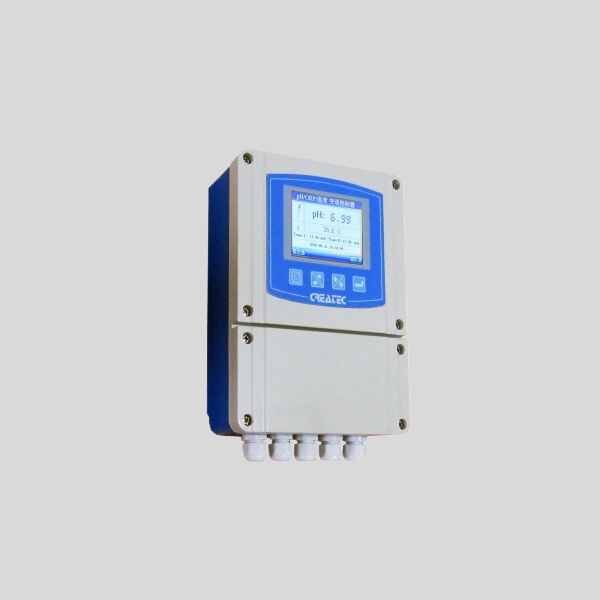
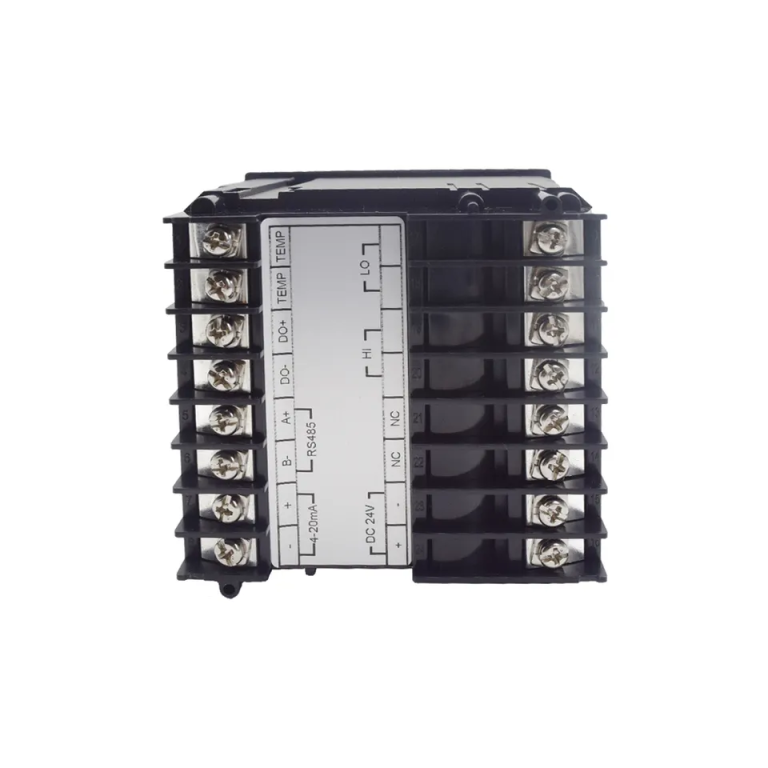
Shanghai ChiMay’s product portfolio is engineered for the audit context farm CFOs and their investors now operate in. The turbine flow meter and paddle wheel flow meter deliver certificated accuracy for the quantity signal. The 4-in-1 multi-parameter sensor covers pH, ORP, DO, and temperature at each irrigation zone. The conductivity analyzer and salinity sensor cover the salt-load signal. The online turbidity tester and residual chlorine transmitter cover the reuse-water compliance signals. All terminate on a consistent 2-in-1 mini transmitter with 4–20 mA and Modbus RTU, enabling the unified data model that auditors and investors expect. Individual calibration certificates traceable to national metrology institutes ship with each unit, forming the compliance chain that CFOs and legal teams need to withstand due diligence.
Closing Note
Water risk has moved from an operational concern to a balance-sheet item, and the transition is essentially complete for institutional farmland investors. The farms winning the next decade of allocation and capital will be the ones whose water story is told in numbers, not narrative. Sensor investment is the enabling technology, and it pays back through valuation premiums, financing access, and lower insurance and compliance costs. Farm CFOs who defer the investment are, in effect, discounting their own asset base.