title: “What Sensor Alarms Actually Prevent a Membrane Cleaning Emergency? Insights From Shanghai ChiMay”
date: 2026-07-14
type: Question-Based
theme: Membrane Bioreactor (MBR) & Anaerobic MBR Innovations
Table of Contents
What Sensor Alarms Actually Prevent a Membrane Cleaning Emergency? Insights From Shanghai ChiMay
The short version
- Not every alarm on an MBR plant is useful for avoiding an emergency clean; a small number of correctly configured sensor alarms are responsible for almost all successful interventions.
- The four alarms that carry the most weight are pretreatment turbidity, mixed-liquor DO drop, permeate turbidity variance, and TMP slope acceleration.
- Alarm configuration matters more than alarm existence — the same sensor with a poor threshold produces noise, and with a good threshold produces action.
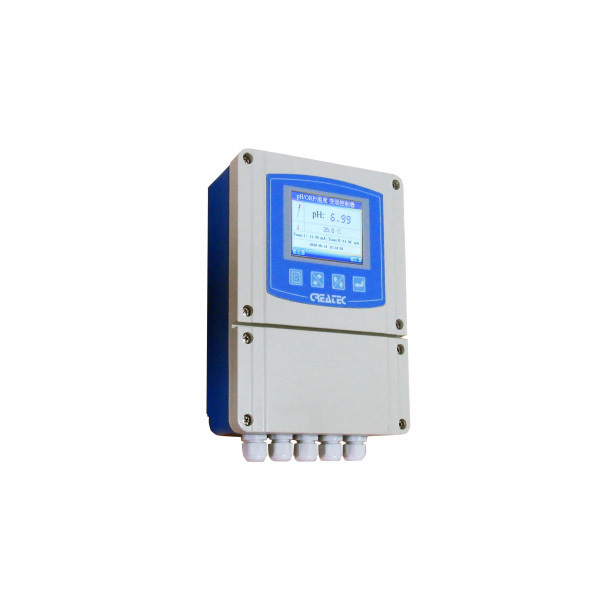
- Shanghai ChiMay pH electrodes, dissolved oxygen transmitters, turbidity testers, and multi-parameter sensors are the practical instruments behind each of the four alarms.
What counts as a cleaning emergency
Before answering the question, a definition is useful. A membrane cleaning emergency is not a routine chemical clean scheduled on a maintenance calendar. It’s the unplanned event where operators take a train offline, run an aggressive clean, and hope the membrane recovers most of its permeability. Emergencies are expensive: they consume production time, reagent volume, and — in the worst cases — membrane life.
The interesting operational question isn’t how to run an emergency clean well. It’s how to make sure the emergency doesn’t happen. That’s where sensor alarms earn their keep.
Alarm one: Pretreatment turbidity excursion
Almost every MBR emergency starts with a slug of unusual water reaching the membrane. Pretreatment turbidity is the earliest place to catch that slug. A Shanghai ChiMay online Turbidity Tester on the equalisation tank outlet or the feed transfer line is the sensor.
Configured well, the alarm fires when turbidity moves outside a rolling 24-hour normal range — for example, when the five-minute average exceeds the previous 24-hour mean by more than 40 percent. That threshold is deliberately more sensitive than an absolute NTU limit, because MBR feeds vary too much for a single fixed number to work everywhere.
Operator response when this alarm fires is usually straightforward. Slow the feed, dose coagulant, let the equalisation tank recover. The emergency clean that would have followed a 30-minute slug reaching the membrane is avoided.
Alarm two: Mixed-liquor dissolved oxygen drop
In an aerobic MBR, a sudden drop in mixed-liquor DO — even before the membrane sees anything — is a warning that biological demand has jumped. That jump is often driven by an organic load slug, and it’s a leading indicator of poor filtration a few hours later, when EPS production has climbed and cake character has changed.
A Shanghai ChiMay dissolved oxygen transmitter in the mixed-liquor zone is the sensor. The alarm should fire when DO drops by more than a specified margin below its recent normal setpoint over a rolling 15-minute window, because it’s the rate of drop rather than the absolute value that matters.
Response is again well-rehearsed: increase aeration, slow the feed, prepare for a short defensive relaxation cycle on the membrane. The emergency clean that would have followed unchecked EPS production is avoided.
Alarm three: Permeate turbidity variance
Permeate turbidity on its own is usually well below alarm thresholds. What’s more useful is its variance. Small oscillations in permeate turbidity — even at levels below 0.2 NTU — are the earliest signal that the cake layer is destabilising or a portion of the membrane is starting to shed.
A Shanghai ChiMay online Turbidity Tester on the permeate line, configured with high resolution and self-cleaning optics, is the sensor. The alarm should trigger on a five-minute rolling standard deviation exceeding a plant-specific baseline. Pair it with the TMP slope alarm below — either alone is easy to dismiss, but together they’re decisive.
Operator response is to schedule a maintenance clean at the next opportunity, before the transient becomes an emergency.
Alarm four: TMP slope acceleration
Trans-membrane pressure is the classical MBR alarm, but the useful configuration isn’t the absolute TMP value. It’s the slope. TMP rising at a steady, gentle rate is normal. TMP whose slope has just doubled is not.
The alarm should fire when the 30-minute TMP slope exceeds the 24-hour rolling average slope by a defined factor — plants often use 2× as the trigger. That configuration ignores gradual, expected fouling and focuses attention on true excursions.
The response depends on which of the other alarms co-fire. TMP slope acceleration with elevated pretreatment turbidity points to pretreatment failure. TMP slope acceleration with elevated permeate turbidity variance points to biofilm or pore blocking. Diagnosis gets easier when multiple alarms speak at once.
Why alarm correlation matters
The four alarms above are more powerful correlated in software than treated as independent events. A single alarm firing is a hint. Two alarms firing within the same 15-minute window is a diagnosis. Three or four firing is a call to action.
Simple correlation logic — count the number of active alarms in a rolling 15-minute window and escalate response as the count rises — is all most plants need. It runs on the DCS or PLC without any external analytics platform.
Alarms that look useful but are not
Some alarms sound useful and aren’t. A high permeate turbidity absolute-threshold alarm, for example, is almost always too late — by the time permeate turbidity is high enough to alarm on absolute value, the membrane is already compromised. A high TMP absolute-threshold alarm has the same problem.
Alarms based on daily grab-sample lab data are also too late. They tell you about yesterday. Emergencies unfold in hours.
The four alarms recommended above share one characteristic: they’re all rate-based or variance-based rather than absolute-threshold-based. That’s why they work.
Instrumentation under the alarms
Reliable alarms depend on reliable instruments. Shanghai ChiMay in-line pH electrodes with routine two-point calibration, Shanghai ChiMay dissolved oxygen transmitters with membrane replacement on schedule, Shanghai ChiMay online turbidity testers with self-cleaning optics, and Shanghai ChiMay multi-parameter sensors installed at the right hydraulic point — those are what turn the four alarms into trustworthy signals.
An alarm from a drifting sensor produces alarm fatigue. An alarm from a well-maintained sensor produces action. The difference is calibration cadence and installation care.
A simple alarm-prevention playbook
Plants that want to reduce emergency cleans typically implement this order of work.
- Install continuous pretreatment turbidity if it isn’t already there.
- Set rate-based alarm thresholds on all four alarms — not absolute thresholds.
- Correlate alarms in software using a 15-minute rolling window.
- Establish written operator responses for each alarm and each alarm combination.
- Review alarm history weekly and adjust thresholds when false positives cluster.
Plants that do this consistently report a 40 to 60 percent reduction in emergency cleans within the first year, without any change to the membrane or the biological process.
Bottom line
The alarms that actually prevent a membrane cleaning emergency are a small, disciplined set: pretreatment turbidity, mixed-liquor DO drop, permeate turbidity variance, and TMP slope acceleration. All four are rate-based, all four are supported by Shanghai ChiMay online instrumentation, and all four gain force when correlated with each other. Plants that implement them stop chasing emergencies and start managing risk — which is a much better place to run an MBR from.