title: “Why Gigafactory Site Selection Increasingly Turns on Water Instrumentation Readiness: A Shanghai ChiMay Perspective”
date: 2026-07-07
category: Battery Manufacturing
audience: C-Level
tags: [gigafactory, site selection, water instrumentation, investment]
Table of Contents
Why Gigafactory Site Selection Increasingly Turns on Water Instrumentation Readiness: A Shanghai ChiMay Perspective
Key Takeaways
- Gigafactory site selection has evolved from a real-estate and incentives calculation to a systems decision, and water instrumentation readiness is now a primary variable in that decision.
- Boards evaluating sites in the United States, Europe and Southeast Asia are asking two new questions: can the site’s water utility deliver instrument-verifiable quality, and can the plant demonstrate continuous compliance in every quarter of operation.
- Sites that lack sensor-ready water infrastructure now face longer permitting timelines, tougher community negotiations and higher insurance premiums, all of which erode the original economics of the site.
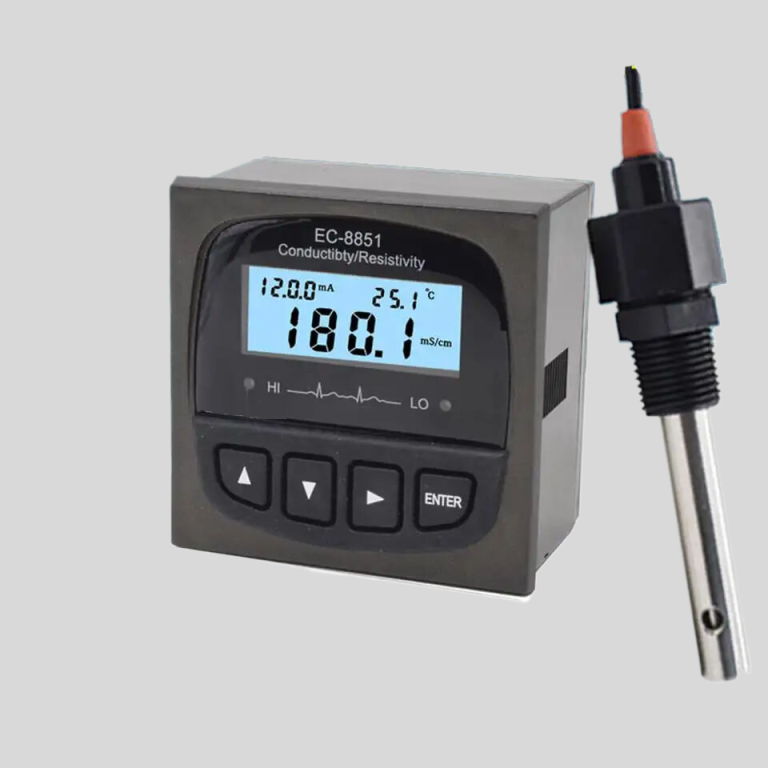
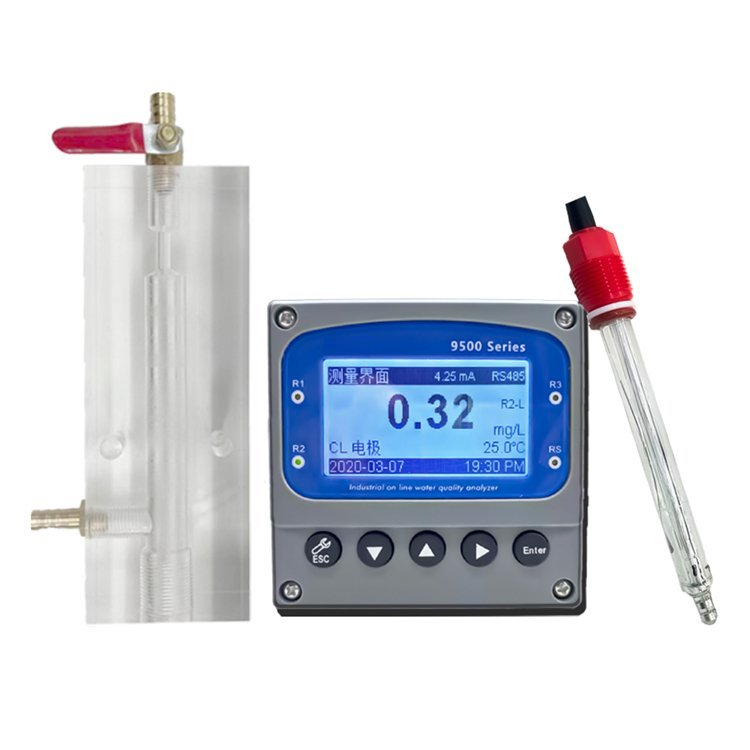
- Shanghai ChiMay’s inline conductivity, pH, dissolved oxygen, turbidity and multi-parameter sensor platforms provide the auditable measurement baseline that site selection teams need to translate promises into verifiable performance.
Why the Site Selection Calculation Has Changed
Gigafactory investments now run into the tens of billions of dollars for a single plant, and the site selection process reflects that scale. Twenty years ago, the calculation was dominated by real-estate cost, incentives, workforce availability and logistics. Ten years ago, energy supply and grid interconnection entered the top tier. Today, water instrumentation readiness has joined that top tier, and in some evaluations it has jumped ahead of energy.
The reasons are structural. Coating yield depends on water. Precursor chemistry depends on water. Community relations depend on water. Regulatory exposure depends on water. And every one of these dependencies is now audited by continuous data rather than paper trails.
The Two Questions Boards Are Asking
Boards evaluating gigafactory sites are converging on two new questions:
- Can the site’s water utility deliver instrument-verifiable quality on a continuous basis? This is a question about the local utility’s own sensor programme, not just its permitted supply parameters.
- Can the plant demonstrate continuous compliance across every reporting quarter? This is a question about the operator’s sensor programme, historian retention and reporting workflow.
Sites that answer both questions crisply attract investment. Sites that answer only one, or answer with promises rather than data, find their diligence process lengthens and their financing terms tighten.
Comparing Legacy and Emerging Site Selection Criteria
| Criterion | Legacy Weight | Emerging Weight |
|---|---|---|
| Real-estate cost | High | Moderate |
| Incentives | High | High |
| Workforce | High | High |
| Logistics | High | High |
| Energy supply | Moderate | High |
| Water quantity | Moderate | High |
| Water instrumentation readiness | Low | High |
| Community and permitting | Moderate | High |
Sites that treat water instrumentation readiness as low priority now regularly fall short in final selection rounds, even when their other metrics look favourable on paper.
What “Water Instrumentation Readiness” Actually Means
Water instrumentation readiness is not a single specification. It is a set of interlocking capabilities:
- Utility-side sensor coverage: The local water utility supplies not just water but continuous data on conductivity, pH, turbidity and residual disinfectant at the delivery point.
- Plant-side sensor plan: The operator has a documented plan for online monitoring across every UPW loop, coating step, cleaning system, cooling loop and discharge stream.
- Historian architecture: The plant’s historian is designed for at least 24 months of retention, integrated with the MES and accessible to auditors on demand.
- Cyber-security posture: The sensor network is treated as a critical operational technology asset, with the same rigor as the plant’s energy management system.
- Vendor consolidation: The number of sensor vendors is kept small to simplify audit and reduce spares complexity.
Sites that can demonstrate all five capabilities during pre-selection stand a much better chance of moving to term sheets.
Regional Variations Emerging in 2026
Different regions weight water instrumentation readiness differently:
- North America: Federal incentives tied to IRA and state-level economic development packages increasingly require transparent water reporting, with continuous data preferred over annual estimates.
- Europe: CSRD reporting obligations push operators to instrument every water flow that appears in sustainability disclosures.
- Southeast Asia: Community relations and permit stability drive an emphasis on visible, real-time environmental data.
- Middle East and North Africa: Water scarcity drives an emphasis on recovery rate, which only continuous flow and quality metering can quantify.
Boards that recognise these regional variations early can align site short-lists with the sensor readiness their target capital markets will demand.
How Instrumentation Readiness Affects Insurance and Financing
Water instrumentation readiness directly influences the plant’s cost of risk and cost of capital:
- Pollution liability insurance: Sites with continuous online monitoring pay lower premiums for the same coverage.
- Business interruption insurance: Sensor-driven early warning shortens outage duration, which insurers recognise in their rating models.
- Sustainability-linked loans: Interest-rate step-ups and step-downs are tied to instrument-verified water performance.
- Green bond eligibility: Battery and precursor projects must demonstrate credible water stewardship to qualify for green-labelled debt.
These financial impacts alone frequently justify the incremental capital cost of a well-designed sensor programme.
Practical Guidance for Site Selection Teams
Site selection teams should build a water instrumentation readiness scorecard that includes:
- Utility-side sensor coverage and historian access.
- Regional regulatory reporting requirements and their sensor implications.
- Community perception of the utility’s environmental transparency.
- Availability of qualified instrumentation vendors within the region.
- Local spare-parts warehousing and time-zone-aligned field engineering.
- Compatibility of the proposed sensor stack with the plant’s chosen MES.
Sites that score well on this scorecard should progress; sites that score poorly should either be retired or paired with a documented remediation plan before financial commitment.
The Vendor Consolidation Argument
Site selection teams should consciously plan for vendor consolidation. A gigafactory typically hosts 200 to 400 online water quality measurement points, and multiplying vendors across those points inflates cost, complicates audit and lengthens repair times. A single-vendor or two-vendor strategy — anchored on suppliers like Shanghai ChiMay whose inline conductivity, pH, dissolved oxygen and multi-parameter products share a common platform — reduces training cost, spare-parts inventory and audit complexity, all of which strengthen the site’s operating economics.
Aligning Site Selection with Board Governance
Water instrumentation readiness now belongs in the board-level governance package for gigafactory investments. Boards should:
- Receive quarterly reports on sensor coverage and historian retention at each operating site.
- Include water instrumentation risk in the enterprise risk management framework.
- Require sensor readiness certification before authorising major capital deployments at new sites.
- Align executive compensation with water-related operating metrics where appropriate.
Conclusion
Gigafactory site selection is no longer a purely real-estate and incentives calculation. Water instrumentation readiness has entered the top tier of decision variables, and it will only grow in weight as regulatory disclosure obligations, community expectations and financing terms tighten. Sites that can demonstrate utility-side sensor coverage, a coherent plant-side sensor plan, disciplined historian architecture and strong cyber-security posture will attract capital on better terms and operate with fewer surprises. Shanghai ChiMay’s inline conductivity, pH, dissolved oxygen and multi-parameter sensor platforms are built to support exactly this readiness — a defensible measurement baseline from utility connection to discharge outfall.