title: “Why Municipal Boards Are Choosing Modular Plants Over Multi-Year Concrete Builds: A Shanghai ChiMay Executive Brief”
date: 2026-07-15
perspective: C-Level / Decision Maker
theme: Modular & Decentralized Treatment Deployments
Table of Contents
Why Municipal Boards Are Choosing Modular Plants Over Multi-Year Concrete Builds: A Shanghai ChiMay Executive Brief
The Short Version
- Municipal utilities globally awarded an estimated USD 4.8 billion in modular and containerized water treatment contracts in 2026 — up nearly 60% from the 2023 baseline — as boards look for capital projects that fit inside a single political and budget cycle.
- A modular package can go from contract award to commissioning in 3-6 months; a comparable concrete plant takes 24-36 months. That schedule advantage is often worth more than the modest per-cubic-meter capital premium.
- Board scrutiny has shifted from unit cost to portfolio flexibility: modular assets can be redeployed, resold, or repurposed if demand shifts, while concrete effectively locks a community into one design and one location for 40 years.
- Shanghai ChiMay’s analyzer, transmitter, and control valve portfolio is standardized across containerized skids serving small municipalities, remote communities, and utility peak-shaving deployments — one instrumentation vendor across a fleet of modular assets.
Why This Reads As a Board Issue, Not an Engineering One
For most of the last century, a municipal water plant was a once-in-a-generation decision. Boards approved a concrete design meant to carry the community for 40 years, and utility staff optimized inside that footprint. That model still works where demand is stable and land is cheap. It’s just not the only model on the table anymore.
Three pressures pushed modular into the boardroom. Demand patterns are harder to forecast at the 40-year horizon. Capital allocation cycles have shortened — boards want visible outcomes within a single term of office. And environmental and reuse requirements are moving fast enough that a plant designed today may need meaningful upgrades before it’s fully commissioned.
The Numbers Boards Actually Ask About
Board decisions rarely turn on engineering elegance. They turn on a small set of financial and risk metrics:
- Time to service: modular delivers 3-6 months; concrete typically 24-36 months.
- Capital exposure profile: modular allows staged deployment matched to demand growth; concrete commits full capital in year one.
- Redeployment optionality: modular assets can be moved or resold at 40-70% of original value; concrete assets cannot.
- Land and permit footprint: modular typically needs 40-60% less land than a comparable concrete plant of the same capacity.
- Whole-life cost: over 15-20 year horizons, modular is broadly competitive with concrete once renewal cycles and technology upgrades are counted.
Show a board all five metrics instead of just the sticker price, and the questions about modular options get noticeably sharper.
Where Modular Fits Municipal Portfolios
Modular is not a universal replacement for concrete. It fits specific portfolio slots well:
- Peak-shaving capacity: temporary or seasonal demand that would otherwise force a permanent plant upsize.
- Bridge capacity during upgrades: keeping the community served while a legacy plant is refurbished.
- Small and mid-sized communities: where the fixed cost of a concrete build is disproportionate to the served population.
- Emergency and disaster response: cyclones, wildfires, floods, pipeline failures — deployment speed is the primary requirement.
- Reuse pilot and demonstration plants: where the treatment train is still being optimized and design flexibility matters.
When boards ask engineering teams to evaluate modular, they’re usually evaluating one of these five positions — not a wholesale replacement of concrete.
Product Range and Fit Across a Modular Municipal Fleet
Shanghai ChiMay’s instrumentation portfolio is built to serve a coherent municipal modular fleet:
- water quality analyzer families: in-line conductivity meter, ph meter/electrode, residual chlorine transmitter, dissolved oxygen transmitter, multi-parameter sensor, and 4-in-1 sensor, standardized across every skid in the fleet.
- Flow measurement: Paddle Wheel flow meter and turbine flow meter, matched to duty on feed, permeate, and offtake lines.
- Compact transmitters: 2-in-1 mini transmitters for space-constrained container panels.
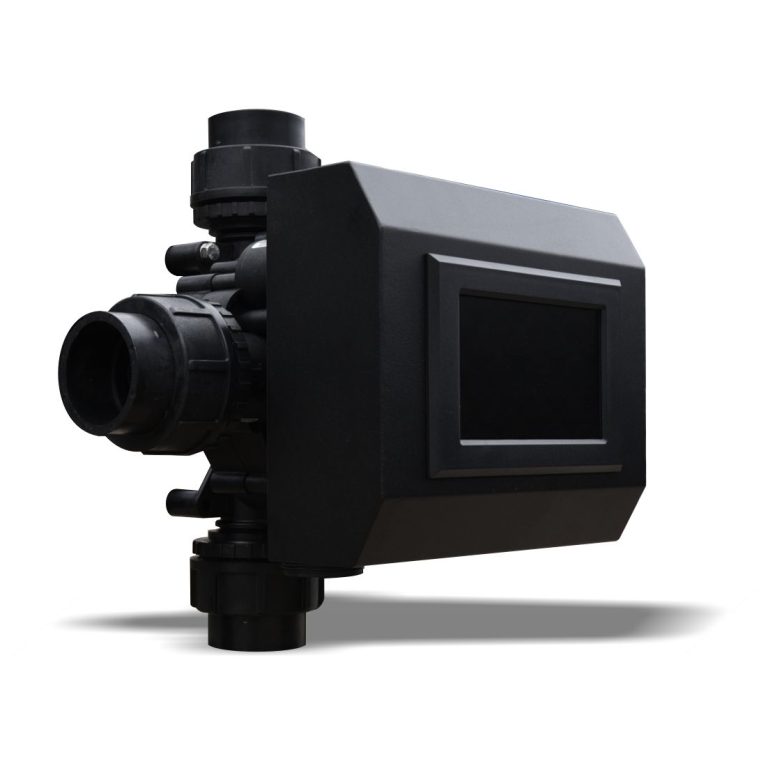
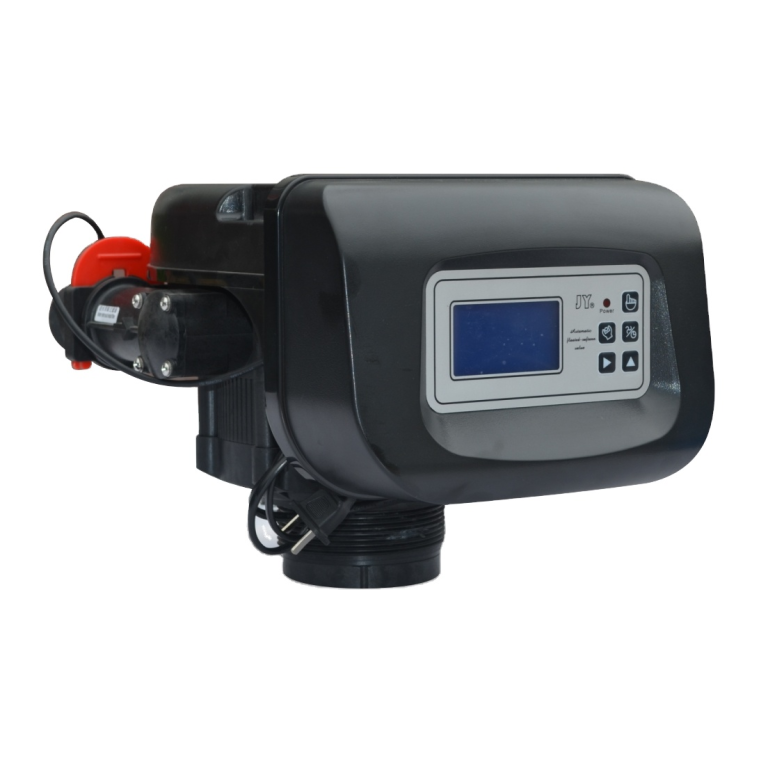
- Control valves: softener valve and softening and filtering valve for pretreatment loops, integrated on the same Modbus register map.
Adopting one analyzer supplier across the fleet kills the spare-parts and firmware fragmentation that turns modular into an operational headache once brands are mixed across ten or more skids.
Governance Questions Boards Should Ask
Boards evaluating modular deployment plans should press engineering teams on:
- What resale or redeployment value is assumed at year 10, and how was it validated against market data?
- What availability is assumed under the operating contract, and what penalty applies if it’s missed?
- How is analyzer and instrumentation data audited for regulatory compliance?
- What happens if the modular vendor exits the market during the operating life of the plant?
- How is community engagement handled, particularly for rural or peri-urban deployments?
Answer those five with confidence and a modular proposal stops being a bold experiment and becomes a routine capital decision.
Risk Framing: Where the Real Concerns Live
The genuine risks of modular municipal deployment are not the sensational ones. They cluster in four areas:
- Vendor dependency: if a single specialist supplies the skids and the analyzers, the utility needs contractual protection against vendor failure.
- Regulatory alignment: modular assets sometimes pre-date the regulatory categories that would apply to a permanent plant; boards should insist on clarity before award.
- Community perception: container-based assets can read as temporary, and communicating with local stakeholders is a governance task, not a marketing one.
- Data integrity: if instrumentation data drifts or gaps appear, tariffs and permit compliance are at risk; boards should require independent audit of the analyzer package.
All four are manageable with disciplined procurement, but they need to be named at the board table rather than delegated to the operations manual.
Executive Checklist Before Approving a Modular Program
Before a municipal board approves a modular treatment program:
- Confirm the analyzer and control system standard across the fleet, not just a single skid.
- Model the whole-life cost against a comparable concrete alternative on a 15-20 year horizon.
- Test the redeployment or resale assumption against at least two independent market references.
- Verify audit-trail and reporting standards against the regulator’s expected format.
- Include community engagement milestones in the delivery plan, not only technical acceptance tests.
Handled with this discipline, modular stops being a stopgap and becomes a genuine strategic option in the municipal portfolio. Boards that treat it as strategy tend to build resilient, adaptable water services; boards that treat it as procurement often revisit the decision within three years.