Table of Contents
Key Takeaways
—
The Hidden Drain on Chemical Budgets
Water treatment in industrial facilities consumes enormous quantities of acids, bases, oxidizers, and biocides. The global industrial water treatment chemicals market reached $47.2 billion in 2025, and chemical procurement consistently ranks as one of the largest operational line items for plants relying on process water. Yet a significant portion of this spending is squandered — not through overuse in the strictest sense, but through informed but delayed responses to water quality changes.
Traditional water quality management relies on grab sampling: collecting a flask of water, sending it to a laboratory, and waiting hours or days for results. By the time a technician receives a report indicating elevated pH or declining residual chlorine levels, the water has already moved through the process. Dosing decisions made on yesterday’s data govern today’s water chemistry — a fundamentally reactive approach that leads to systematic chemical overdosing to maintain safety margins.
A landmark study by the Water Research Foundation found that facilities using continuous online monitoring systems reported chemical consumption reductions of 23–41% compared to manual sampling regimes. The mechanism is straightforward: real-time measurements enable real-time adjustments. When a pH sensor detects a drift toward acidic conditions, the dosing system can respond within seconds rather than hours, adding precisely the amount of acid needed and no more.
—
The Economics of Continuous Monitoring
The financial case for real-time water quality monitoring extends beyond direct chemical savings. Consider a typical mid-size food processing facility operating a reverse osmosis (RO) system:
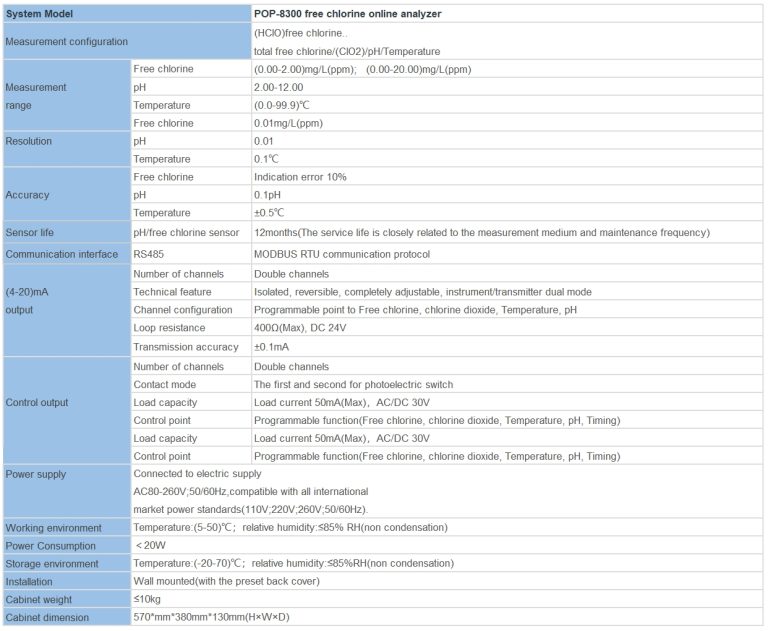
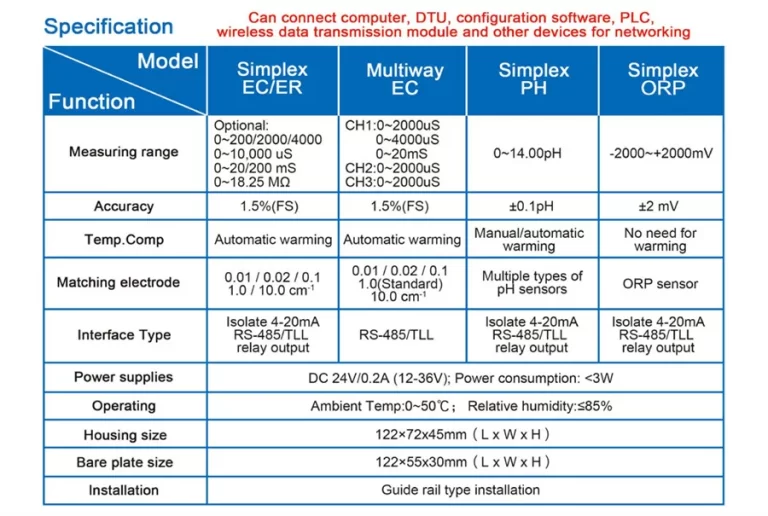
Deploying an online monitoring strategy — using instruments such as ChiMay in-line pH meters, residual chlorine transmitters, and conductivity sensors — typically costs $45,000–$80,000 in capital equipment with annual calibration and maintenance contracts of $8,000–$15,000. The payback period, accounting for chemical savings alone, frequently falls in the 12–18 month range. When labor reassignment and reduced waste disposal fees are factored in, the internal rate of return often exceeds 140% over a three-year horizon.
> “Continuous monitoring fundamentally changes the economics of water treatment. You stop paying for chemical safety margins and start paying only for what the water actually needs.” — Industrial Water Treatment Magazine, 2025 Technology Survey
—
Technical Integration: From Sensor to Control Loop
The value of continuous monitoring depends critically on how sensor data flows into the facility’s control architecture. Modern online water quality instruments communicate via industry-standard protocols including Modbus RTU/TCP, 4–20 mA analog signals, and HART — enabling seamless integration with distributed control systems (DCS) and SCADA platforms.
A properly configured system works as follows: the ChiMay online turbidity tester measures suspended solids every 10 seconds; the data is transmitted via Modbus TCP to the plant’s DCS; the DCS applies a proportional-integral-derivative (PID) control algorithm; and the biocide dosing pump adjusts its flow rate in real time. The entire chain executes without human intervention, responding to turbidity spikes within seconds rather than the hours required for manual sampling and laboratory analysis.
This closed-loop architecture delivers several compounding benefits:
1. Reduced chemical overdose: Sensors detect changes before they breach critical thresholds, enabling proactive — rather than reactive — dosing
2. Lower sampling labor: Automation eliminates the need for round-the-clock manual sampling shifts
3. Improved regulatory compliance: Continuous data logging creates defensible audit trails, reducing the risk of exceedance fines that averaged $12,500 per incident in US EPA enforcement actions in 2024
4. Extended asset life: Consistent water chemistry reduces scaling and corrosion in boilers, heat exchangers, and membrane systems, cutting unplanned maintenance costs by 18–35%
—
Choosing the Right Monitoring Strategy
Not all continuous monitoring approaches deliver equal value. Facilities must evaluate several dimensions before deploying online sensors:
| Factor | Manual Sampling | Basic Online Monitoring | Advanced Integrated Monitoring |
|---|
| Measurement frequency | Every 4–8 hours | Every 30–60 seconds | Real-time, continuous |
|---|
| Initial capital cost | $5,000–$15,000 | $40,000–$80,000 | $80,000–$200,000 |
|---|
| Data traceability | Paper-based, error-prone | Digital, basic | Full audit trail, regulatory-ready |
|---|
Facilities with budget constraints should prioritize parameters where chemical spend is highest and process variability is most pronounced. In most cases, pH and conductivity monitoring deliver the fastest payback, with residual chlorine or dissolved oxygen monitoring as secondary deployments.
—
A Path Forward for Procurement Teams
For procurement officers evaluating real-time monitoring investments, the decision framework should center on three questions:
1. What is the facility’s annual chemical budget, and what fraction is attributable to reactive over-dosing? A 30% waste rate on a $200,000 chemical budget represents $60,000 in recoverable spend.
2. What is the regulatory consequence of a water quality exceedance? Facilities in environmentally sensitive sectors face significantly higher stakes from non-compliance events.
3. Can the existing control infrastructure accommodate sensor integration? Most modern SCADA platforms support Modbus and 4–20 mA natively, minimizing integration costs.
The data consistently points in one direction: real-time water quality monitoring is among the highest-return investments available in industrial water management. With payback periods measured in months rather than years, and compounding benefits across chemical spend, labor efficiency, and regulatory risk reduction, the economic case for continuous online monitoring has never been stronger.