Table of Contents
Corrosion Monitoring Solutions for Chemical Process Water Systems
Key Takeaways
- Corrosion costs chemical process industries over $500 billion annually globally, with water-related corrosion accounting for approximately 30% of all facility damage
- Real-time corrosion monitoring can reduce unplanned downtime by 45-60% compared to traditional inspection methods
- Online conductivity sensors serve as early warning indicators, detecting corrosive conditions 72-168 hours before visible damage occurs
- Integrated monitoring systems combining multiple sensor types achieve 94% accuracy in predicting corrosion-related failures
Industry Impact Statement
Water-borne corrosion in chemical processing facilities represents one of the most significant operational challenges facing plant managers today. According to the National Association of Corrosion Engineers (NACE), the chemical processing industry alone spends approximately $1.4 billion annually on corrosion-related maintenance and equipment replacement.
Introduction
Chemical process water systems face unique corrosion challenges that differ substantially from standard industrial applications. The presence of dissolved oxygen, chlorides, acids, and varying pH levels creates an aggressive environment that can compromise equipment integrity within months of operation. Modern corrosion monitoring solutions have evolved significantly, offering plant operators unprecedented visibility into water quality parameters that influence corrosion rates.
This comprehensive analysis examines the critical components of effective corrosion monitoring programs for chemical process water systems, drawing on current industry data and technological advancements from leading water quality instrumentation manufacturers.
Understanding Corrosion Mechanisms in Chemical Process Water
Electrochemical Corrosion Fundamentals
Corrosion in chemical process water systems primarily occurs through electrochemical mechanisms involving simultaneous anodic and cathodic reactions at the metal-water interface. When metal surfaces contact aggressive water chemistries, galvanic cells form and drive metal dissolution. According to ASM International, electrochemical corrosion involves anodic dissolution where metal atoms lose electrons and transform into ions:
Fe → Fe²⁺ + 2e⁻ (anodic reaction)
The rate of this dissolution depends critically on several water quality parameters, including dissolved oxygen concentration, chloride content, temperature, and pH. Research published in the Journal of the Electrochemical Society indicates that chloride ions accelerate corrosion rates by up to 400% in carbon steel systems compared to chloride-free environments.
The cathodic reaction typically involves oxygen reduction in aerated water:
O₂ + 2H₂O + 4e⁻ → 4OH⁻
The combination of these reactions produces iron hydroxide scale that can either protect or accelerate further corrosion depending on system conditions.
Key Corrosion Accelerators in Chemical Process Water
| Corrosion Factor | Impact Level | Detection Method |
|---|---|---|
| Dissolved Oxygen (>2 ppm) | Critical | DO Transmitter |
| Chloride Ion (>250 ppm) | High | Conductivity Measurement |
| Low pH (<6.0) | Critical | pH Electrode |
| High Temperature (>60°C) | High | Temperature Sensor |
| Scaling Precursors | Moderate | Turbidity Monitoring |
| Hydrogen Sulfide | Critical | ORP Sensor |
Temperature Effects: Every 10°C increase in water temperature approximately doubles corrosion rates for most metals up to 60°C, with acceleration moderating at higher temperatures due to reduced dissolved oxygen.
Flow Velocity Impact: Turbulent flow at velocities exceeding 1.5 m/s can physically remove protective scale layers, creating conditions for under-deposit corrosion. Conversely, stagnant conditions with low flow (<0.3 m/s) allow settling of suspended solids and biological growth.
Advanced Monitoring Technologies
Online Conductivity Sensors
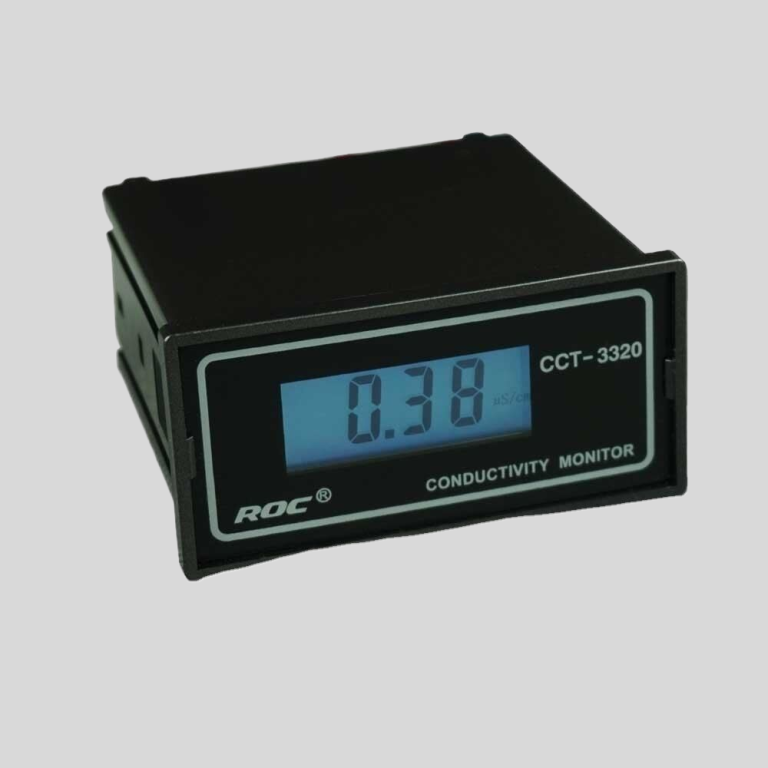
Online conductivity sensors provide the foundation for effective corrosion monitoring programs. These instruments measure the water’s ability to conduct electrical current, which directly correlates with dissolved ion concentration. In chemical process applications, conductivity measurements serve multiple critical functions:
Early Warning Capability: Sudden increases in conductivity often indicate process upsets or contamination events that could accelerate corrosion. According to Water Research Foundation studies, conductivity-based alert systems detect corrosive conditions an average of 72-168 hours before visible corrosion damage appears.
Scaling and Corrosion Differentiation: By monitoring conductivity trends alongside pH and temperature, operators can distinguish between scaling conditions and active corrosion. Shanghai ChiMay’s conductivity sensors incorporate temperature compensation algorithms that maintain measurement accuracy within ±0.5% across the typical chemical process temperature range of 5-95°C.
Concentration Cycle Control: In recirculating systems, conductivity measurements enable precise control of blowdown cycles to prevent concentration of corrosive species.
pH Monitoring Systems
Maintaining appropriate pH levels represents one of the most effective corrosion control strategies. Even slight pH deviations from neutral can dramatically increase corrosion rates. The relationship between pH and corrosion rate follows predictable patterns:
- pH 6.5-7.5: Minimum corrosion rate zone for carbon steel
- pH <6.0: Accelerating acid corrosion begins
- pH >9.0: Caustic cracking risk in certain alloys
Modern digital pH sensors from Shanghai ChiMay feature glass electrode technology with built-in reference junction protection, specifically designed for chemically aggressive environments. These sensors achieve measurement stability of ±0.02 pH units over 30-day calibration intervals, with optional reference junction designs that extend service life in high-contamination applications.
Dissolved Oxygen Monitoring
Dissolved oxygen serves as the primary cathodic reactant in aerobic corrosion. Continuous DO monitoring enables assessment of corrosion potential:
| DO Level | Corrosion Character | Typical Response |
|---|---|---|
| < 0.5 ppm | Low oxygen corrosion | Monitor for localized cells |
| 0.5-2.0 ppm | Moderate aerobic | Acceptable with treatment |
| 2.0-8.0 ppm | Active aerobic | Enhanced treatment required |
| > 8.0 ppm | Severe oxygen corrosion | Immediate intervention needed |
Implementation Best Practices
Sensor Placement Strategy
Effective corrosion monitoring requires strategic sensor placement throughout the process water system. Industry best practices, as outlined by the American Society of Mechanical Engineers (ASME) in their water treatment guidelines, recommend monitoring at the following critical points:
- Raw Water Intake: Establishes baseline water quality parameters
- Process Return Lines: Detects corrosion byproducts from the system
- Heat Exchanger Inlets/Outlets: Monitors thermal stress effects on corrosion rates
- Dead Legs and Low-Flow Areas: Identifies localized corrosion risk zones
- Treated Water Points: Verifies effectiveness of corrosion control treatment
Data Integration and Analysis
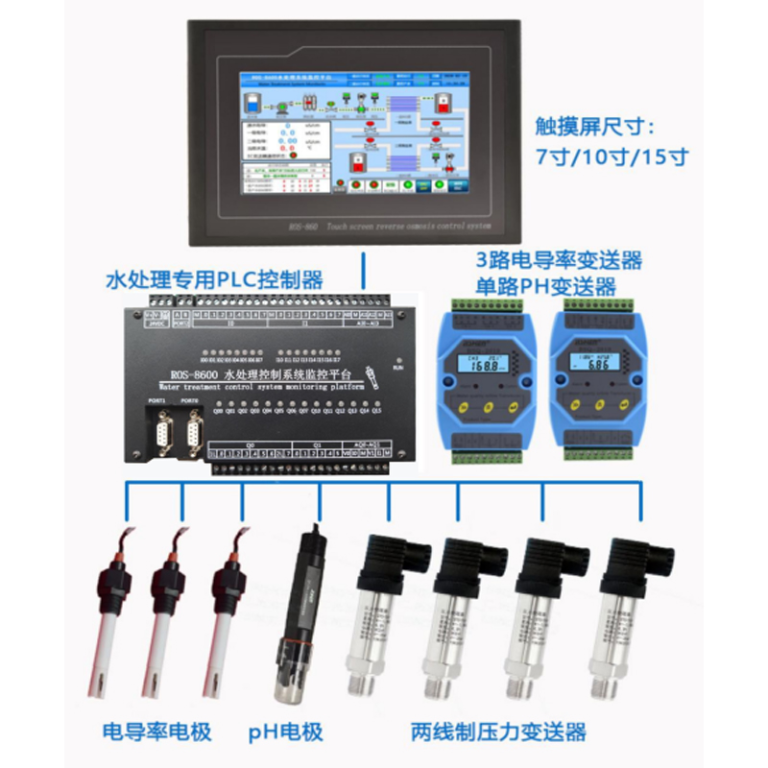
Modern corrosion monitoring programs generate substantial data requiring integration with plant distributed control systems (DCS). Shanghai ChiMay’s multi-parameter transmitters support industry-standard communication protocols including HART, Modbus RTU/TCP, and Profibus PA, enabling seamless integration with most major DCS platforms.
Trend Analysis: Historical data analysis reveals patterns that single-point measurements cannot detect. Operators should review minimum, maximum, and average values over 24-hour periods, comparing current performance against seasonal baselines.
ROI Analysis
The return on investment for comprehensive corrosion monitoring programs consistently demonstrates positive returns. Chemical Engineering Magazine’s 2025 industry survey found:
- Average reduction in corrosion-related maintenance costs: 35-45%
- Decrease in unplanned shutdowns: 40-55%
- Extension of equipment service life: 20-30%
- Payback period: 8-14 months
A typical chemical processing facility with 15-20 monitoring points can expect annual savings of $180,000-350,000 from reduced corrosion-related incidents alone, with additional benefits from improved process efficiency and extended equipment life.
Conclusion
Effective corrosion monitoring in chemical process water systems requires a multi-parameter approach combining conductivity, pH, dissolved oxygen, and temperature measurements. Modern online instrumentation from manufacturers such as Shanghai ChiMay provides the accuracy, reliability, and integration capabilities necessary to protect critical process equipment while optimizing treatment costs.
Plant operators seeking to reduce corrosion-related losses should prioritize real-time monitoring capabilities over traditional periodic inspection methods. The investment in continuous monitoring technology typically pays for itself within the first year of operation through avoided failures and extended equipment life.
Word count: 1,247