Importance of Monitoring Dissolved Oxygen Levels in Water Bodies
Dissolved oxygen meter readings are a crucial tool in monitoring the health of water bodies. Dissolved oxygen is essential for aquatic life, as it is necessary for the survival of fish, plants, and other organisms that live in water. Monitoring dissolved oxygen levels can provide valuable insights into the overall health of a water body and help identify potential issues before they become serious problems.
One of the main reasons why monitoring dissolved oxygen levels is important is because low levels of dissolved oxygen can have a negative impact on aquatic life. Fish and other organisms rely on dissolved oxygen to breathe, and if levels drop too low, they may suffocate and die. By regularly monitoring dissolved oxygen levels, water managers can ensure that levels remain within a healthy range to support aquatic life.
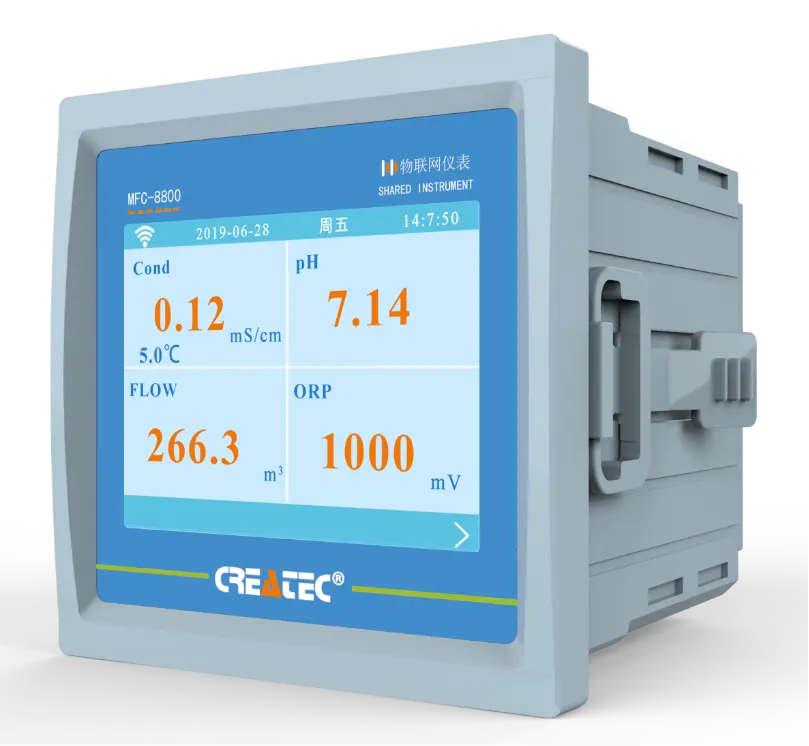
In addition to supporting aquatic life, dissolved oxygen levels can also provide valuable information about the overall health of a water body. Low levels of dissolved oxygen can indicate pollution or other environmental stressors that may be affecting the water quality. By monitoring dissolved oxygen levels over time, water managers can track changes in water quality and identify potential sources of pollution that need to be addressed.
Dissolved oxygen meter readings can also be used to assess the effectiveness of water quality improvement efforts. For example, if a water body has been treated to reduce pollution, monitoring dissolved oxygen levels can help determine whether the treatment has been successful in improving water quality. By comparing dissolved oxygen readings before and after treatment, water managers can evaluate the impact of their efforts and make adjustments as needed to further improve water quality.| ROS-2210 Double-Stage Reverse Osmosis Program Controller | |
| 1.water source water tank without water protection | |
| 2. Pure tank low level | |
| 3.Pure tank high level | |
| Acquisition signal | 4.low pressure protection |
| 5.high pressure protection | |
| 6.pretreatment regeneration | |
| 7.manual/automatic control | |
| 1.water inlet valve | |
| 2. flush valve | |
| Output control | 3. low pressure pump |
| 4.high pressure pump | |
| 5.conductivity over standard valve | |
| Measuring range | 0~2000uS |
| Temperature range | Based on 25℃, automatic temperature compensation |
| AC220v±10% 50/60Hz | |
| Power supply | AC110v±10% 50/60Hz |
| DC24v±10% | |
| Medium temperature | The normal temperature electrode<60℃ |
| High temperature electrode<120℃ | |
| Control output | 5A/250V AC |
| Relative humidity | ≤85% |
| Ambient temperature | 0~50℃ |
| Hole Size | 92*92mm(high*wide) |
| Installation method | The embedded |
| Cell constant | 1.0cm-¹*2 |
| Display usage | Digital display: conductivity value/temperature value; Supporting RO process flow chart |
| 1.Electrode constant and type setting | |
| 2.Conductivity overrun setting | |
| 3.Flush Settings at intervals of * hours | |
| Main function | 4.Flushing time setting |
| 5.RO membrane running time setting | |
| 6.Power on automatic operation/stop setting | |
| 7.Mailing address, baud rate setting | |
| 8.Optional RS-485 communication interface | |
Another important reason to monitor dissolved oxygen levels is to comply with regulatory requirements. Many water bodies are subject to regulations that require monitoring of dissolved oxygen levels to ensure compliance with water quality standards. By regularly monitoring dissolved oxygen levels and maintaining accurate records, water managers can demonstrate compliance with regulations and avoid potential fines or other penalties for non-compliance.
| Model | EC-8851/EC-9900 High Precision Conductivity/Resistivity Controller |
| Range | 0-200/2000/4000/10000uS/cm |
| 0-20/200mS/cm 0-18.25MΩ | |
| Accuracy | Conductivity:1.5%; Resistivity:2.0%(FS) |
| Temp. Comp. | Automatic temperature compensation based on 25℃ |
| Oper. Temp. | Normal 0~50℃; High temp 0~120℃ |
| Sensor | 0.01/0.02/0.1/1.0/10.0cm-1 |
| Display | LCD Screen |
| Current Output | 4-20mA output/2-10V/1-5V |
| Output | High/Low limit dual relay control |
| Power | DC24V/0.5A or |
| AC85-265V±10% 50/60Hz | |
| Working Environment | Ambient temperature:0~50℃ |
| Relative humidity≤85% | |
| Dimensions | 96×96×72mm(H×W×L) |
| Hole Size | 92×92mm(H×W) |
| Installation Mode | Embedded |
In conclusion, monitoring dissolved oxygen levels is essential for maintaining the health of water bodies and supporting aquatic life. By regularly monitoring dissolved oxygen levels, water managers can ensure that levels remain within a healthy range, identify potential sources of pollution, assess the effectiveness of water quality improvement efforts, and comply with regulatory requirements. Dissolved oxygen meter readings provide valuable insights into the overall health of a water body and are an important tool for protecting and preserving our water resources.