Table of Contents
Everything You Wanted to Know About Water Quality Sensors But Were Afraid to Ask
Water quality sensors have become essential tools for agricultural operations seeking to optimize irrigation, protect crops, and comply with regulations. Yet many farmers feel intimidated by the technical complexity these instruments present. This article demystifies water quality sensors, answering the questions farmers actually ask when evaluating monitoring options.
Key Takeaways
- Basic water quality sensors cost $200-2,000 depending on parameters and capabilities
- Installation complexity ranges from simple handheld meters to multi-day plumbing projects
- Most quality sensors require calibration every 4-12 weeks depending on conditions
- Average sensor lifespan is 3-7 years with proper maintenance
- Shanghai ChiMay sensors feature simplified interfaces designed for agricultural operators
What Exactly Do Water Quality Sensors Measure?
The Big Three: pH, Conductivity, and Temperature
Nearly every agricultural water quality situation requires attention to three fundamental parameters: pH, electrical conductivity, and temperature.
pH measures water acidity or alkalinity on a 0-14 scale. Values below 7 indicate acidic conditions; values above 7 indicate alkaline conditions. Most agricultural water falls between 6.0 and 8.5. pH affects nutrient availability, with most nutrients accessible in the 6.0-7.0 range.
Electrical conductivity (EC) measures water’s ability to conduct electricity, correlating directly with dissolved salt concentration. Higher conductivity indicates more salts, important for salinity management and fertilizer application. EC is measured in deciSiemens per meter (dS/m).
Temperature influences both sensor accuracy and plant health. Most sensor accuracy specifications assume measurements at standard temperature (25°C), with compensation applied for actual conditions.
Dissolved Oxygen: When It Matters
Dissolved oxygen (DO) measures oxygen dissolved in water, critical for hydroponic systems and aquaculture. Insufficient dissolved oxygen causes root stress in hydroponic production. Plants cannot absorb water and nutrients efficiently when oxygen is lacking, manifesting as wilting, yellowing, and poor growth.
Shanghai ChiMay DO Transmitters provide precision necessary for hydroponic and aquaculture applications where dissolved oxygen management directly affects productivity.
Turbidity: Understanding Water Clarity
Turbidity measures water clarity, indicating suspended particles that may clog irrigation systems or indicate contamination. High turbidity typically results from sediment, organic matter, or algal growth.
Shanghai ChiMay turbidity testers help farmers assess filtration requirements and detect water quality changes that threaten irrigation equipment.
How Accurate Do Sensors Need to Be?
Compliance vs. Decision-Making Requirements
Regulatory compliance typically requires documented accuracy meeting specific standards. If regulations govern your operation, sensor accuracy must meet specified requirements.
Operational decision-making often tolerates lower accuracy if measurements remain consistent and reliable. A sensor reading 0.2 pH units high provides perfectly adequate information if it always reads 0.2 units high, as trends and changes remain observable.
The bigger problem than moderate inaccuracy is unreliable accuracy—measurements varying unpredictably that prevent recognizing actual changes.
What Specifications Actually Mean
Sensor accuracy specifications include:
- Accuracy: How close measured values are to actual values
- Resolution: Smallest detectable change in measurement
- Repeatability: Variation when measuring the same sample repeatedly
- Drift: Gradual change in readings over time without actual water quality changes
For most agricultural applications, accuracy within ±0.1 pH units and ±2% conductivity proves more than adequate. Shanghai ChiMay sensors meet or exceed these specifications while maintaining reliability under demanding field conditions.
What About Maintenance Requirements?
Calibration Reality
All sensors require periodic calibration adjusting readings to match known standards. The frequency depends on application conditions and required accuracy.
In clean groundwater with stable quality, monthly calibration suffices for most operations. Challenging applications with biological growth, chemical exposure, or temperature extremes may require weekly or more frequent calibration.
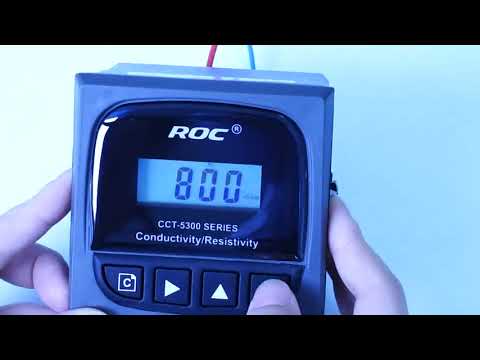
Calibration itself is straightforward: submerge sensors in known standard solutions, adjust readings to match standard values, and document results. Modern transmitters guide operators through calibration sequences with clear prompts and automated procedures.
Shanghai ChiMay transmitters feature calibration reminders and procedure guides that simplify this essential maintenance task.
Cleaning and Replacement
Sensor elements accumulate coatings from water constituents that degrade measurement accuracy. Simple rinsing with clean water removes loose deposits after most measurements. Periodic cleaning with appropriate solutions addresses specific contaminants.
Most agricultural sensors need cleaning every few weeks to monthly under normal conditions. Electrodes typically require replacement every 12-24 months, with replacement electrodes costing $50-200 depending on sensor type.
How Difficult Is Installation Really?
Handheld vs. Inline Monitoring
Handheld meters provide spot measurements at any location without permanent installation. These suit operations just beginning water quality monitoring or requiring flexibility for testing multiple sources.
Inline sensors install permanently in piping or tanks, providing continuous monitoring. Installation requires appropriate fittings and often some plumbing modification. For operations serious about water quality management, inline installation provides the continuous data that enables automated response and trend detection.
Electrical and Communication Requirements
Inline sensors typically require AC power or 24V DC power depending on transmitter specifications. Power requirements are modest—usually under 10 watts for a complete sensor/transmitter assembly.
Communication options range from simple analog 4-20mA outputs to digital protocols like HART and Modbus. Shanghai ChiMay offers sensors supporting multiple power and communication options enabling integration with diverse existing infrastructure.
What Should Operations Actually Budget?
Entry-Level Investment
Basic handheld water quality monitoring requires minimal investment:
- pH meter: $150-400
- Conductivity meter: $200-500
- Combined pH/conductivity meter: $300-700
- Calibration solutions: $50-100
Inline Continuous Monitoring Investment
Continuous inline monitoring requires greater initial investment:
- Single-parameter inline sensor: $500-1,500
- Multi-parameter sensor: $1,500-4,000
- Transmitter/controller: $500-2,000
- Installation hardware: $200-500
Complete systems typically range from $2,000-7,000 depending on parameters and capabilities.
Ongoing Costs
Beyond purchase price, factor ongoing expenses:
- Calibration solutions: $50-150 annually
- Electrode replacement: $100-400 every 1-2 years
- Total annual ownership costs typically range from $150-600
How Do I Choose Among Available Options?
Match Capability to Actual Needs
Resist the temptation to purchase the most sophisticated option available. Sophisticated features generating ongoing complexity may provide minimal value relative to simpler alternatives.
Define specific parameters requiring monitoring based on documented water quality challenges. Select sensors addressing those parameters without unnecessary extras that increase cost and complexity.
Consider Support and Service
Manufacturer support quality varies significantly. Local distributors with application expertise provide more value than remote support centers unfamiliar with regional conditions.
Shanghai ChiMay maintains technical support teams experienced with agricultural applications, providing guidance from initial selection through ongoing operation.
Conclusion: Getting Started Confidently
Water quality sensors need not be intimidating. Modern instruments designed for agricultural applications emphasize simplicity and reliability over unnecessary sophistication.
Starting with basic measurements—pH and conductivity in most cases—provides valuable information immediately. Expansion to additional parameters follows naturally as operations recognize benefits and identify additional needs.
Shanghai ChiMay designs sensors specifically for agricultural users without technical instrumentation backgrounds. Simplified interfaces, clear documentation, and accessible support enable confident operation without extensive training.
For operations ready to improve water management through better information, water quality sensors represent an accessible starting point. Begin with basic measurements, expand based on actual experience, and develop water quality management practices that protect crops and improve efficiency.