Table of Contents
Desalination Water Reuse: A Game-Changer for Industrial Sustainability
Key Takeaways:
– Industrial water reuse can reduce freshwater consumption by 40-60%
– Water scarcity affects 40% of global industries
– Reuse projects typically achieve ROI within 2-3 years
Introduction
As freshwater scarcity intensifies across industrial sectors, water reuse has evolved from an environmental nicety to an operational necessity. For facilities that once relied on seemingly unlimited freshwater supplies, the economics and availability of water have fundamentally changed.
This comprehensive guide explores how desalination technology and water reuse strategies are transforming industrial water management, creating sustainable operations while reducing costs and environmental impact.
The Water Scarcity Challenge
Global Industrial Impact
Water scarcity affects industrial operations worldwide:
– 40% of global industries face water-related risks
– Water costs have increased 50-200% in water-stressed regions
– 25% of facilities report production limitations due to water availability
Regulatory Pressures
Environmental regulations increasingly restrict freshwater withdrawal:
– Stricter effluent discharge limits
– Mandatory water recycling requirements
– Environmental impact assessments
– Sustainability reporting mandates
Understanding Industrial Water Reuse
Categories of Water Reuse
Direct Reuse: Treated water used without dilution or additional treatment
Indirect Reuse: Treated effluent discharged to environment, then withdrawn downstream
Internal Reuse: Process water cascaded between applications
Effluent Recycle: Treated wastewater returned to original process**
Quality Requirements
Water quality standards vary by application:
| Application | TDS (mg/L) | pH | TSS (mg/L) | Other |
|---|---|---|---|---|
| Cooling towers | < 500 | 6.5-8.5 | < 10 | Hardness < 350 |
| Boiler feed | < 50 | 8.0-10.0 | < 1 | Silica < 0.1 |
| Process water | < 200 | 6.5-8.5 | < 5 | Varies |
| Irrigation | < 1,000 | 6.0-8.5 | < 30 | Na < 100 |
| Toilet flushing | < 450 | 6.0-9.0 | < 10 | Chlorine > 0.5 |
Desalination Technology for Reuse
Treatment Technologies
Reverse Osmosis (RO):
– Removes 95-99% of dissolved solids
– Produces high-quality permeate from wastewater
– Energy consumption: 0.5-2.0 kWh/m³ for tertiary treatment
– Recovery rates: 70-85% typical
Electrodeionization (EDI):
– Produces ultra-pure water
– No chemical regeneration required
– Energy consumption: 0.2-0.5 kWh/m³
– Operating pressure: 60-90 psi
Advanced Oxidation:
– Removes recalcitrant organics
– Destroys micro-pollutants
– Enables water reuse for high-purity applications
Key Monitoring Parameters
For Reuse Applications
Effective reuse requires comprehensive monitoring:
Physical Parameters:
– Turbidity: Indicator of suspended solids
– Temperature: Affects biological activity and chemistry
– Color and odor: Contamination indicators
Chemical Parameters:
– pH: Process compatibility and corrosion
– Conductivity/TDS: Dissolved solids concentration
– Hardness: Scaling potential
– Alkalinity: Buffering capacity
Biological Parameters:
– Total coliform: Sanitary quality
– E. coli: Pathogen indicator
– BOD/COD: Organic load
– Chlorine residual: Disinfection verification
Critical Sensors for Reuse
Conductivity Sensors:
– Essential for mineral content monitoring
– Recovery optimization
– Product quality verification
– Process control integration
pH Sensors:
– Chemical treatment optimization
– Corrosion control
– Biological process monitoring
– Discharge compliance
dissolved oxygen sensors:
– Biological treatment control
– Aeration optimization
– Corrosion assessment
– Receiving water impact
Industrial Applications
Manufacturing
Food and Beverage:
– Water reuse for cleaning and rinsing
– Product quality preservation
– Regulatory compliance
– Cost savings of 20-40%
Pharmaceuticals:
– Water for injection (WFI) production
– Pure steam generation
– Cleaning-in-place (CIP) systems
– Zero liquid discharge potential
Electronics:
– Ultrapure water production
– Semiconductor manufacturing
– Display panel production
– Wafer processing
Power Generation
Cooling Towers:
– Drift eliminator makeup
– Blowdown replacement
– Zero liquid discharge systems
– Water consumption reduction of 30-50%
Boiler Systems:
– Pre-treatment for high-pressure boilers
– condensate return makeup
– Corrosion prevention
– Energy efficiency improvement
Oil and Gas
Enhanced Oil Recovery:
– Produced water treatment
– Steam injection for heavy oil
– Fracking operations
– Water handling cost reduction
Refining:
– Desalting operations
– Process water makeup
– Effluent treatment
– Environmental compliance
Economic Analysis
Cost Comparison
Freshwater vs. Reuse vs. Desalination:
| Source | Cost ($/m³) | Availability | Reliability |
|---|---|---|---|
| Freshwater | 0.50-3.00 | Variable | Moderate |
| Wastewater Reuse | 0.80-2.50 | High | High |
| Seawater Desalination | 1.00-3.00 | High | Moderate |
| Brackish Desalination | 0.60-1.50 | Moderate | High |
ROI Considerations
Typical reuse project economics:
– Capital investment: $500,000-5,000,000 (depending on scale)
– Operating cost reduction: 30-60% of water costs
– Payback period: 2-3 years
– Project life: 20-25 years
Implementation Strategies
Phased Approach
- Audit Phase: Assess current usage and reuse potential
- Pilot Phase: Test treatment technologies at small scale
- Phase 1: Implement highest-value reuse applications
- Expansion: Gradual expansion based on results
Technology Selection
Factors influencing technology choice:
– Feedwater quality
– Product water specifications
– Available footprint
– Energy availability
– Technical expertise
– Budget constraints
Environmental Benefits
Resource Conservation
Water reuse provides significant environmental benefits:
– Reduced freshwater withdrawal
– Decreased effluent discharge
– Lower energy footprint (vs. desalination)
– Reduced habitat impact
Carbon Reduction
Water reuse typically produces:
– 50-70% lower carbon footprint than desalination
– 30-50% lower than new freshwater sources
– Significant transportation emissions avoided
Shanghai ChiMay Solutions
Shanghai ChiMay provides comprehensive monitoring solutions for industrial water reuse applications:
Sensor Technologies:
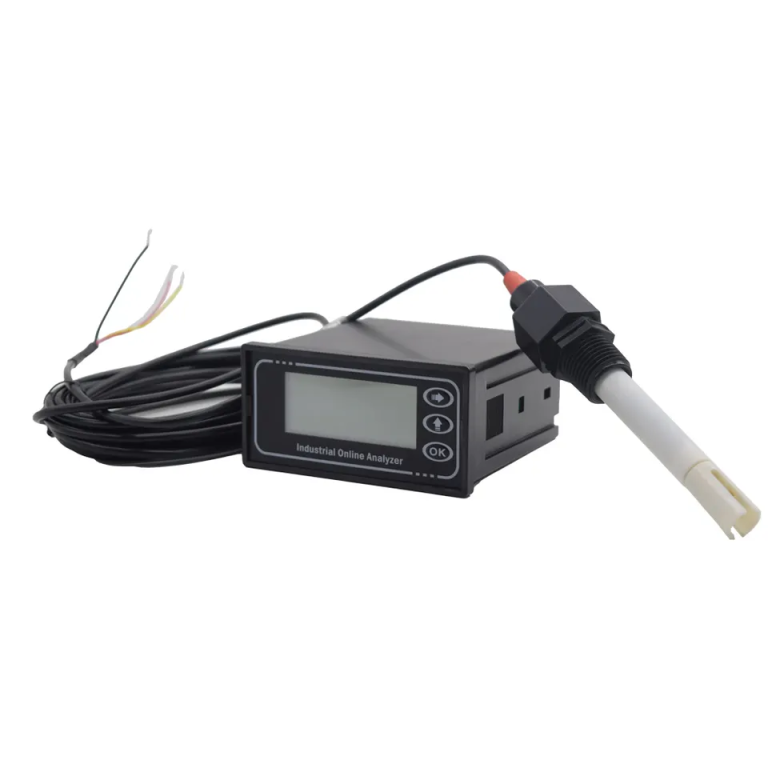
– Conductivity sensors for mineral monitoring
– pH sensors for process optimization
– dissolved oxygen sensors for biological control
– Turbidity sensors for quality assurance
– Chlorine sensors for disinfection
System Integration:
– Industrial communication protocols
– SCADA integration support
– Data analytics platforms
– Remote monitoring capabilities
Applications:
– Municipal wastewater reuse
– Industrial process water recycling
– Agricultural irrigation
– Groundwater recharge
– Environmental restoration
Conclusion
Water reuse represents the future of industrial water management, offering a path to sustainability that makes economic sense. As freshwater scarcity intensifies and costs rise, facilities that invest in reuse technology and comprehensive monitoring will maintain competitive advantages through water security and cost reduction.
The combination of advanced treatment technology and precise monitoring creates opportunities for virtually any industrial facility to reduce freshwater dependence while improving environmental performance and operational resilience.
Shanghai ChiMay stands ready to support industrial water reuse initiatives with proven monitoring technology, application expertise, and commitment to sustainable water management solutions.