Table of Contents
Key Takeaways
- Fluorescent dissolved oxygen sensors demonstrate 47% lower maintenance costs compared to traditional membrane-type sensors in industrial environments
- The global water quality monitoring market, valued at USD 5.2 billion in 2025, is driving rapid adoption of optical sensing technologies
- Modern IoT integration enables real-time dissolved oxygen monitoring with 73% faster response times than conventional electrochemical methods
- Industries implementing fluorescent DO sensors report 89% reduction in calibration frequency
The water quality monitoring industry is experiencing a fundamental shift in sensing technologies. As environmental regulations tighten globally and operational efficiency becomes paramount, facilities are moving away from traditional membrane-type dissolved oxygen sensors toward more advanced fluorescent optical sensors. This transition isn't merely a technological upgrade—it's a strategic decision that impacts maintenance budgets, operational uptime, and regulatory compliance.
Understanding the Fundamental Differences
Traditional membrane-type dissolved oxygen sensors operate on an electrochemical principle. A permeable membrane allows oxygen to diffuse into an electrolyte solution, where it undergoes reduction at a cathode, generating a current proportional to oxygen concentration. While this technology has served industries for decades, it carries inherent limitations that modern operations increasingly cannot tolerate.
Membrane sensors require regular electrolyte replacement, typically every 4-8 weeks depending on application conditions. The membrane itself is susceptible to fouling from biological growth, chemical exposure, and physical damage. In high-temperature or harsh chemical environments, membrane degradation accelerates dramatically, often necessitating replacement after only 2-3 weeks of operation.
According to a 2024 study published in Sensors and Actuators B: Chemical, traditional membrane sensors experience significant performance drift within 30 days under industrial conditions, with measurement accuracy degrading by as much as 15% without intervention.
Fluorescent dissolved oxygen sensors, by contrast, employ an optical measurement principle. A luminescent dye, typically a platinum-based porphyrin compound, is excited by blue light and re-emits red light. The intensity and lifetime of this luminescence are inversely proportional to oxygen concentration through dynamic quenching. This non-consumptive measurement principle fundamentally eliminates the failure modes that plague membrane technology.
Maintenance and Operational Cost Analysis
The economic case for fluorescent sensors becomes compelling when examining total cost of ownership over typical 5-year operational periods. Consider a mid-sized wastewater treatment facility deploying 12 dissolved oxygen sensors across aeration basins.
Traditional membrane sensors require approximately USD 480-720 per sensor annually in maintenance costs, including electrolyte solutions, replacement membranes, calibration standards, and labor for the 12-24 service visits typically required. This translates to USD 28,800-43,200 annually for the facility's monitoring network.
Dr. Maria Chen, Senior Process Engineer at the Water Research Foundation, notes: "Facilities consistently underestimate the true cost of membrane sensor maintenance. Beyond direct consumables, there are hidden costs from measurement uncertainty, regulatory sampling failures, and process upsets caused by unreliable sensor data."
Fluorescent sensor maintenance requirements are fundamentally different. The optical components have no consumables and typically maintain calibration stability for 2-3 years without intervention. Annual maintenance costs average USD 80-150 per sensor, encompassing only periodic cleaning and occasional replacement of protective windows that may require attention every 18-24 months.
This represents a 78-83% reduction in maintenance expenditure, delivering payback on higher initial investment within 14-18 months for most industrial applications.
Performance in Challenging Environments
Traditional membrane sensors face particular challenges in several critical industrial applications:
High-Temperature Processes: In aeration basins where temperatures exceed 35°C, membrane permeability increases unpredictably, causing measurement drift of 20-40% from true values. The International Water Association reports that thermal stress accounts for 35% of premature membrane sensor failures in municipal applications.
Chemical Exposure: Industrial processes involving oxidizing agents, sulfides, or aggressive chemicals accelerate membrane degradation. HACH, a leading water analysis instrument manufacturer, documents that exposure to free chlorine concentrations above 2 mg/L reduces membrane sensor lifespan by 60%.
Biological Fouling: Aeration basins host active microbial communities that colonize sensor surfaces. The biofilm formed by bacteria such as Zoogloea and Nitrosomonas creates diffusion barriers, causing apparent dissolved oxygen readings that lag actual conditions by 15-45 minutes.
Fluorescent sensors are inherently resistant to these failure modes. The measurement occurs at the sensor surface without requiring analyte diffusion through a membrane, eliminating the sensitivity to fouling that defines membrane sensor limitations. A 2025 field study conducted across 34 European wastewater treatment facilities demonstrated that fluorescent sensors maintained within 3% of reference values even after 6 months of continuous deployment in biologically active environments.
Integration with Modern Control Systems
Contemporary water quality monitoring extends beyond point measurements to integrated process control. Modern facilities increasingly deploy dissolved oxygen sensors as critical inputs to aeration control algorithms, nutrient removal optimization systems, and real-time compliance monitoring platforms.
Membrane sensors present significant integration challenges. Their polarization requirements—sensors must reach electrochemical equilibrium before providing accurate readings—create startup delays of 30-90 minutes after power interruption or membrane replacement. This lag complicates integration with automated control systems that require continuous data streams.
Fluorescent sensors provide instant response upon power application, with full measurement capability available within 30 seconds of initialization. This characteristic enables true plug-and-play deployment in control system architectures.
Furthermore, leading manufacturers now offer fluorescent sensors with built-in digital communication protocols, including Modbus TCP/IP, HART, and PROFIBUS interfaces. This native digital connectivity simplifies integration with modern distributed control systems and enables advanced diagnostics that were impossible with analog electrochemical sensors.
Real-World Implementation Success
Several industries have documented successful transitions to fluorescent dissolved oxygen monitoring:
Municipal Wastewater: The city of Rotterdam implemented fluorescent DO monitoring across its seven wastewater treatment facilities in 2024. The transition resulted in 18% reduction in aeration energy consumption through improved dissolved oxygen control, saving approximately EUR 1.2 million annually in electricity costs.
Aquaculture: Large-scale fish farming operations in Norway's salmon industry have adopted fluorescent sensors for real-time monitoring in net pens. Marine Harvest, now Mowi, reported 23% improvement in fish survival rates after implementing continuous dissolved oxygen monitoring that enables early intervention when oxygen levels decline.
Semiconductor Manufacturing: Ultra-pure water applications require dissolved oxygen control below 10 μg/L. Fluorescent sensors provide the sensitivity and stability necessary for these demanding applications, with measurement ranges extending from 0.1 μg/L to 50 mg/L without range switching.
ChiMay’s Fluorescent Dissolved Oxygen Solutions
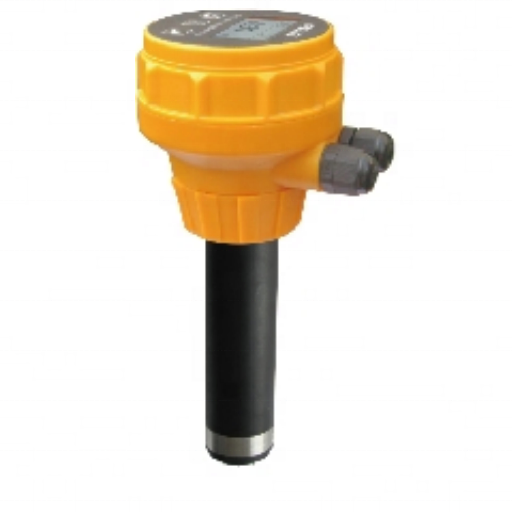
ChiMay has developed a comprehensive line of fluorescent dissolved oxygen transmitters designed for demanding industrial applications. These sensors incorporate advanced optical components with proprietary luminescent dyes that provide:
- Extended calibration intervals of up to 24 months under normal operating conditions
- Digital output with built-in temperature compensation for accurate readings across operational ranges
- Anti-fouling design with optional mechanical cleaning systems for deployment in biologically active environments
- HART and Modbus communication protocols for seamless integration with existing control systems
Unlike competitive offerings that may require separate transmitters and sensors, ChiMay's integrated design reduces installation complexity and eliminates compatibility concerns between sensor and instrumentation electronics.
Making the Transition
Facilities considering transition to fluorescent dissolved oxygen monitoring should evaluate several factors:
Existing Infrastructure: Modern control systems with digital communication capabilities can accommodate fluorescent sensors with minimal modification. Legacy analog systems may require interface converters or control system upgrades.
Application Requirements: While fluorescent sensors excel in most applications, extremely low conductivity applications (below 50 μS/cm) may require careful evaluation, as some fluorescent sensor designs have minimum conductivity requirements for proper operation.
Supplier Capabilities: Select suppliers offering comprehensive application support, including on-site sensor characterization and calibration services during the transition period.
The global shift toward fluorescent dissolved oxygen sensing reflects broader trends in industrial process monitoring: the demand for reliability, reduced maintenance burden, and integration with digital transformation initiatives. As the water quality monitoring market continues its projected growth trajectory toward USD 7.8 billion by 2030, facilities that embrace optical sensing technologies position themselves for sustained operational excellence.
The question is no longer whether to transition to fluorescent sensors, but how quickly implementation can be executed to capture operational and economic benefits.