Table of Contents
Aquaculture Water Quality Monitoring: Cost-Benefit Analysis for Commercial Fish Farming Operations
Key Takeaways
Aquaculture represents the fastest-growing food production sector globally, with production exceeding 120 million metric tons and industry value approaching $250 billion according to the Food and Agriculture Organization (FAO) 2024 State of World Fisheries and Aquaculture report. Sustainable aquaculture expansion depends critically on effective water quality management that optimizes fish health, growth rates, and feed efficiency while minimizing environmental impacts. Real-time water quality monitoring through advanced sensor technology provides the data foundation for optimized aquaculture management practices that improve productivity while reducing operational risks.
Dissolved Oxygen: The Critical Parameter in Aquaculture
Dissolved oxygen concentration represents the most critical water quality parameter affecting aquaculture production success, with direct impacts on fish respiration, metabolism, stress levels, and disease susceptibility. Fish require oxygen concentrations above 4-5 mg/L for normal metabolic function, with optimal growth occurring at 6-8 mg/L depending on species and temperature conditions. According to the Journal of World Aquaculture Society (2024), dissolved oxygen levels below 3 mg/L trigger stress responses that reduce feed intake and growth rates, while levels below 2 mg/L can cause mortality within hours.
Water temperature directly influences dissolved oxygen saturation levels, with warmer water holding less oxygen than cooler water at equivalent atmospheric conditions. Summer months and afternoon hours typically present the highest risk periods for low dissolved oxygen as elevated temperatures reduce oxygen solubility while increasing fish metabolic demand. Automated aeration systems triggered by dissolved oxygen sensor readings provide protective intervention that prevents catastrophic mortality events during low-DO episodes. Research from the University of Florida IFAS Extension (2024) demonstrates that sensor-triggered aeration reduces energy consumption by 40% while providing superior dissolved oxygen control compared to time-clock operated systems.
Economic Analysis of Water Quality Monitoring Investment
The capital investment required for comprehensive aquaculture water quality monitoring must be evaluated against the operational cost savings, mortality reduction, and growth improvement benefits that monitoring enables. Traditional manual monitoring approaches require labor-intensive sampling and analysis activities that limit sampling frequency while consuming significant personnel time. The National Marine Fisheries Service (NMFS) economic analysis (2024) estimates that manual monitoring programs cost $15-25 per pond per day in labor alone for twice-daily sampling protocols.
Automated dissolved oxygen sensor and multi-parameter monitoring systems reduce labor requirements while providing continuous data that manual sampling cannot capture. Fixed-point monitoring stations with data logging capabilities eliminate routine sampling labor while generating comprehensive data records for management analysis and regulatory compliance. The Aquaculture Engineering Society (AES) technology assessment (2024) demonstrates that automated monitoring reduces total monitoring costs by 60% compared to manual approaches while providing superior data quality.
Mortality reduction benefits from improved water quality management represent the most significant economic value driver for monitoring system investment. Fish mortality in commercial aquaculture typically ranges from 5-15% of stocked biomass annually, with poor water quality accounting for approximately 40% of losses. The FAO 2024 report indicates that optimized water quality management through continuous monitoring reduces mortality by 25-35%, representing substantial value in high-value species production. For a 500-ton production facility with $8/kg average product value, a 30% mortality reduction translates to $1.2 million in annual value retention.
Multi-Parameter Monitoring Requirements
Effective aquaculture water quality management requires monitoring beyond dissolved oxygen to include additional parameters affecting fish health and production performance. Ammonia nitrogen sensor measurement addresses the toxicological impacts of ammonia excretion from fish metabolism, with un-ionized ammonia concentrations above 0.05 mg/L causing sublethal stress and growth reduction. The World Aquaculture Society (WAS) water quality guidelines (2024) establish monitoring requirements for ammonia, nitrite, and pH in addition to dissolved oxygen for comprehensive production management.
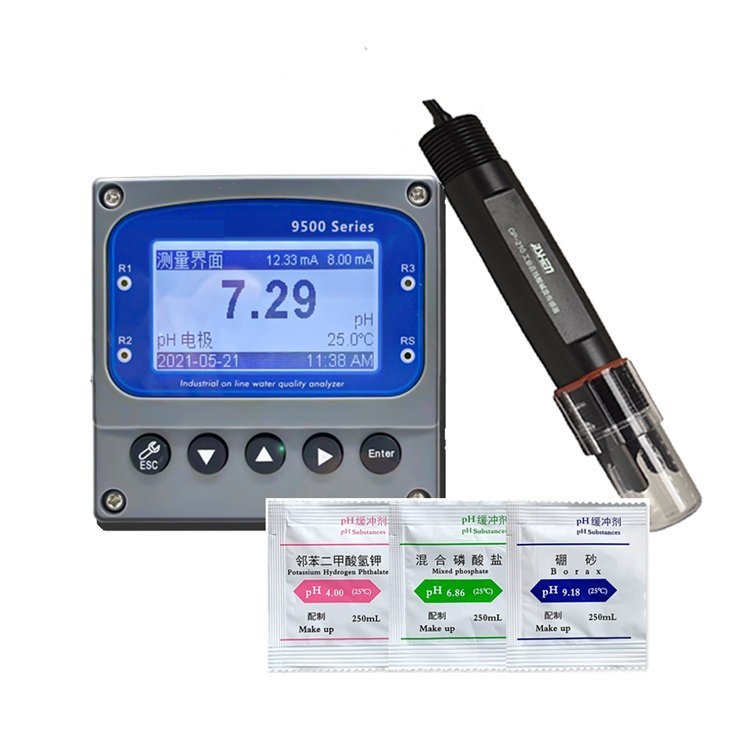
pH monitoring through inline ph meter measurement provides essential data for managing the acid-base balance that influences fish physiological function and toxicant speciation. Most fish species thrive in pH ranges of 6.5-8.5, with values outside this range causing stress and reduced growth regardless of other water quality parameters. inline conductivity meter measurements provide indirect monitoring of total dissolved solids (TDS) and ionic composition that influences fish osmoregulation and overall physiological condition.
System Architecture and Species-Specific Considerations
Aquaculture monitoring system architecture must address the unique environmental conditions, connectivity challenges, and operational requirements of fish farming operations. Sensor deployment in net pens, raceways, or tanks requires attention to positioning that ensures representative measurements while protecting instrumentation from physical damage. Connectivity infrastructure for remote aquaculture operations presents challenges that influence monitoring system configuration options. ChiMay's aquaculture monitoring platforms incorporate efficient power management that extends battery backup duration and supports reliable operation in off-grid locations.
Different aquaculture species present distinct water quality requirements and sensitivities that influence monitoring system configuration and alarm setpoints. Cold-water species including salmon and trout require lower temperatures and oxygen levels than warm-water species such as tilapia and catfish. Recirculating aquaculture systems (RAS) present particularly demanding monitoring requirements due to the concentrated fish densities and intensive production conditions that amplify water quality management challenges.
Data Management and Decision Support
Effective use of aquaculture monitoring data requires management systems that aggregate, visualize, and analyze information to support operational decision-making. Modern monitoring platforms incorporate cloud-based data management that provides remote access to real-time data from any location with internet connectivity. The Aquaculture North America industry survey (2024) reports that 78% of commercial aquaculture operations now utilize cloud-connected monitoring systems for real-time oversight of production conditions.
Trend analysis and predictive modeling based on continuous monitoring data enables proactive management that addresses developing conditions before they impact fish health. Machine learning algorithms can identify patterns that precede dissolved oxygen crashes or ammonia accumulation events, providing early warning that enables preventive intervention. Research from the Norwegian Institute of Marine Research (2024) demonstrates that predictive analytics reduce acute mortality events by 50% compared to reactive management approaches. Integration with feeding systems enables optimization of feed delivery based on real-time water quality conditions that affect appetite and feeding behavior.
Conclusion
Water quality monitoring represents essential infrastructure for commercial aquaculture operations seeking to optimize production efficiency while minimizing mortality risk and environmental impact. Investment in comprehensive water quality analyzer systems delivers measurable returns through improved fish survival, enhanced growth rates, and optimized feed conversion that justify capital expenditure with attractive return profiles. Strategic implementation of monitoring technology requires attention to species-specific requirements, system architecture considerations, and data management practices that translate measurement capability into operational improvements. ChiMay's expertise in aquaculture monitoring solutions supports fish farming operations seeking to improve production performance and protect their biological assets through reliable water quality management.