Table of Contents
Key Takeaways
- Smart water management systems reduce operational costs by 20-30% and decrease non-revenue water losses by 15-25% according to McKinsey's 2025 Analysis.
- Global smart water management market is projected to reach $50.9 billion by 2033, growing at a CAGR of 12.3%.
- IoT-enabled sensors reduce monitoring costs by 35-50% while improving data availability from 85% to 99%.
- Water utilities implementing digital transformation achieve 25-40% improvement in capital efficiency.
Introduction
Water utilities face mounting pressures to improve efficiency, enhance service reliability, and address aging infrastructure. Digital transformation offers a strategic pathway to address these challenges.
According to Bluefield Research's 2026 Digital Water Utility Survey, 78% of water utilities are pursuing digital transformation initiatives, with 45% allocating more than 5% of annual capital budgets to smart water technologies.
Digital Transformation Drivers
Operational Efficiency Imperatives
| Challenge | Traditional Approach | Digital Solution | Savings |
|---|---|---|---|
| Leak detection | Periodic surveys | Continuous monitoring | 40-60% |
| Water quality monitoring | Manual sampling | Online sensors | 30-50% |
| Asset management | Time-based replacement | Condition-based | 20-35% |
| Regulatory reporting | Manual compilation | Automated systems | 50-70% |
Regulatory and Sustainability Pressures
- Continuous monitoring requirements: Real-time water quality data
- Data retention mandates: Electronic records for multi-year retention
- Non-revenue water reduction: Advanced analytics for leak identification
- Energy optimization: Variable frequency drives and algorithms
Technology Foundation
IoT Sensor Networks
| Parameter | Measurement Application | Data Frequency |
|---|---|---|
| Flow | Distribution monitoring | Continuous |
| Pressure | Network optimization | Continuous |
| pH | Water quality | Continuous |
| Conductivity | Contamination detection | Continuous |
| Turbidity | Treatment optimization | Continuous |
| Chlorine residual | Disinfection control | Continuous |
ChiMay IoT-Enabled Solutions
ChiMay offers comprehensive online sensors for smart water applications:
Connected Sensor Platforms:
- Inline conductivity meters with Modbus TCP/IP
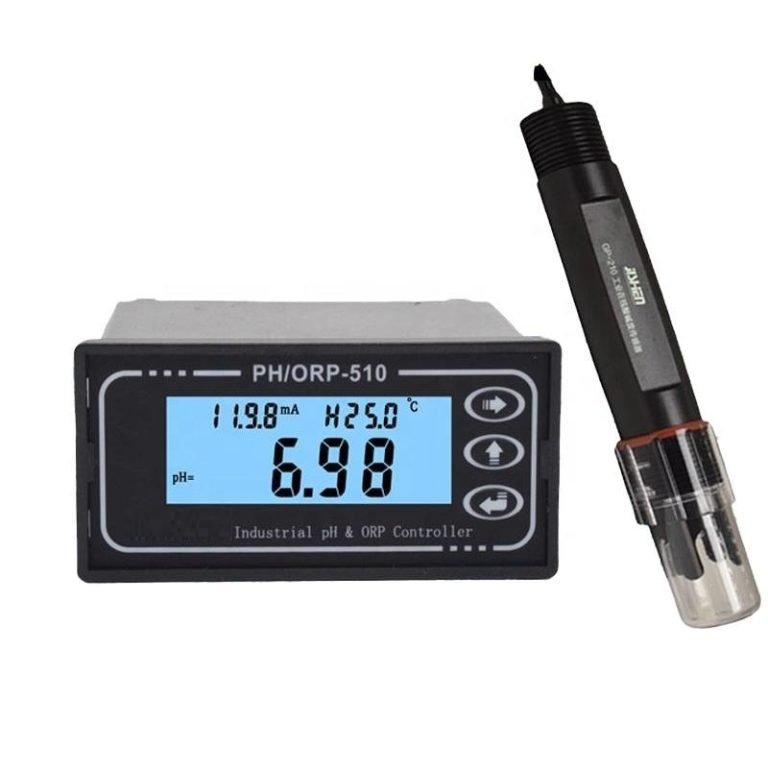
- pH sensors with HART protocol for remote configuration
- Dissolved oxygen transmitters with digital output
- Multi-parameter sensors integrating multiple measurements
- Online turbidity testers with EPA-compliant accuracy
Integration Capabilities:
- Modbus RTU/TCP: Industry-standard industrial protocol
- HART: Remote sensor configuration and diagnostics
- 4-20mA: Analog integration with legacy systems
- Wireless options: Cellular and WiFi for remote sites
Key Digital Transformation Applications
1. Advanced Distribution Monitoring
Capabilities:
- Continuous pressure and flow monitoring
- Automated leak detection algorithms
- Demand pattern analysis
- Water age tracking
Impact: 15-25% reduction in non-revenue water, 30-40% faster leak identification
2. Intelligent Water Quality Monitoring
Capabilities:
- Continuous multi-parameter monitoring
- Automated contamination alerts
- Drinking water safety scoring
- Regulatory compliance automation
Impact: 40-60% reduction in sampling costs, 99%+ data availability
3. Predictive Asset Management
Capabilities:
- Equipment condition monitoring
- Remaining useful life estimation
- Failure prediction algorithms
- Maintenance optimization
Impact: 20-35% extension of equipment lifespan, 25-40% reduction in unplanned failures
4. Advanced Process Optimization
Capabilities:
- Real-time optimization algorithms
- Chemical dosing optimization
- Energy management systems
- Operator decision support
Impact: 15-25% reduction in chemical costs, 10-20% reduction in energy consumption
Implementation Roadmap
Phase 1: Foundation (Year 1)
Objectives:
- Establish sensor network backbone
- Implement data collection infrastructure
- Deploy basic monitoring dashboards
- Train operations staff
Investment: $500,000-$2,000,000 depending on utility size
Phase 2: Enhancement (Year 2)
Objectives:
- Expand sensor coverage
- Implement advanced analytics
- Deploy mobile workforce tools
- Integrate customer systems
Investment: $300,000-$1,500,000 annual
Phase 3: Optimization (Year 3+)
Objectives:
- Implement predictive models
- Deploy optimization algorithms
- Achieve autonomous operations
Investment: $200,000-$1,000,000 annual
ROI Analysis
Financial Benefits
| Benefit Category | Annual Value | Timeline |
|---|---|---|
| Non-revenue water reduction | $200,000-$2,000,000 | Year 1-2 |
| Energy optimization | $100,000-$500,000 | Year 1-2 |
| Chemical optimization | $50,000-$300,000 | Year 1 |
| Maintenance reduction | $75,000-$400,000 | Year 2-3 |
| Total Annual Value | $500,000-$3,650,000 |
Total Cost of Ownership
| Cost Category | Year 1 | Years 2-5 Annual |
|---|---|---|
| Hardware | $500,000-$2,000,000 | $100,000-$300,000 |
| Software | $200,000-$800,000 | $100,000-$400,000 |
| Integration services | $150,000-$500,000 | $25,000-$100,000 |
| Total 5-Year Investment | $3,000,000-$8,000,000 |
ROI Summary
Typical Utility (500,000 population):
- Five-year ROI: 150-300%
- Payback period: 18-30 months
Technology Selection Considerations
Vendor Evaluation Criteria
| Criterion | Weight | Focus |
|---|---|---|
| Technology roadmap | 20% | Future capability development |
| Integration capabilities | 20% | System compatibility |
| Total cost of ownership | 20% | Initial and ongoing costs |
| Implementation support | 15% | Professional services |
| Customer references | 15% | Similar utility experience |
ChiMay Partnership Value
Sensor Technology:
- IoT-enabled sensors with comprehensive connectivity
- EPA-compliant accuracy for regulatory applications
- Industrial-grade reliability for harsh environments
Integration Support:
- Pre-engineered integration packages
- Modbus, HART, and OPC-UA protocols
- Technical documentation and support
Organizational Change Management
Workforce Transition
| Stakeholder | Impact | Focus |
|---|---|---|
| Operations staff | New tools | Training and support |
| Technicians | Remote diagnostics | Skill development |
| Engineers | Analytics access | Capability building |
| Managers | Data-driven decisions | Process redesign |
Risk Management
Implementation Risks
| Risk | Probability | Impact | Mitigation |
|---|---|---|---|
| Integration failures | Medium | High | Phased approach, pilot testing |
| Data quality issues | High | Medium | Data governance framework |
| Change resistance | Medium | Medium | Stakeholder engagement |
| Budget overruns | Medium | Medium | Contingency planning |
Future Technology Trends
| Technology | Timeline | Benefit |
|---|---|---|
| AI/ML optimization | 2-5 years | Autonomous operations |
| Digital twins | 3-5 years | Infrastructure simulation |
| Advanced analytics | Ongoing | Continuous improvement |
Conclusion
Digital transformation represents a strategic imperative for water utilities. The investment delivers favorable returns through operational cost reduction, improved asset utilization, and enhanced regulatory compliance.
Success requires careful planning, phased implementation, and sustained organizational commitment. Utilities that embrace digital technologies will achieve competitive advantages in an increasingly complex operating environment.