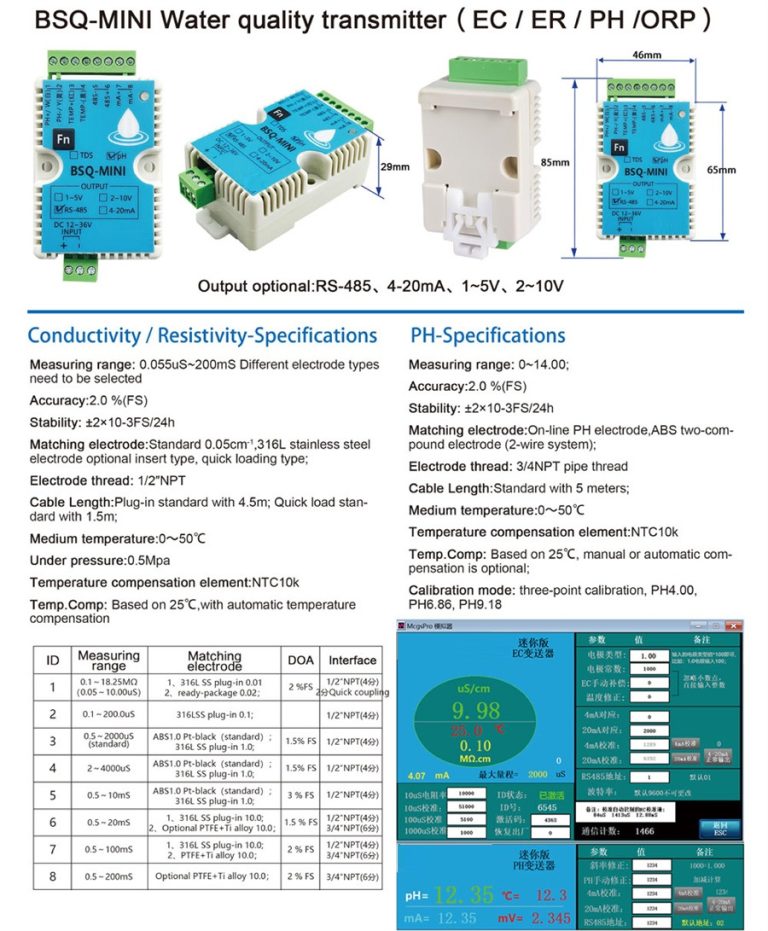
what is the principle on which a conductivity meter works

“Measuring electrical conductivity for accurate results.” Understanding the Principle of Conductivity Measurement in a conductivity meter Conductivity meters are widely used in various industries to measure the ability of a solution to conduct electricity. This measurement is crucial in determining the purity of water, monitoring chemical processes, and ensuring the quality of products. But how…

how does a conductivity meter work

how does a conductivity meter work

“Measure with precision, conductivity meter at work.” Principles of Conductivity Measurement Conductivity meters are widely used in various industries to measure the ability of a solution to conduct electricity. This measurement is crucial in determining the concentration of ions in a solution, which can provide valuable information about the solution’s composition and purity. Understanding how…

how to control conductivity in water

how to control conductivity in water

“Maintain the flow: Control conductivity in water.” Methods for Monitoring and Adjusting Conductivity Levels in Water Water conductivity is a crucial parameter that can indicate the presence of dissolved ions in water. High conductivity levels can be a sign of contamination, while low levels can indicate a lack of essential minerals. Monitoring and controlling conductivity…

does conductivity increase with concentration

does conductivity increase with concentration

“More particles, more power: conductivity increases with concentration.” The Relationship Between Conductivity and Concentration in Aqueous Solutions Conductivity is a crucial property of aqueous solutions that measures the ability of a substance to conduct electricity. It is influenced by various factors, including the concentration of ions in the solution. In general, conductivity increases with concentration…

導電率計の校正方法

導電率計の校正方法

「あらゆる測定の精度: 正確な結果を得るために導電率計を校正してください。」 導電率計の校正の重要性 導電率計の校正は、正確で信頼性の高い測定を保証するための重要なステップです。導電率計は、水処理、食品および飲料の製造、科学研究などのさまざまな業界で使用されています。適切に校正しないと、導電率計の測定値が不正確になる可能性があり、プロセスや実験で潜在的なエラーが発生する可能性があります。 次のいずれかキャリブレーションが重要である主な理由は、測定の精度を確保することです。時間の経過とともに、温度変化、汚染物質への曝露、または一般的な磨耗などの要因により、導電率計が校正から外れてしまう可能性があります。メーターを定期的に校正することで、あらゆる偏差を修正し、測定値を可能な限り正確に保つことができます。 キャリブレーションは、データの整合性を維持するのにも役立ちます。品質管理や規制遵守のために導電率測定が重要な業界では、正確で信頼性の高いデータが不可欠です。メーターを校正することで、測定の精度に自信を持ち、結果に基づいて情報に基づいた意思決定を行うことができます。 校正するには導電率計を使用するには、既知の導電率値を持つ校正溶液が必要です。この溶液は、測定するサンプルの予想される導電率範囲に近い必要があります。幅広い値にわたってメーターの精度を確保するには、少なくとも 2 つの校正ポイントを使用することをお勧めします。 校正プロセスを開始するには、まず導電率セルを脱イオン水ですすぎ、残留物や汚染物質を除去します。次に、セルを校正溶液に浸し、数分間安定させます。メーターの読み取り値が安定したら、校正溶液の既知の導電率値と一致するまでメーターの校正設定を調整します。 最初の点で校正した後、異なる導電率値の 2 番目の校正溶液を使用してプロセスを繰り返します。これは、より広い範囲の値にわたってメーターの精度を検証し、特定のニーズに合わせてメーターが適切に校正されていることを確認するのに役立ちます。 ROS-360 水処理ROプログラマーコントローラー モデル ROS-360 シングルステージ ROS-360 ダブルステージ 測定範囲 原水0~2000uS/cm 原水0~2000uS/cm   一次排水 0~1000μS/cm 一次排水 0~1000μS/cm   二次排水 0~100μS/cm 二次排水 0~100μS/cm 圧力センサー(オプション) 膜前圧/後圧 一次・二次膜前後圧力 流量センサー(オプション) 2チャンネル(入口・出口流量) 3流路(原水、一次流、二次流) IO入力 1.原水低圧 1.原水低圧   2.一次ブースターポンプ入口低圧 2.一次ブースターポンプ入口低圧   3.1次ブースターポンプ出口高圧 3.1次ブースターポンプ出口高圧   4.レベル1タンクの液位が高い 4.レベル1タンクの液位が高い   5.レベル1タンクの液面低下 5.レベル1タンクの液面低下  …