Table of Contents
Key Takeaways
- Suspended solids concentrations in industrial wastewater range from 10 mg/L to 10,000 mg/L depending on process type
- Optical scattering technology achieves measurement accuracy of ±2% of reading across the full range
- Real-time suspended solids monitoring reduces treatment chemical consumption by 15-30%
- Continuous measurement enables 40% faster process response compared to grab sampling
- Environmental regulations increasingly mandate continuous TSS monitoring with 95% uptime requirements
Introduction
Industrial wastewater treatment facilities process effluents from manufacturing operations ranging from food processing to chemical production. Suspended solids represent one of the most critical water quality parameters, directly influencing treatment efficiency, discharge compliance, and environmental impact. The global industrial wastewater treatment market, valued at $38.5 billion in 2026, relies heavily on accurate suspended solids measurement for process optimization.
Traditional laboratory analysis of total suspended solids (TSS) requires sample collection, filtration, drying, and weighing—a process typically requiring 2-4 hours to complete. This delay creates significant challenges for real-time process control, where treatment conditions change rapidly and decisions must be made within minutes rather than hours.
Online suspended solids sensors have transformed industrial wastewater treatment by providing continuous, real-time measurements that enable immediate process response. This article examines the technical principles, practical applications, and operational benefits of continuous suspended solids monitoring in industrial wastewater treatment systems.
Measurement Technologies for Suspended Solids
Optical Scattering Principles
Modern suspended solids sensors predominantly utilize optical scattering technology, leveraging the interaction between light and particles suspended in water. When a light beam encounters suspended particles, several optical phenomena occur:
Mie Scattering: For particles with diameters comparable to the light wavelength, scattering occurs in multiple directions. The intensity and angular distribution of scattered light correlate with particle concentration.
Rayleigh Scattering: Particles significantly smaller than the light wavelength produce symmetric scattering with intensity inversely proportional to the fourth power of wavelength. This principle explains why shorter wavelengths (blue light) scatter more effectively.
Diffraction: Large particles (> light wavelength) produce diffraction patterns that provide information about particle size distribution alongside concentration.
Near-Forward Scattering: Most industrial sensors measure scatter at near-forward angles (typically 11-90 degrees from incident direction). This geometry provides optimal sensitivity across the measurement range while minimizing interference from colored dissolved substances.
Multi-Scattering Angle Technology
Advanced suspended solids sensors employ multiple detector angles to extract both concentration and particle size information:
Nephelometric Element: Scattered light measured at 90 degrees (nephelometric geometry) provides the primary concentration reading with good sensitivity for moderate particle concentrations.
Transmittance Element: Measurement of light passing directly through the sample (attenuated by absorption and scattering) extends the measurement range to higher concentrations where forward scatter saturates.
Ratio Processing: The ratio of signals from multiple angles correlates with particle size distribution, enabling sensors to compensate for varying particle characteristics that influence scattering intensity.
This multi-parameter approach enables accurate measurements across the 10 mg/L to 50,000 mg/L range required for industrial applications, with typical accuracy of ±2% of reading or ±1 mg/L, whichever is greater.
Sensor System Components
Optical Assembly
The optical assembly constitutes the measurement heart of suspended solids sensors:
Light Source: High-intensity infrared LEDs (typically 860 nm wavelength) provide stable, maintenance-free illumination. Infrared wavelengths minimize interference from colored compounds while maintaining good scattering efficiency from most suspended particles.
Optical Windows: Sapphire or quartz windows provide optical access to the sample while withstanding pressure, temperature, and chemical exposure. Anti-fouling coatings minimize window contamination in challenging wastewaters.
Membrane Bioreactor (MBR) Applications: MBR systems require precise suspended solids control to prevent membrane fouling. Continuous monitoring enables ±5% MLSS control that extends membrane cleaning intervals by 25-40%.
Sequencing Batch Reactor (SBR) Control: Batch process timing depends on biological reaction completion. Real-time suspended solids measurements confirm treatment endpoints more reliably than fixed timers.
Tertiary Treatment and Discharge Monitoring
Final treatment stages and discharge points require monitoring for regulatory compliance:
Effluent Quality Assurance: Discharge limits typically range from 10-100 mg/L TSS depending on receiving waterbody sensitivity. Continuous monitoring documents compliance and triggers process adjustments before exceedances occur.
Filter Backwash Control: Sand filters and multimedia filters can initiate backwash based on headloss accumulation and effluent turbidity rather than fixed schedules, reducing backwash water volume by 15-25%.
Reuse Application Monitoring: Treated wastewater reuse for irrigation or industrial cooling requires suspended solids monitoring to prevent equipment fouling and ensure appropriate water quality.
Measurement Challenges and Solutions
Fouling and Contamination
Industrial wastewaters often contain sticky, scaling, or biological materials that coat sensor optical surfaces:
Self-Cleaning Mechanisms: Many sensors incorporate compressed air purging, mechanical wipers, or ultrasonic cleaning to maintain clean optical surfaces. Air purging systems using 30-second pulses every 5 minutes effectively prevent most fouling.
Hygienic Design: Sensors with flush-mounted or recessed window designs minimize particle accumulation at critical optical surfaces.
Cleaning Intervals: Automated cleaning systems typically require maintenance attention every 2-4 weeks depending on wastewater characteristics.
Varying Particle Characteristics
Industrial wastewaters contain diverse particle types—organic, inorganic, flocculated, granular—that scatter light differently:
Matrix Compensation: Advanced sensors utilize multiple wavelengths and scattering angles to characterize particle properties and compensate for their influence on measurement accuracy.
Site-Specific Calibration: Calibration using actual process wastewater (rather than standard solutions) provides the most accurate results when particle characteristics differ significantly from typical calibration standards.
Dynamic Range Optimization: Selecting sensors with appropriate measurement ranges for specific applications ensures optimal accuracy throughout the process.
Industry Implementation: Food Processing Facility
A major food processing facility processing 2 million liters daily implemented continuous suspended solids monitoring across its wastewater treatment system in 2025. The installation included sensors at four critical points.
System Configuration:
- Inlet sampling station with automatic sampler integration
- Primary clarifier outlet monitoring
- Activated sludge basin MLSS monitoring
- Final effluent turbidity measurement
Measured Results:
- Polymer consumption reduced by 22% through optimized dosing
- Clarifier sludge wasting optimization extended equipment life by 18 months
- Energy consumption decreased by 12% through MLSS optimization
- Zero discharge violations recorded in 24 months of operation
- Total operational savings: $185,000 annually
The facility operators noted that process stability improved dramatically with continuous monitoring enabling rapid response to treatment upsets that previously would have gone undetected for hours.
Integration with ChiMay Suspended Solids Sensors
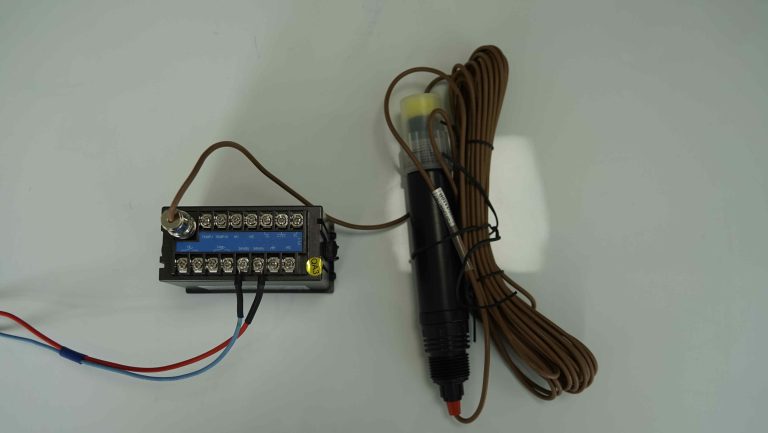
ChiMay provides online suspended solids sensors designed for industrial wastewater applications. These sensors combine multi-angle optical scattering with advanced signal processing to deliver accurate measurements across challenging wastewater compositions.
Technical Specifications:
- Measurement range: 0-10,000 mg/L (configurable)
- Accuracy: ±2% of reading or ±1 mg/L
- Response time: <60 seconds to 95% of final reading
- Self-cleaning: Automatic air purge system
- Communication: Modbus RTU/TCP, 4-20 mA, HART
ChiMay sensors support industrial reuse monitoring applications where suspended solids control protects downstream processes and ensures treated water meets reuse quality specifications.
Conclusion
Suspended solids measurement forms the foundation of effective industrial wastewater treatment monitoring and control. Optical scattering technology provides the accuracy, reliability, and response speed required for modern treatment process optimization.
The operational benefits demonstrated across industries—chemical savings, energy reduction, equipment protection, and regulatory compliance—underscore the value of continuous suspended solids monitoring. As discharge regulations tighten and water reuse becomes more prevalent, the importance of accurate suspended solids measurement will continue increasing.
Industrial facilities should evaluate their current monitoring approaches and consider how continuous suspended solids sensing could improve treatment efficiency, reduce operational costs, and enhance environmental compliance. The technology has proven its value across diverse industries and applications.