Table of Contents
Understanding Organic Contamination in Ultrapure Water Applications
Key Takeaways:
– Organic contamination in UPW causes multiple defect mechanisms affecting semiconductor yield
– Common contamination sources include piping materials, seals, and atmospheric infiltration
– Sub-ppb TOC detection has become essential for advanced process nodes
– UV oxidation technology destroys organic compounds, enabling TOC reduction to specification levels
– Continuous online monitoring detects contamination events that batch sampling misses
Organic contamination in ultrapure water (UPW) represents one of the most challenging quality concerns in semiconductor manufacturing. Unlike ionic contamination, which resistivity monitoring detects with high sensitivity, organic compounds exhibit diverse chemical structures and produce varied effects on device fabrication. Understanding organic contamination sources, detection methods, and control strategies enables facilities professionals to protect manufacturing yield effectively.
Origins of Organic Contamination
Organic compounds enter UPW systems through multiple pathways, each requiring specific control strategies:
Leaching from system materials represents a significant organic source. Elastomeric seals and gaskets contain plasticizers, antioxidants, and processing aids that gradually leach into flowing water. Polymer piping materials release oligomers and additives, particularly during initial system operation. Epoxy coatings and sealants contribute organic compounds through surface degradation and leaching.
Atmospheric contamination occurs whenever UPW contacts air. Carbon dioxide absorption forms carbonic acid, introducing organic carbon while reducing water resistivity. Hydrocarbon vapors from facility environments dissolve into exposed water surfaces, while particulate organic matter settles into open tanks and reservoirs.
Microbiological growth within water systems generates biologically derived organics through metabolic processes and cell lysis. Bacteria colonizing pipe surfaces form biofilms that continuously release organic compounds into flowing water. Even dead biomass releases intracellular contents upon cell lysis, creating persistent organic contamination.
Chemical infiltration through contamination events introduces organic compounds from process chemicals, cleaning solutions, and maintenance materials. Improper hose connections, tank overflows, and backflow conditions can introduce organic contamination requiring extensive system flushing to remove.
Impact on Semiconductor Manufacturing
Organic contamination produces multiple defect mechanisms affecting device performance and yield:
Photolithography interference occurs when organic films deposit on wafer surfaces before imaging steps. These films alter reflection properties affecting exposure dose accuracy, while altered surface energy affects photoresist adhesion. Pattern fidelity suffers, creating defects that propagate through subsequent processing steps.
Etch rate variations result from organic contamination affecting chemical reaction kinetics. Inconsistent etch rates create dimensional variations exceeding specification tolerances, reducing yield and increasing parameter spread. Organic contamination may also create localized etching anomalies creating localized defects.
Surface contamination from organic deposits creates reliability defects in finished devices. Ionic contamination beneath organic films migrates through dielectric layers over device lifetime, eventually creating leakage paths or short circuits. These field failures may escape detection during production testing, appearing only in customer applications.
Deposition defects occur when organic compounds react with process chemistries to form insoluble deposits. These particles contaminate wafer surfaces and equipment chambers, creating defects requiring extensive cleaning to remove.
Industry data indicates that organic contamination accounts for 1-3% of total yield losses in facilities without robust organic control programs. For advanced process nodes, the impact increases as feature sizes decrease and process windows narrow.
Detection Technologies
Total Organic Carbon (TOC) Measurement
TOC analysis quantifies the total carbon content of organic compounds dissolved in water samples. The measurement provides an aggregate indicator of organic contamination without identifying specific compounds, making it suitable for continuous monitoring applications.
Online TOC analyzers employ UV oxidation to convert organic compounds to carbon dioxide, which conductivity cells then detect. Detection limits of 0.1-0.5 ppb enable reliable monitoring of water meeting SEMI F63 specifications. Sample handling requires careful attention— PTFE or stainless steel tubing minimizes organic leaching from sampling systems.
Laboratory TOC analysis using high-temperature combustion or wet chemical oxidation methods provides higher accuracy and lower detection limits for certification and troubleshooting applications. However, batch laboratory analysis cannot detect contamination events occurring between sample collection and analysis.
Specific Compound Analysis
Gas chromatography-mass spectrometry (GC-MS) identifies and quantifies specific organic compounds in UPW samples. The technique separates individual compounds through chromatography, then identifies them through mass spectral patterns. Detection limits in the ppt (parts per trillion) range enable analysis at specification levels.
Thermal desorption-GC-MS (TD-GC-MS) achieves exceptional sensitivity without solvent extraction, making it particularly suitable for UPW analysis. This technique detects semi-volatile organic compounds including phthalates, siloxanes, and hydrocarbons that conventional methods might miss.
While powerful, compound-specific analysis remains primarily a troubleshooting and certification tool rather than continuous monitoring method. The complexity and cost of these instruments limits deployment to laboratory settings.
Control Strategies
Material Selection
System material selection significantly impacts organic contamination levels. 316L stainless steel with electropolished interiors provides minimal organic leaching with excellent durability. PVDF (polyvinylidene fluoride) piping offers good chemical resistance and low leaching characteristics.
Elastomer selection requires careful attention to compound composition. PTFE (polytetrafluoroethylene) and FFKM (perfluoroelastomer) offer excellent chemical resistance and minimal leaching, though at higher cost than conventional elastomers. Viton and EPDM elastomers require validation testing to confirm acceptable leaching characteristics.
Surface treatments including electropolishing and passivation reduce organic adsorption and leaching from metallic surfaces. These treatments create smooth, chemically stable surfaces that resist organic film formation and release adsorbed compounds more readily.
UV Oxidation Systems
UV oxidation provides continuous organic destruction without chemical addition. UV light at 185nm wavelength breaks chemical bonds in organic molecules, initiating oxidation reactions that convert organics to carbon dioxide and water. The 254nm wavelength complements organic destruction by controlling microbiological growth.
Proper UV system design requires attention to irradiation dose, exposure time, and water transparency. UV absorbers in water reduce effective dose, requiring higher lamp output or longer exposure times. Flow-by lamp configurations maximize exposure efficiency, while closed-vessel designs ensure adequate contact time.
Distribution System Controls
Closed-loop circulation prevents atmospheric contamination throughout the distribution network. Continuous flow velocities of 3-5 feet per second prevent particle settling and biological growth, while pressure maintenance prevents infiltration at any connection point.
Nitrogen blanketing protects storage tanks and deaeration vessels from atmospheric contact. Blanket pressure slightly above atmospheric prevents air infiltration, while nitrogen purity exceeding 99.999% ensures the blanketing gas introduces no additional contaminants.
Sanitization protocols control biological growth throughout the distribution system. Heat sanitization at 80°C destroys microorganisms without chemical residue, though it requires careful temperature management to avoid hot water burns. UV sterilization provides continuous microbiological control without chemical addition.
Shanghai ChiMay: Organic Monitoring Solutions
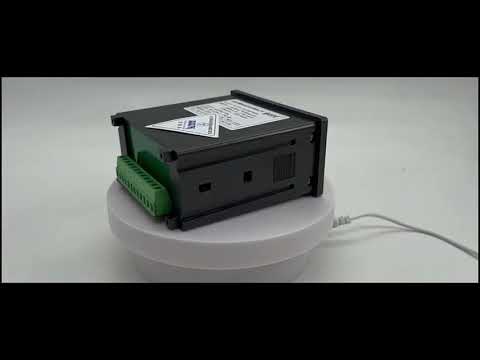
Shanghai ChiMay delivers advanced TOC monitoring solutions designed for semiconductor UPW applications. The online analyzer product line achieves detection limits meeting SEMI F63 specifications, with models optimized for different monitoring requirements.
Application engineering teams provide system design support, installation guidance, and calibration services. Shanghai ChiMay’s commitment to semiconductor industry excellence ensures reliable monitoring performance protecting manufacturing yield.
Article ID: 927
Word Count: ~950 words