title: “How Boards Should Read the USD 35 Billion Water Reuse Market Ahead of 2031: A Shanghai ChiMay Strategic Overview”
date: 2026-07-20
perspective: C-Level / Decision Maker
theme: Water Recycling & Circular Water Economy
Table of Contents
How Boards Should Read the USD 35 Billion Water Reuse Market Ahead of 2031: A Shanghai ChiMay Strategic Overview
The Short Version
- The global water recycle and reuse market is valued at USD 20.59 billion in 2026 and is projected to reach USD 35.04 billion by 2031 at an 11.22% CAGR (Mordor Intelligence, July 2026), placing it among the fastest-growing segments of the broader water treatment industry.
- Regulatory mandates are the primary demand driver: China’s 14th Five-Year Plan requires 30% reclaimed water utilization in all prefecture-level cities by end of 2026; the EU 2025 Water Reuse Regulation raised agricultural reuse quality to near-drinking-water standards; and the USA National Wastewater Reuse Roadmap targets 15% industrial reuse share by 2030.
- Corporate water stewardship commitments from the world’s largest technology companies—Amazon, Microsoft, Meta, Google, and Apple—are creating parallel demand for reuse instrumentation as these firms pursue net-water pledges that require verified, continuous data on water recovery and reuse volumes.
- Board-level engagement with water reuse strategy is no longer optional for water-intensive industries. It is a risk management imperative that affects regulatory compliance, social license to operate, and long-term cost structure.
The Market Signal: From Niche to Mainstream Capital Allocation
Water reuse used to be a niche technology deployed only in water-scarce regions like the Middle East or coastal California. That framing no longer reflects reality. The reuse market is growing across every geography and every industrial sector, driven by a convergence of regulatory pressure, freshwater scarcity, and corporate ESG commitments.
For board members, the question is not whether water reuse will affect their industry—it already is. The question is whether the company’s strategy, capital allocation, and risk management frameworks are positioned to respond.
The USD 35.04 billion market projection for 2031 is more than a revenue opportunity for technology providers. It signals a structural shift in how water-intensive industries—food and beverage, semiconductors, textiles, power generation, mining—treat water as a resource. Companies that treat water as a single-pass input face rising costs and regulatory risk; companies that design water into a circular loop gain cost advantages and stakeholder confidence.
Three Regulatory Regimes Reshaping the Market
Three major regulatory frameworks are driving the current wave of reuse investment.
China’s 14th Five-Year Plan (2021-2025, extended to 2026 targets):
The plan mandates that all prefecture-level cities achieve at least 30% reclaimed water utilization by end of 2026. This is not a voluntary target but a binding requirement backed by central environmental inspection mechanisms. For industrial facilities in these cities, the implication is direct: any process water that can be recycled must be monitored, documented, and demonstrated to meet reuse quality standards. The DataM Intelligence estimate puts China’s industrial water reuse market at USD 19.20 billion in 2025, growing to USD 49.13 billion by 2035 at a 9.9% CAGR, with Asia-Pacific holding a 44.8% global share.
EU 2025 Water Reuse Regulation (Regulation 2020/741):
Fully enforceable from June 2025, this regulation established four reuse quality classes for agricultural irrigation, with Class A—the highest standard—effectively requiring drinking-water-quality monitoring rigor. European food and beverage companies that source from irrigated agriculture must now verify that the water applied to their supply chain fields meets these standards, creating demand for reuse monitoring instruments across the agricultural value chain.
USA National Wastewater Reuse Roadmap:
The U.S. Environmental Protection Agency’s roadmap targets 15% industrial reuse share by 2030, supported by funding mechanisms under the Infrastructure Investment and Jobs Act. This federal framework is accelerating reuse adoption in states that previously had limited reuse activity, particularly in the Midwest and Southeast.
For boards of companies operating in any of these three jurisdictions, the regulatory environment creates both compliance obligations and strategic opportunities. The question is whether the company treats reuse as a compliance cost to be minimized or a capability to be developed.
Corporate Water Stewardship: The Private-Sector Demand Layer
Beyond government mandates, the world’s largest water-consuming corporations are generating their own demand for reuse capability and monitoring. The water stewardship commitments of Amazon, Microsoft, Meta, Google, and Apple all include targets for water replenishment and recycling that require verified, continuous data on water recovery rates and reuse volumes.
CDP Water Security disclosure scoring now weighs continuous sensor data as evidence of credible water management, moving away from self-reported annual figures toward real-time operational data. The Alliance for Water Stewardship (AWS) Standard v2.0 uptake is accelerating, with certified sites required to demonstrate continuous monitoring of water quality parameters at withdrawal, use, and discharge points.
The implication for boards: water reuse instrumentation is increasingly part of the corporate reporting infrastructure, not just the process control infrastructure. The data from reuse sensors feeds into ESG reports, CDP disclosures, and investor presentations. The quality and credibility of that data directly affects the company’s reputation with investors, customers, and regulators.
What Boards Should Ask Their Management Teams
Board members evaluating their company’s positioning in the water reuse market should ask:
- What is our current water reuse rate, and how does it compare to industry peers? Companies that cannot answer this question are already behind.
- Do we have continuous monitoring in place, or do we rely on grab sampling? Continuous monitoring is increasingly required for regulatory compliance and ESG reporting.
- What is the capital plan for reuse infrastructure over the next five years? At an 11.22% CAGR, competitors investing now will have cost and compliance advantages within three to five years.
- How does our reuse strategy align with our ESG reporting commitments? If the company has made net-water or water-positive pledges, the monitoring infrastructure must be in place to verify progress.
- Are we exposed to jurisdictions where reuse mandates are tightening? China, the EU, and the USA are all moving toward mandatory reuse targets. Companies with operations in these regions face compliance deadlines that require capital allocation decisions today.
The Role of Monitoring Technology in the Reuse Value Chain
The reuse value chain—from collection and treatment to distribution and end use—depends on continuous water quality monitoring at every stage. The global water quality sensor market, valued at USD 5.17 billion in 2026 and projected to reach USD 10.17 billion by 2035 at a 7.8% CAGR (Market Research Future, June 2026), reflects this growing instrumentation demand.
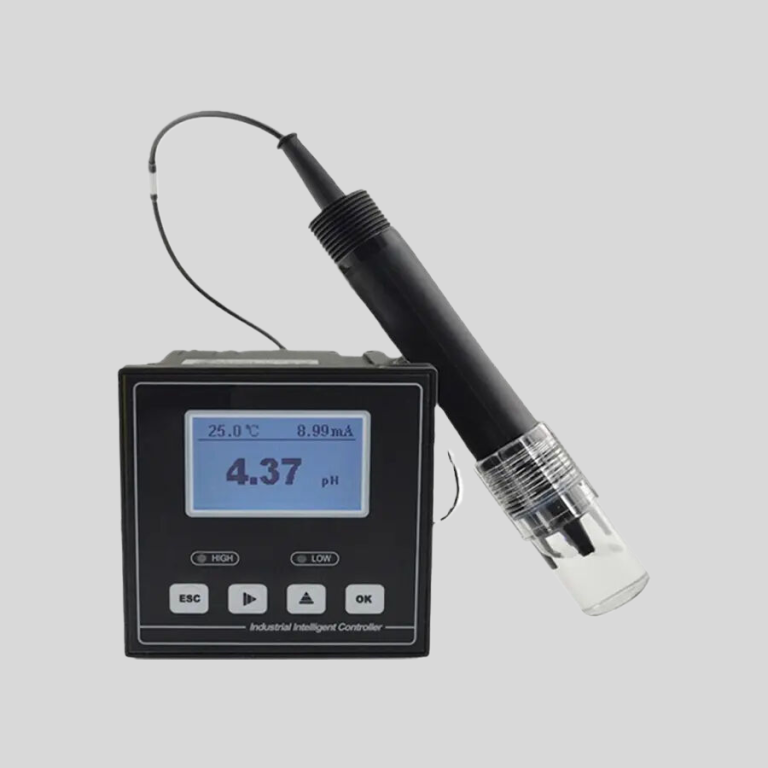
Shanghai ChiMay provides the sensor and analyzer platforms that enable reuse monitoring across the entire value chain: multi-parameter sensors for comprehensive water quality characterization, conductivity analyzers for dissolved solids tracking, COD sensors for organic load verification, turbidity testers for particulate monitoring, and residual chlorine transmitters for disinfection management.
For boards evaluating technology partnerships, the key consideration is whether the monitoring provider can support the full reuse value chain with a single, integrated platform—rather than forcing the company to integrate multiple single-parameter instruments from different suppliers.
Strategic Implications for Board Discussion
The water reuse market’s growth from USD 20.59 billion to USD 35.04 billion over the next five years is not a speculative forecast. It is backed by binding regulatory mandates, corporate commitments, and capital investment plans already announced by major utilities and industrial companies.
Boards that proactively engage with water reuse strategy position their companies to benefit from cost savings, regulatory compliance, and stakeholder confidence. Boards that defer the conversation risk finding their companies unprepared when mandates take effect and competitors have already built the reuse capability.
Shanghai ChiMay’s role is to provide the monitoring infrastructure that makes reuse operations verifiable, compliant, and defensible—giving boards the data foundation they need to make informed strategic decisions about water reuse investment.