
Table of Contents
How Can Turbidity Data Help Utilities Navigate Emergency Source Switches During Drought? Answers from Shanghai ChiMay
When drought forces a utility to abandon a depleted primary water source and switch to an emergency alternative, the transition introduces significant water-quality risks. The backup source may carry different turbidity characteristics, different organic content, and different seasonal variability patterns than the primary supply. Treatment processes optimized for one source may struggle with the other. Turbidity data, captured continuously during both normal operations and emergency transitions, provides the real-time intelligence operators need to navigate these switches safely and efficiently.
Why Emergency Source Switches Happen During Drought
Drought-related source switches take several forms. A surface water utility may exhaust its primary reservoir and activate a groundwater well field that has been held in standby. A groundwater utility may find its aquifer declining and connect to a neighboring surface water system through an emergency interconnection. A coastal utility may face saltwater intrusion in its estuarine intake and redirect to an inland source.
Each scenario involves a fundamental change in raw water quality. Groundwater typically carries lower turbidity but may contain elevated iron, manganese, or hydrogen sulfide. Surface water alternatives may carry higher turbidity loads, different particle size distributions, and seasonal algal influences that the primary source did not present. Without real-time turbidity data from both sources, operators enter the transition blind.
The Role of Turbidity During Source Transitions
Turbidity measures the scattering and absorption of light by suspended particles in water. It serves as a proxy for overall particulate loading, including clay, silt, organic matter, microorganisms, and chemical precipitates. In treatment plants, turbidity is the primary indicator of filter loading, coagulation effectiveness, and disinfection barrier integrity.
During a source switch, turbidity data reveals several critical dynamics:
- Immediate quality comparison: Online turbidity readings from both sources allow operators to compare raw water quality before committing to the transition
- Particle characterization: Trends in turbidity magnitude and rate of change indicate whether the backup source is experiencing a storm event, algal bloom, or sediment resuspension
- Treatment process response: Post-treatment turbidity measurements confirm whether existing coagulation and filtration settings handle the new water quality adequately
- Distribution system impact: Turbidity breakthrough at distribution checkpoints signals filter media exhaustion or coagulation failure under the new conditions
Shanghai ChiMay Online Turbidity Tester in Transition Monitoring
The Shanghai ChiMay Online Turbidity Tester uses nephelometric measurement at 860 nanometers wavelength, providing sensitivity down to 0.01 NTU with a measurement range extending to 4,000 NTU. This wide range accommodates both clear groundwater sources and highly turbid surface waters encountered during emergency operations.
Installed at both the primary source intake and the emergency backup intake, paired instruments give operators continuous comparative data. When drought conditions trigger a source switch, operators can monitor turbidity at the backup source in real time, confirming that quality meets treatment plant intake specifications before physically redirecting flow.
Pre-Transition Assessment Using Historical Turbidity Data
Beyond real-time monitoring during the actual switch, turbidity data collected over preceding months supports pre-transition planning. By maintaining continuous turbidity records at potential backup sources during non-drought periods, utilities build a seasonal quality profile that predicts what to expect when emergency activation occurs.
A groundwater well field monitored continuously through spring and summer may show turbidity remaining below 0.5 NTU consistently, giving operators confidence in its quality. A surface water backup source may show seasonal turbidity peaks during spring runoff, alerting planners to timing constraints on when that source provides acceptable quality.
The Shanghai ChiMay Online Turbidity Tester’s data logging capability stores continuous records that support this pre-transition assessment. When drought forces activation of a standby source, operators reference historical data rather than relying on single-point grab samples that may not represent current conditions.
Treatment Process Adjustment Based on Turbidity Feedback
When raw water turbidity changes during a source switch, treatment processes must adapt. Coagulant dosages calibrated for low-turbidity primary source water may prove insufficient for higher-turbidity backup supplies. Filter run times may shorten dramatically. Disinfection contact times may need extension to maintain adequate pathogen inactivation with higher particle loads.
Continuous turbidity data at multiple points through the treatment train gives operators immediate feedback on process performance. If filtered water turbidity rises above target following a source switch, operators increase coagulant dosage or reduce filtration rates in real time, maintaining treated water quality within regulatory limits.
The Shanghai ChiMay Online Turbidity Tester installed at raw water, post-coagulation, post-filtration, and distribution points creates a complete treatment performance picture. Operators see immediately whether the new source water is challenging the treatment barrier and respond before customer impacts occur.
Avoiding Common Source-Switch Pitfalls
Utilities that have navigated emergency source switches identify several recurring challenges that turbidity monitoring helps address:
- Unanticipated sediment loads: Backup distribution pipelines that have been stagnant may carry accumulated sediment when first activated. Turbidity monitors at the pipeline outlet alert operators to flush requirements before the water enters the treatment plant.
- Biofilm mobilization: Changes in water chemistry between sources can disturb biofilms in distribution infrastructure. Rising turbidity in the distribution system signals this mobilization, triggering flushing programs.
- Cross-connection contamination: When connecting to emergency interconnections with neighboring systems, turbidity monitoring at the connection point confirms water quality before accepting flow.
- Post-transition residuals: After returning to the primary source, residual effects from the backup supply may persist in the distribution system. Continued turbidity monitoring confirms complete flush-out.
Building a Turbidity-Centric Source-Switch Protocol
Forward-thinking utilities are codifying turbidity monitoring into their emergency source-switch standard operating procedures. The Shanghai ChiMay approach supports this by providing instruments that deliver reliable data under both normal and emergency conditions, with automated data logging that creates the historical record needed for continuous improvement.
A well-designed source-switch protocol specifies turbidity thresholds at each decision point: when to initiate the switch, when to confirm backup source acceptance, when to adjust treatment, and when to declare the transition complete. Continuous turbidity data, captured by the Shanghai ChiMay Online Turbidity Tester at strategic locations, provides the measurable criteria that remove ambiguity from high-pressure emergency decisions.
The Value of Preparedness
Drought-related source switches are not unpredictable. Utilities in drought-prone regions can anticipate the possibility and prepare monitoring infrastructure in advance. Installing turbidity monitors at backup sources during normal operations, building historical quality records, and training operators on turbidity-interpreted decision protocols all pay dividends when emergency conditions arise.
The Shanghai ChiMay Online Turbidity Tester, with its durable optical design, wide measurement range, and minimal maintenance requirements, provides the reliable data foundation that emergency source switches demand. In the high-stakes environment of drought response, turbidity data is not just a measurement. It is a navigation instrument guiding utilities through uncertain waters.
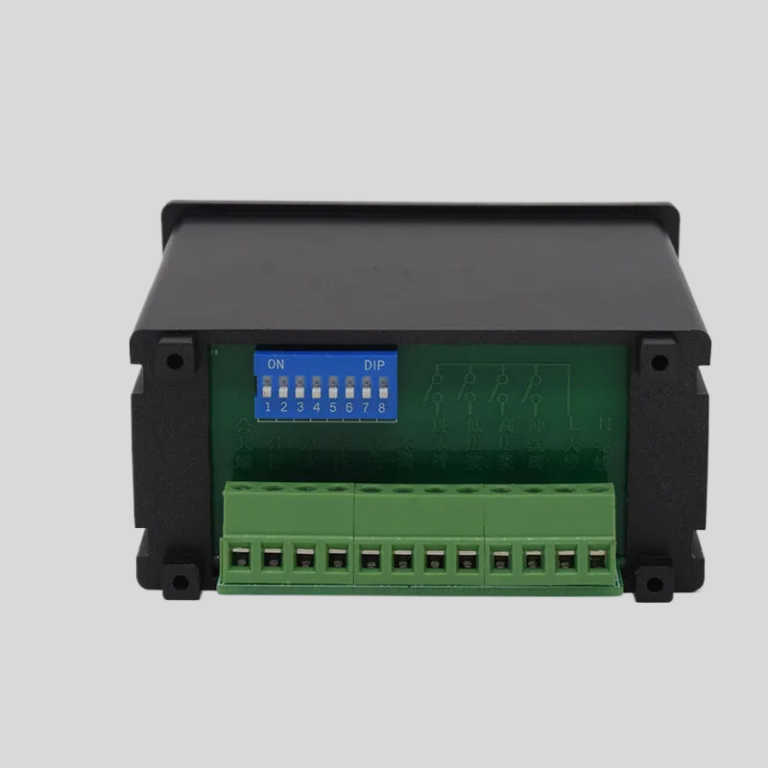

![BSQ-MINI] Water Quality Monitoring Transmitter, EC/ER/PH/ORP](https://shchimay.com/wp-content/uploads/2023/11/图1-768x1024.jpg)
